Soltam L33 Ro'Em
 Self Propelled Howitzer (1973), up to 200 converted.
Development and design of the L33 Ro'Em
The IDF Sherman, used to the bone
The IDF acquired over time a large fleet of WW2 vintage Sherman tanks and arguably of all nations, made the best of it. Israelis searched junkyards in Palestine, Europe, as far as the Philippines looking for tanks. The first acqusition was from a Palestine repair depot near Tira with just two ex-British rusted Shermans, put into shape. In Italy also thirty-two disarmed Shermans, armed with old Krupp 105 mm howitzers were smuggled back to Israel as tractors. They also required extensive work, completely demilitarized. The UN cease-fire enabled the Israeli to purchase leftover WWII matériel and all put them back into service.It was a varied assortment later called either "Sherman-Krupp" for the first serie and later the M1 for the regularly armed ones (75), standardized by re-arming them with M3 guns, with those that arrived from the Philippines. France later was also willing to sell surplus Shermans and provide military assistance and 60 surplus 76mm Shermans, spare parts and equipment were acquired to form two brigades. In 1956 100 improved M50 Shermans with new 75mm high-velocity cannons were acquired giving them superiority over Egyptian Shermans in the Sinai, and the IDF captured many. France later developed the M51 Super Sherman with a 105 mm cannon and 200 Shermans were modified that way, sometimes called "Isherman" or officially the M51. They worked well for the 1967 and 1973 wars.
However 100 older M50 Shermans after 1967 remained "stock" with their older French 75mm guns and as Arab states re-equipped themselves with T55 and T-62s, they were no longer up to scratch. So, many of these vehicles were converted for other uses, rocket launcher, missile carrier, or self propelled guns among others. The IDF gradually converted Shermans into the:
-M-50 155 mm (French howitzer at the back of the hull on the "long" hull M4A4: 120 produced.
-Ro'em (L-33) self-propelled Soltam M-68 155 mm L/33 howitzer Cummins VT-8-460Bi diesel/HVSS chassis, about 200 units converted.
-L-39: Same but longer (39 cal.) Howitzer barrel prototype only
-Makmat, mounting the Soltam M-66 160 mm mortar, open-topped compartment (1968) covered here.
-MAR-240 had a in place of the turret a thirty-six 240 mm rocket launcher (BM-24 clone)
-MAR-290 Episkopi, same but mounting a back-looking launcher for four 290 mm rockets Ivry-1/Haviv in 1973.
-Kilshon (Trident) mounting an AGM-45 Shrike ARM launcher was mounted with booster.
-Sherman Morag (Crab mine flail vehicle).
-Trail Blazer (Gordon) ARV (recovery/engineering vehicle) based on HVSS M4A1s
-Sherman Medical Evacuation Tank (Ambutank), radical conversion, M4A1 hulls with VVSS
-Eyal Observation Post Vehicle with 27 m (90 ft) hydraulic observation platform.
About the SOLTAM 155mm L33
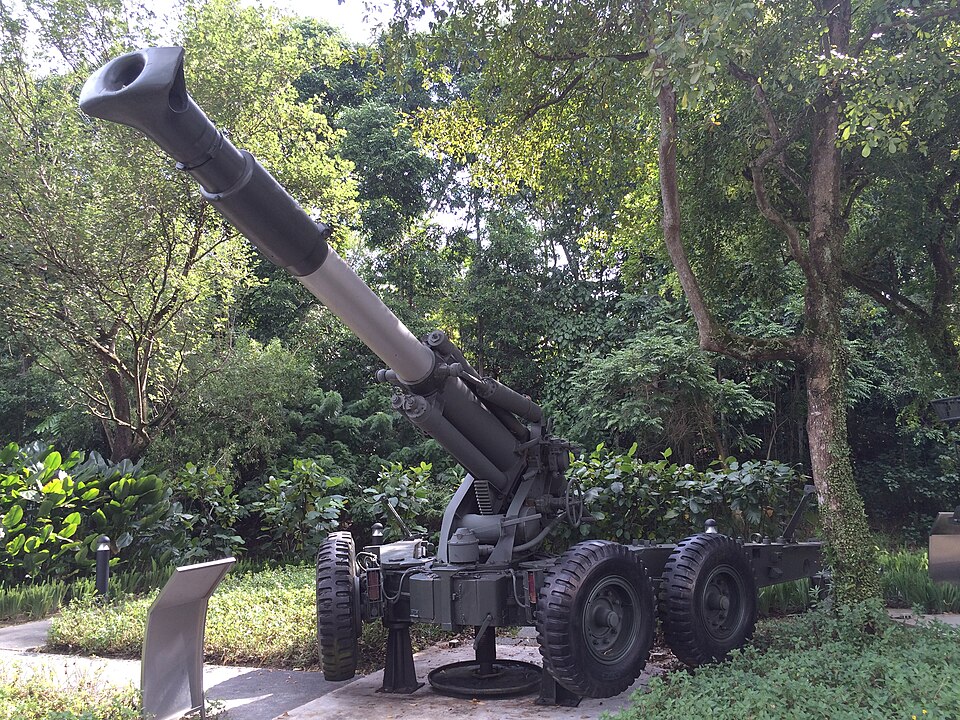
Without it no self propelled howitzer. The SOLTAM M-68 derived from the Finnish 122 K 60 and 155 K 68 of the 1960s by Tampella Oy. Twelve were built by IDF between 1970 and 1975, and the rest licence built as the M-68, (155 K 68) completed in 1968 for trials and evaluations by the IDF and an ordee placed with Soltam, the production starting in 1970 and in service in 1972. Its barrel had a simple muzzle brake and the recoil mechanism counts two pneumatic cylinder jacks at the the back-end of the barrel. The gun mount chassis, breech and recoil system led to develop the Soltam M-71 with a 39 calibers barrel versus 33 calibers and compressed air-driven rammer produced from 1975. But it was too heavy to be self-propelled and remained towed only. The SPH tested with it remained a prototype. This M68 howitzer led to an adaptation as the Ro'em/L-33 to complement the towed M-68.
Design of the Ro'Em
Layout
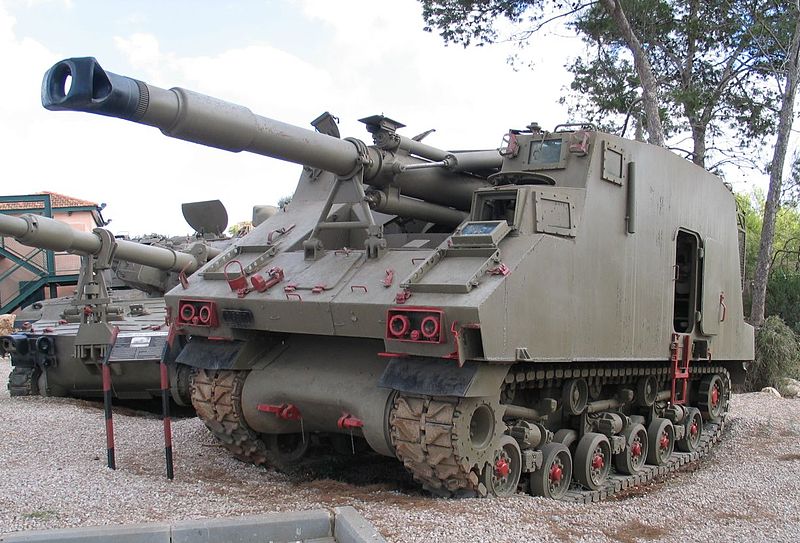
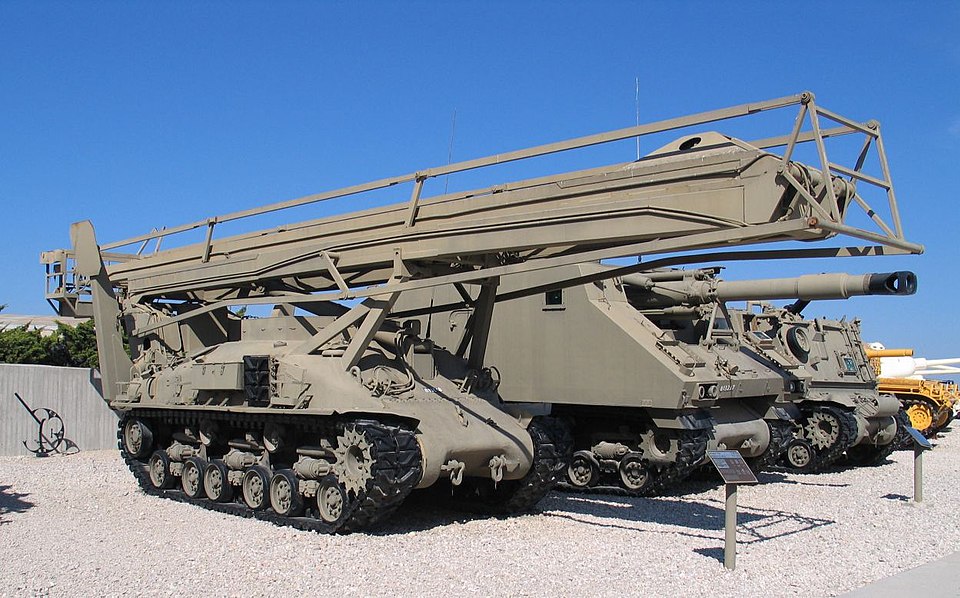
The available chassis were usable to carry this new howitzer, the M68 L-33 and a prototype self-propelled howitzer was designed by a joint team with SOLTAM in Israel, developed to provide self-propelled artillery support that Israeli army was lacking back in 1970. It was already clear in 1967 and that need had not been covered yet. The lack of suitable chassis but the Sherman gave the idea to base it on the chassis of vintage Sherman tanks. The first official vehicle name came from the barrel length of the ordnance and it was soon nicknamed "Ro'em" (Hebrew for "thunder maker") when adopted in 1973.The chassis of the L-33 Ro'Em is based on the M4A3E8 Sherman, fitted with a very large welded casemate structure providing the howitzer in its mount some limited traverse. Beyond it the entre vehicle was moved to either direction. The crew was quite large, 8 members total, with a tank driver and seven howitzer operators. It's unclear if they all sat inside the hull. The design of the vehicle is quite simple and denote of a quick adaptation: Instead of cutting down the sherman hull down to the lower chassis, a new casemate was mounted over the original hull, turret-less.
The final vehicle measured 6.40 m for the casemate alone, but 8.55 m overall when the howitzer was at 0° elevation forward. It had a width of 3.330 m and above 3.5 meters tall, making it quite unstable. Ground Clearance was the same ads the Sherman at 0.430 m with a track 2.108 m long, for a track Width of 584 mm and track on Ground of 3.740 m. Given its overall combat loaded weight of 41,500 kg its Ground Pressure was 0.83 kg/cm².
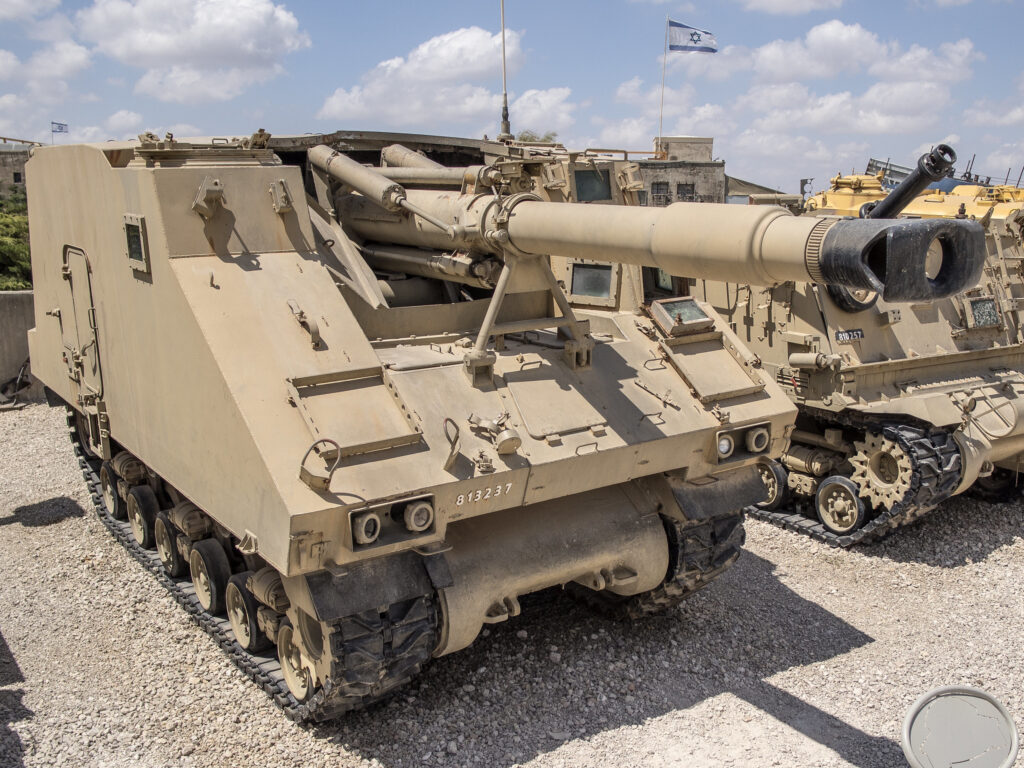
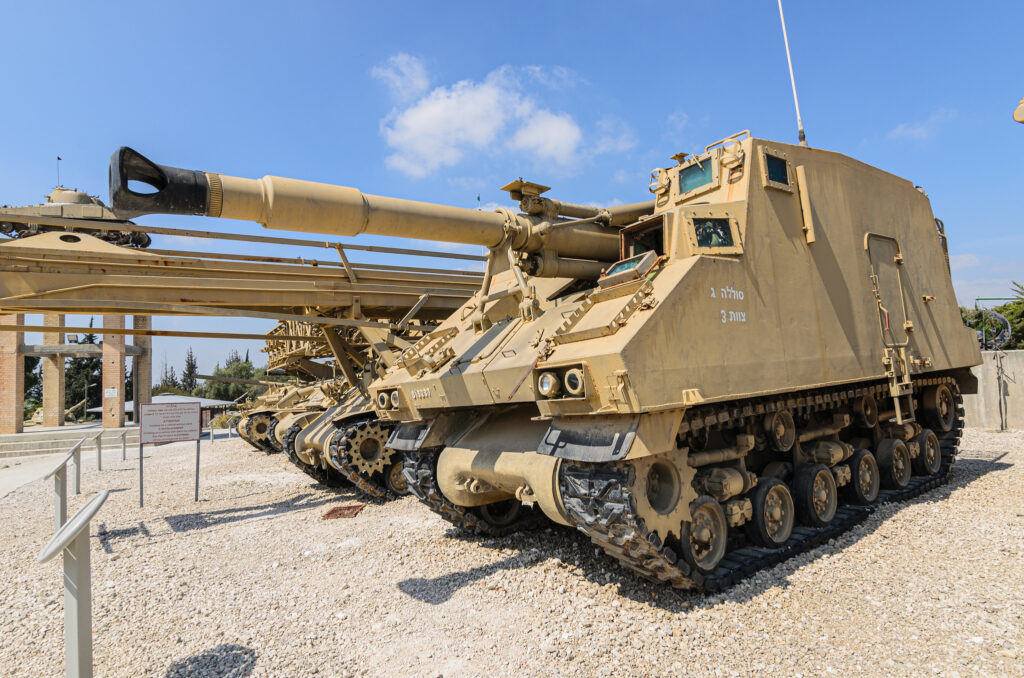
The former turret ring now integrated the base of the howitzer, and all its recoil cylinders and rear loading tray and breech were protruding at the rear. The boxy structure was entirely closed and comprised a two-seat right arrangement for the driver and commander which sat one ofter the other in superfiring positions. The gunner sar in a cabin on the other front side of the casemate, also with a hatch above and three windows. The boxy structure protruded forward, above the original tank nose. Access doors on both sides helped climbing in, and there was another hatch and door at the rear to eject spent casings. The rounds were mostly stacked lower in the casemate, with read-rounds at the rear.
Protection was good for the original Sherman chassis, especially forward, but the casemate itself was only proof against small arms fire and shell splinters, with around 8 mm of armour at all angles, albeit the casemate's nose was sloped for extra thickness and 12 mm thick. The chassis was protected forward at 62 mm cvast steel. There are no NBC system, smoke grenade dischargers or fire extinguishing system. The back plate of the casemate in addition of its two-doors and access ladder, had two meshed stowage bins either side of the doors. Their location, right above the engine and its cooling louvres excluded any rounds to be stored here as it was pretty hot.
Mobility
The chassis is the Sherman chassis, with apparently cast hull (M4A1) with HVSS suspension and new engine for better mobility. It was built onto M50/M51 hulls with the modernized Cummins VT-8-460Bi diesel that gave excellent performances despite greater weight, but it still had a low speed and range. Since it was a VVSS, it had relatively modern Vertical Volute Springs (1944) instead of the antiquated leaf spring bogies of initial models. This Cummins engine developed 460 brake horse power at 2600 rpm and parts were common with the M50, M51 and other Israeli Sherman variants which simplified logistics, having also a gearbox with five forward and one reverse gear. It had a top road speed of around 22 mph (36-37 km/h) only, range of 160 miles (260 km) on flat thanks to a diesel capacity of 820 L. Its Power/Weight ratio was 11.08 hp/t. It could ford 0.91 m of water, clear a vertical Obstacle 0.60 m tall, gap a trench 2.30 m wide and climb a gradient of 60%.Firepower
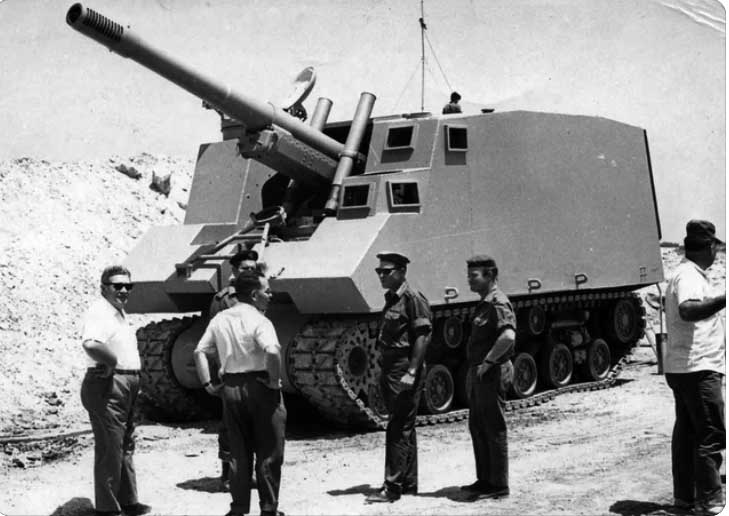
Ro'Em prototype testing a captured ISU-152 main gun
The L-33 as its name suggested mounted the 3 caliber SOLTAM 155mm ordnance derived from the standard M-68 towed gun with modification of the chassis to fit inside the hull. This howitzer has a maximum range of 21 km and best rate of fire of about 6 rpm. Its mount authorized an elevation of 52° and depression of -3° with a traverse of 60°, 30° either side, both elevation and traverse are manual. The Israeli managed to cram 60 round inside the hull on all aavailable spaces, of which 16 are ready rounds. The 155 mm caliber made it compatible with similar US and NATO rounds. It fired the M107 HE projectile up to a maximum velocity of 725 m/s, 9.14 Kg TNT warhead for an equivalent of 61mm of penetration. The barrel had single baffle muzzle brake, bore evacuator and a travel lock. Apart this howitzer, the crew og eight had their own small arms and a pintle-mounted 7.62mm machine for self-defense. The commander’s hatch indeed was provided with a gun ring, possibly string enough to mount a M-2 Browning .50 cal. but more commonly the FN-MAG 7.62 mm LMG with 1000 rounds were carried. The driver also had night vision capabilities with an IR optional vision block forward.
Active Service
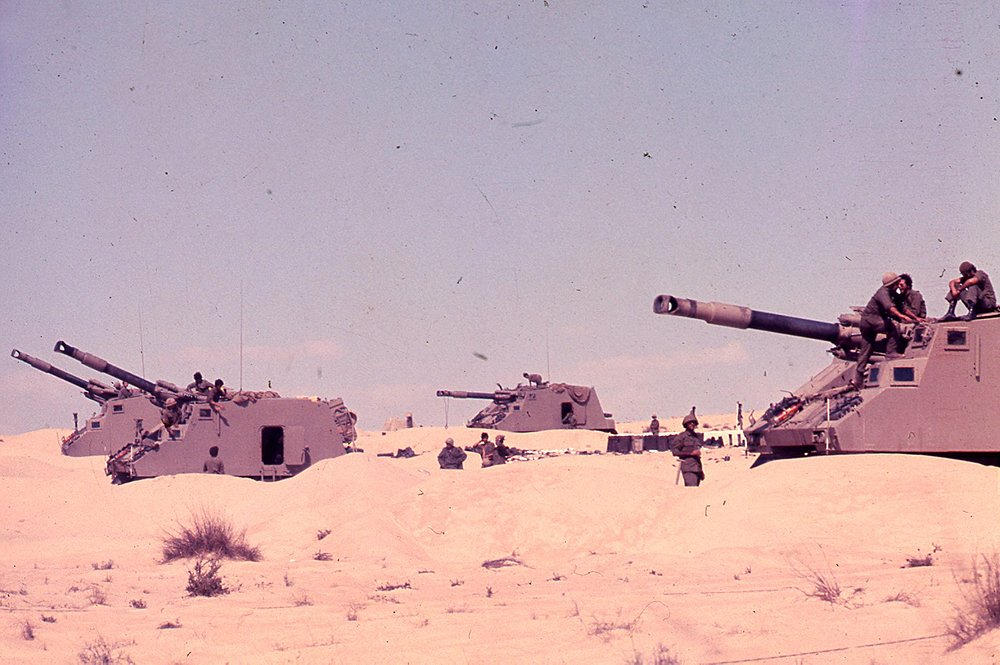
The L-33 was adopted by Israeli forces in 1973. It was used to equip a several artillery battalions throughout the country before the war, the exact number remainign debated to this day, with some sources stating as much as 200 Ro'Em were so converted. The Ro’em was barely in service when committed on the hard fighting of the Yom Kippur War in 1973. The staggering victories of 1948, 1956 and especially during Six-Day War of 1967 produced some complacency in the Israeli General Staff and this war was a reude awakening, with heavy losses, including among Israeli Tankers. L-33 Ro’ems were deployed both against the Syrian Army in the Golan Heights, and Egyptian Army in the Sinai Peninsula, helping stabilize the situation. L-33 artillery battalions were notably used when the IDF started counter-attacking Arab territorial seizures, helping recapturing the Golan Heights but Stubborn Egyptian resistance meant the L-33 SPGs were far more important to disloged them from fortfified positions in the Sinai.The war soon concluded, and the Ro'Em performed surprisingly well in these circumstances, albeit having many deficiencies, like the concpicuous casemate presenting a large target as well as its bulk, size and weight, even its overhang which limited its use on some terrains, especially when moving on slopes, it was slow, top-heavy, and unstable to the point of tipping over at extreme angles. It was also used latter conflicts, notably the war in Lebanon in the 1980s. With the introduction of the US M109 it went to the reserve role, then parked in storage, and never exported. Its end of service was probably in the 1990s.
L33 Ro'Em specifications | |
| Dimensions (l-w-h): | 6.40 m (8.55 m oa) x 3.3 m x 3.5m |
| Total weight, battle ready: | 41.5 Tons |
| Crew : | 8 (Driver, Gunner, Commander +5) |
| Propulsion: | Diesel Cummins VT8 460 hp, 11 hp/tonne |
| Suspensions: | Vertical Volute Springs |
| Top Speed | 36 kph (22 mph) road |
| Range | 260 km (160 mi) |
| Armament (see notes) | 1x 155 mm/33 Howitzer, 0.30-in M1919A4 or 7.62mm FN-MAG LMG |
| Armour | Casemate 0.3 in or 8mm max |
| Total Production | Estimated up to 200 |
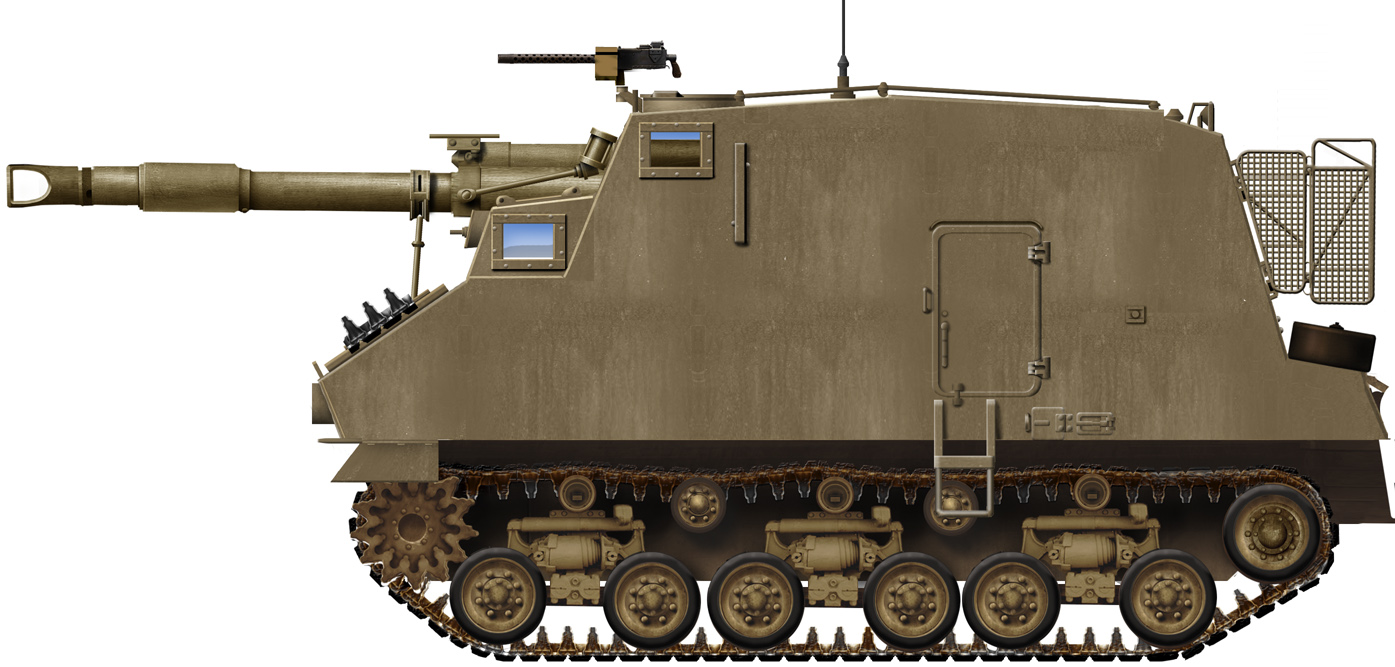
L33 Ro'Em in the Sinai, war of 1973
Links
armedconflicts.comweaponsparade.com/
bukvoed.livejournal.com
forum.warthunder.com
army-guide.com
heworldwars.net
tapatalk.com
en.wikipedia.org
weaponsystems.net
Video

Cold War Tanks


Cold war tanks posters
Cold War Main Battle Tanks
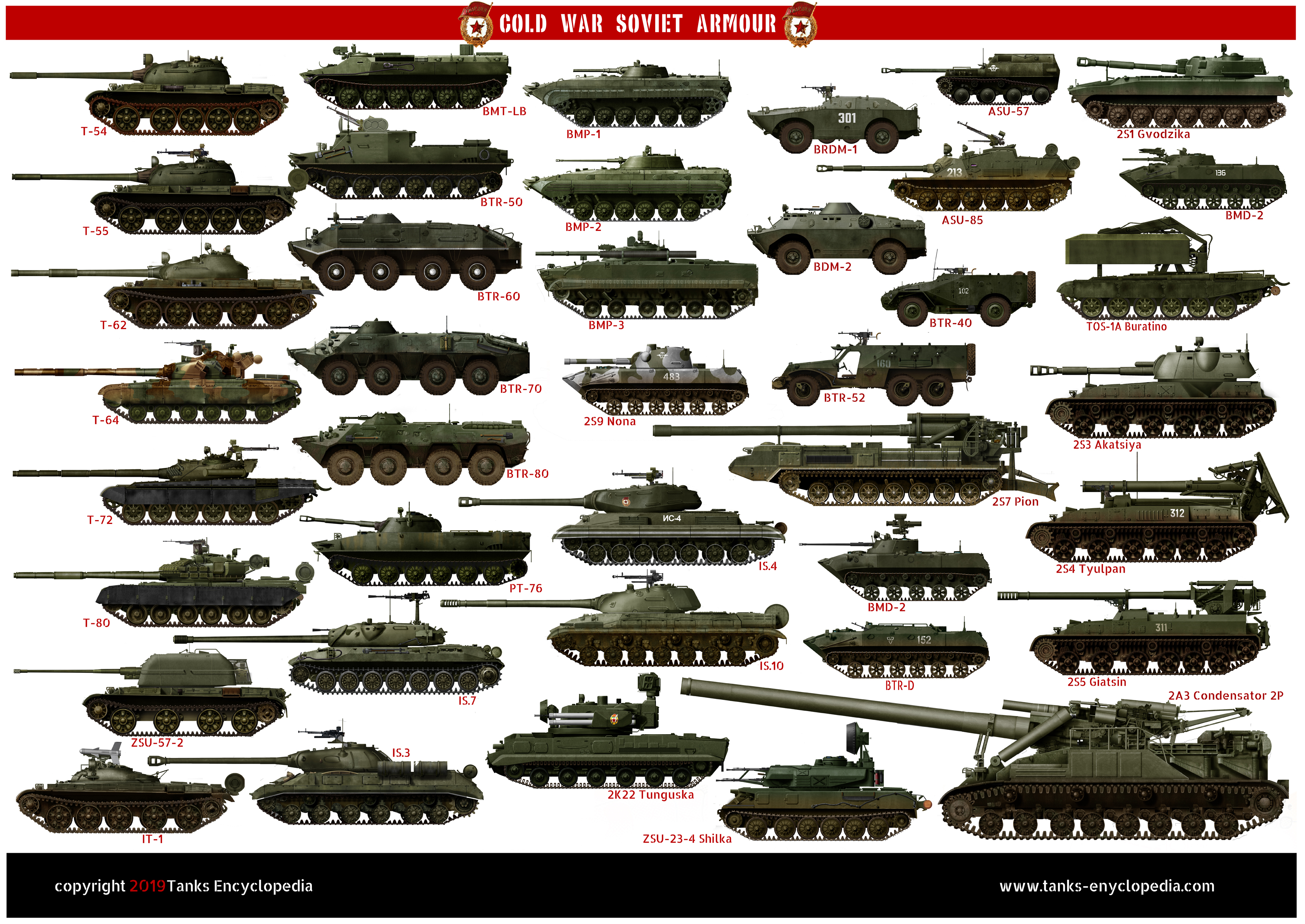
Cold War Soviet Army
Museums, Movies, Books & Games
The Tanks and Armor in pop culture
Tanks and armored vehicles in general are only really grasped when seen first person: The mass, the scale, it's all there. Explore also the way tanks were covered in the movie industry, in books and in video games.Movies:
Best tanks movie on warhistoryonline.com
On imdb.com
On bestsimilar.com/
miltours.com
liveabout.com/
watchmojo.com
Video Games:
pcgamesn.com
historyhit.com
levvvel.com
vg247.com/best-tank-games
mmobomb.com/
alienwarearena.com