Type 16 MCV
 Japan (2007-2016) 142 built 2020 (250 planned)
Specifications and Development
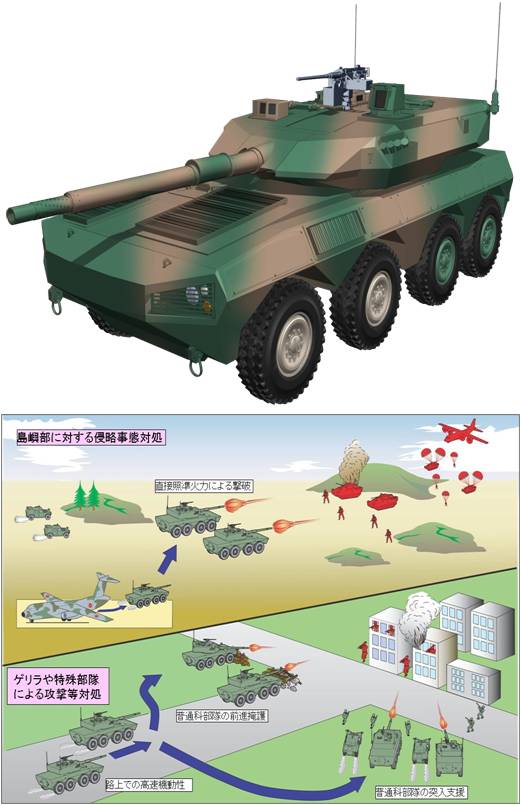
The vehicle was designed after a need was expressed by the JSDF in 2004 by TRDI (Technical Research & Development Institute) from 2007 onwards. It went on for about nine years, with trials and fixes, until greenlight by the army and officially in service by 2016 hence the Type 12 denomination. The manufacturing contract was awarded to Mitsubishi Heavy Industries without much surprise, as the main armoured vehicle provider of the Army. But before this, the first concept for a Japanese wheeled 105 mm cannon self-propelled vehicle appeared with the "Future Combat Vehicle" program in 2003. This was to be initially a universal wheeled chassis capable of mounting a 40 mm CTA cannon, 120 mm mortar, 155 mm howitzer, 105 mm cannon. However this program was cancelled for budgetary reasons, albeit the 105 mm cannon concept R&D was recycled into the Light Combat Vehicle Program.
The LCV program was a technology demonstrator for more concepts to be integrated into the MCV development like better resistance against IED and mine, or even individual motors inside of the wheels. Overall air transportability inside of a C-2 or C-130 Hercules was mandatory. There was also a concept of passive hydro-pneumatic suspension, notably to reduce gun recoil as well as a double action low recoil cannon for potential indirect fire in order to replace the 155 mm concept. The first studies showed a 6x6 design was possible with many compromies, until it was judged more profitable to go for a 8x8 design. The in-wheel engines was sropped as well as transport inside of the C-130 and indirect fire whereas IED and ATGM defence became optional. In the first plane a new V-shaped plate was to be mounted. Work started then on another project around 2006 concentrating everything about the LCV project.
The State-owned Technical Research & Development Institute of Japan, directly under the supervision of the Ministry of Defense made several test vehicles from the study, the first rolling on 2008. The fourth on 9 October 2013. JGSDF service Acceptance tests was pushed back to 2015, and the deplmoyment date was for 2016 with 99 MCVs originally ordered 2018. The program the became the "maneuver combat vehicle" in 2011. The MOD requested funding for 36 MCVs to be fielded in the 8th Division at Kumamoto and 14th Brigade at Zentsūji, planned for conversion to rapid reaction forces. By mid-2015 this was still under review and subject to revision. The idea was to have these two rapid reaction force to counter conventional incursions on the outer islands. But they would be used also in cooperation, as a counter-insurgency vehicle, facing asymmetrical attacks in urban areas in Japan. They were also developed to be used alongside special forces and intelligence operatives.
This new armored vehicle strategy prioritized air-transportability and firepower, notably to compensate the reduction of the park of main battle tanks from 760 to 390, to be concentrated solely at Hokkaido and Kyushu and thus about 200–300 MCVs would be kept in reserve, to be airlifted to islands when needed (An attack of China of Japanese Southern Islands was the lilely scenario). The vehicle could be redeployed quicker than main battle tanks, only moved on ships. That shift in the Japanese armored vehicle structure swapped to an invasion of Sakhalin or Hokkaido by the Soviets to a Chinese invasion of the southern island chain. The MCV was to be distributed to all existing divisions and brigades of the newly formed rapid reaction units, plus dedicated rapid reaction regiments with the LCV specifically to be dropped on these outer islands. By March 15, 2023, 250 MCVs were planned in total. So far 160+ are operational for 700 million yen (5.1 million USD) apiece.
Design
MCVs were designed as compact enough to fit inside a Kawasaki C-2 transport aircraft or by transport vessels to bring them independently, notably to the Okinawa Islands.General Layout
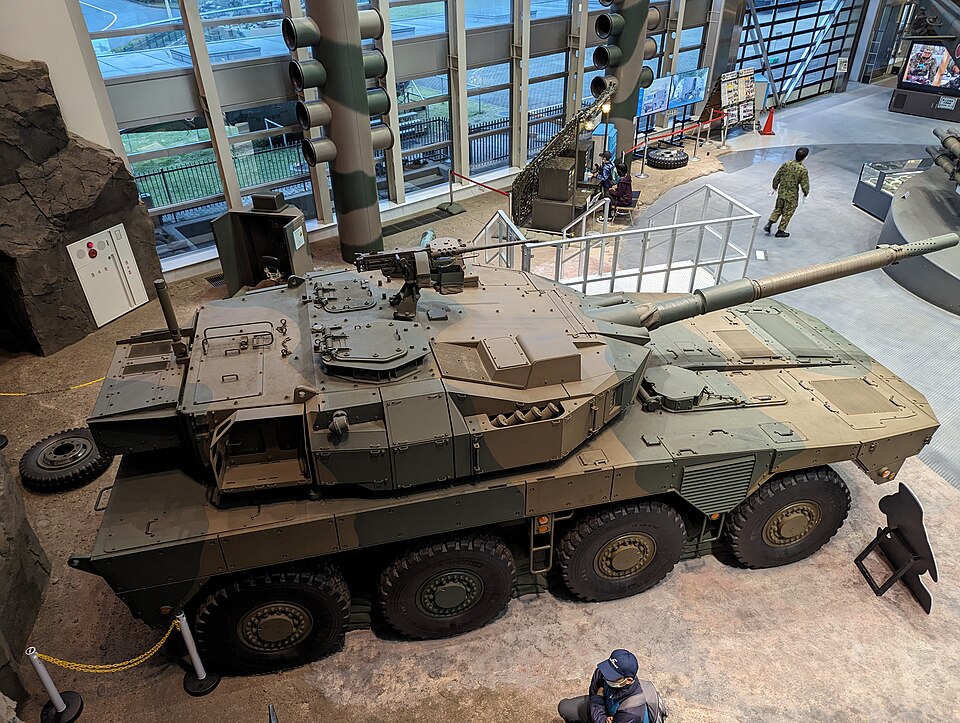
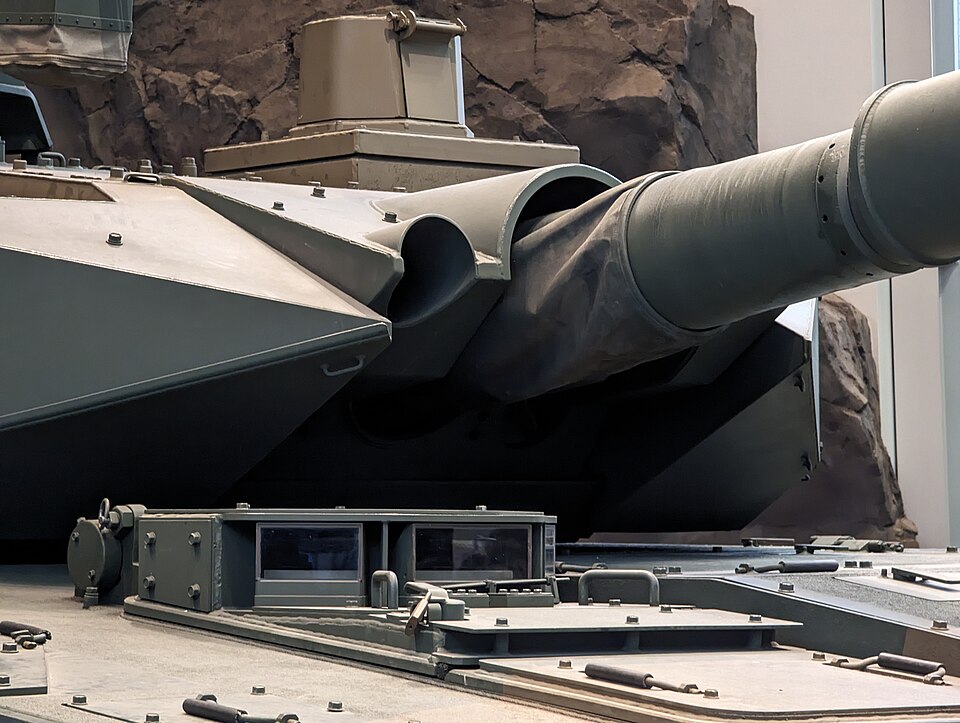
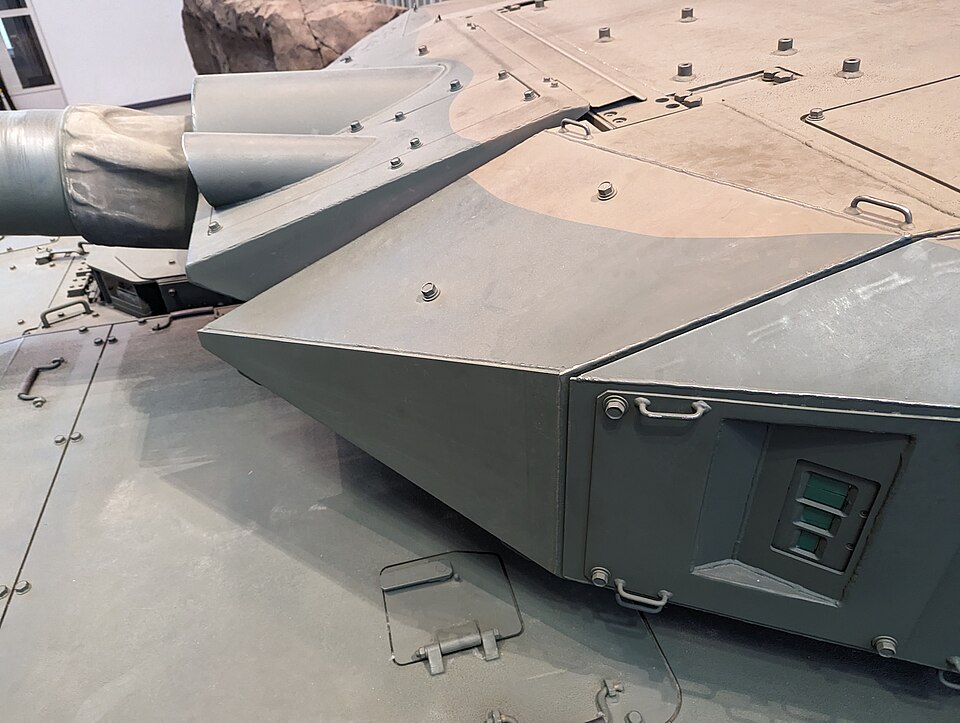
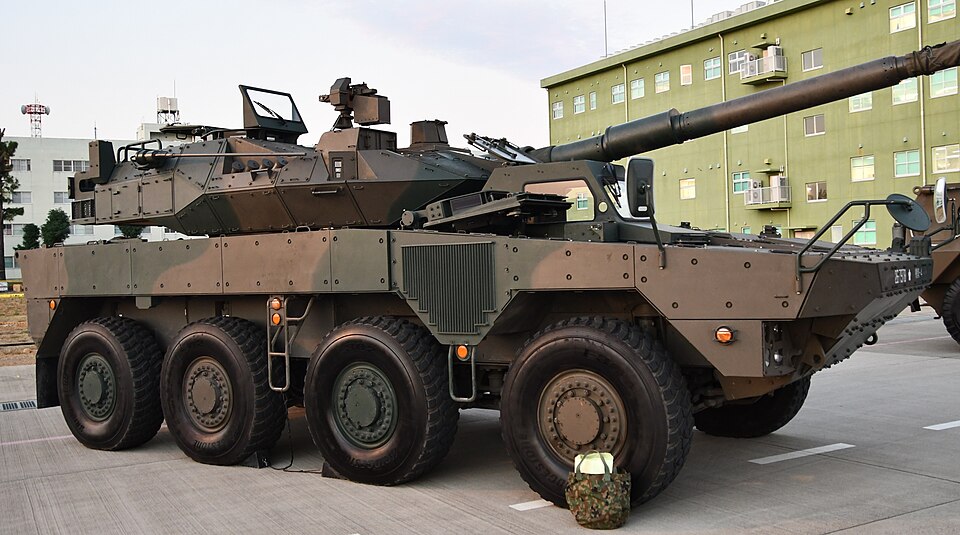
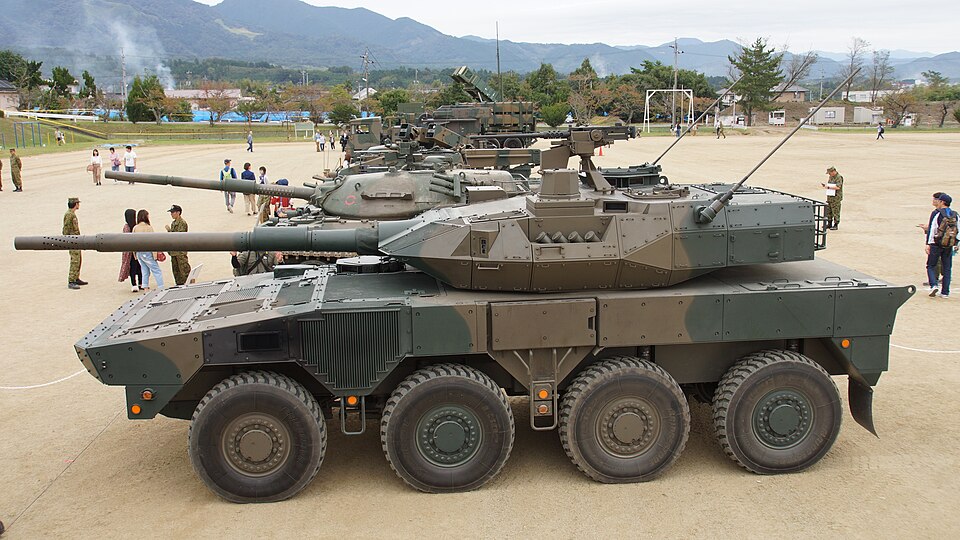
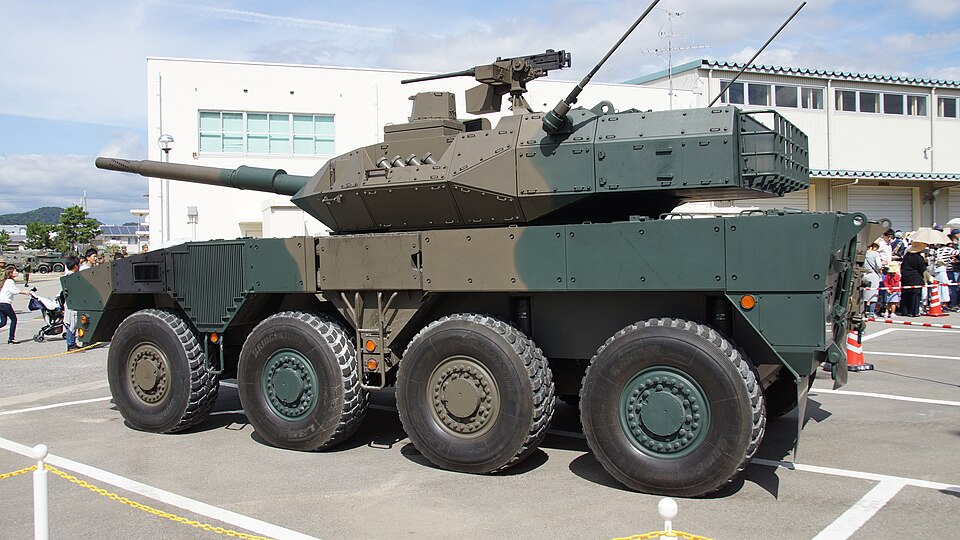
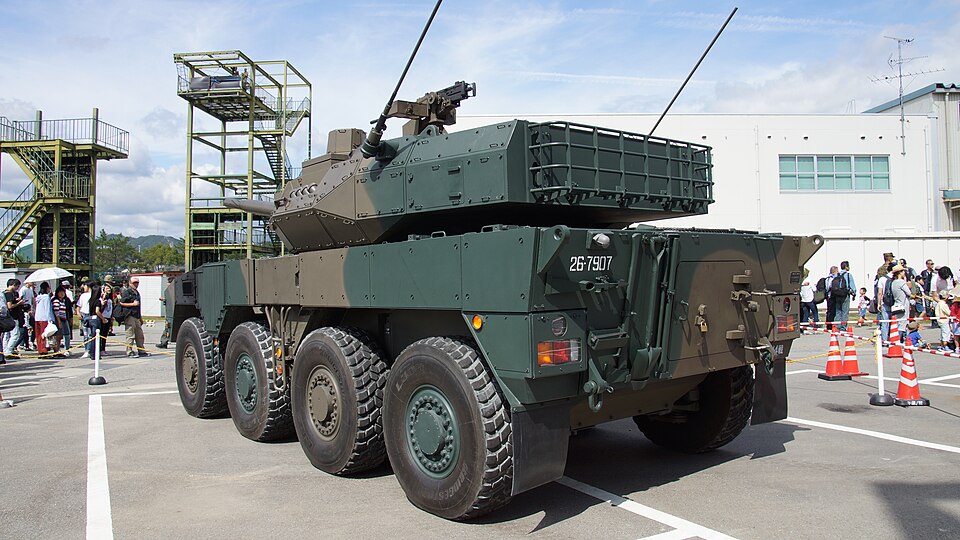
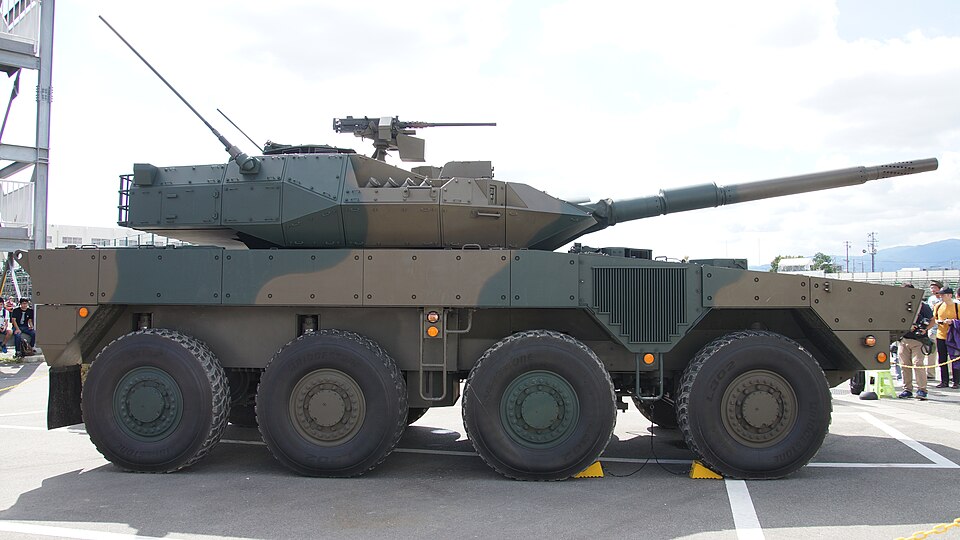
The vehicle has a relatively narrow hull, not very tall for the best ground clearance possible, with a lightly sloped nose, and flat sides. The engine compartment is located forward and to the left, exhausting through left side ventes, with hatches topped byt louvres. The transmission is mounted in front of the driver, which is seated on the center-right, close to the turret. He is given a two-piece hatche, one part slidgin to the right and another folding forward. When buttoned up he has three persicopes and the central one replaced if needed by an IR device. The turret ring is far away enough to enable the drive to enter and exit even if the gun is facing forward.
The other three members of the team are in the turret. The latter had a frontal wedge shape and is covered with modular armour blocks on all sides. The rear part is separated by a fireproof bulkhead (so does the engine from the driver and fighting compartment) and blo-out top panels, housing the ready ammunitions. The gunner is located forward of the turretj with a large gun sight, with IR and magnification, and the commander is seated behind, with a rear-folding hatch and peripheric cupola. The loader is on the right with a laser designator in front of his position, and side periscope.
Powerplant and Performances
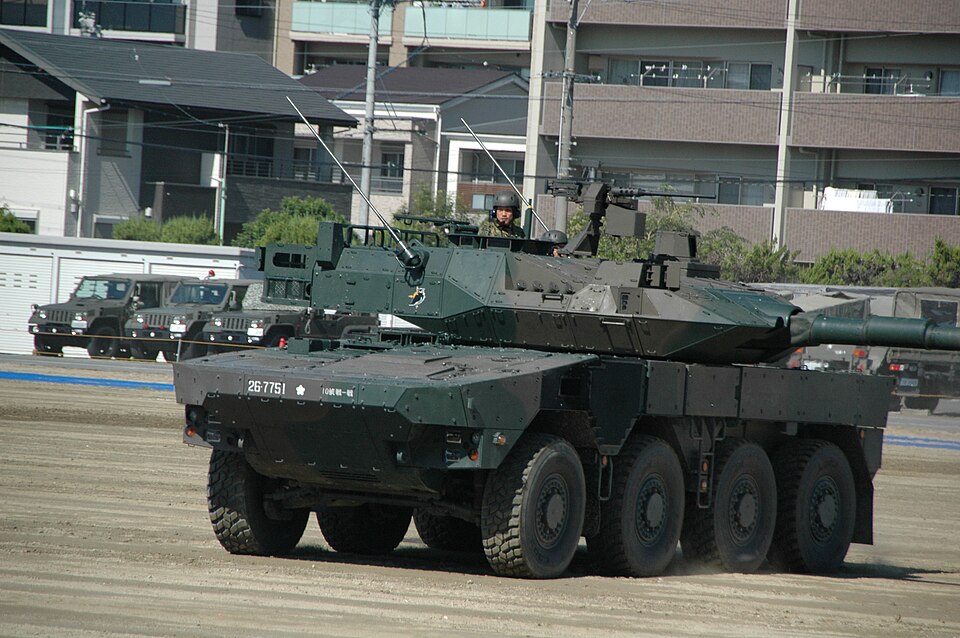
The front-mounted transverse engine is a 4-cylinder water-cooled turbocharged Mitsubishi diesel 11.3 litre rated for 570 hp (430 kW), making for a power to weight of 21.9 hp/tonne (26 tonnes mass). The suspension of this wheeled 8 x 8 chassis sees all four formward and aft axles directional, suspended by hydropneumatic suspensions of a simpler type than the one initially planned. Top speed is a respectable 100 km/h (62 mph) on road and flat surfaced, down to c60 kph on uneven terrain and an operational range of 400 km (250 mi) also depending on the terrain conditions.
This was criticized as being low, but the deployment method and island combat enviioned does not required a large range but to deal with a mountaineous terrain where MBTs are not favored, and deal notably with Chinese Light Tanks that are similarly armed. The vehicle is too heavy and compact for any buoyancy and no amphibious, but it can cross 1 meter of water without preparation, albeit not having a trim vane. If the MCV could be airlifted, the number of Kawasaki C2 is limited in Japanese inventory (15 available, 22 planned) and in case of rapid deployment, sustained rotations would be needed (and US help from Yokosuka AB notably). Max capacity of a C2 is 36t (limited to +2.25g) so only one MCV could be loaded and an LCV plus personal and supplies for both in one flight. Provided ten C2s are made available (due to maintenance rotation), only ten MCVs could be deployed at a time on any island.
Protection, Active and Passive
The passing protection is relatively light, against small arms only (STANAG 4569 Level 3) at all angles, and low resistance to mines and IEDs, with an optional extra protective belly (hence the great ground clearance) with some hints about the modular armour package comprising welded multi-layer steel armor like the Type 10 MBT possibly using nano-crystal steel with high matrix density plus carbon based-plastics and alloys of composites. Of course it's classified. However the package was designed to be upgradable depending on the threat expected, with armor upgrades to be installed forward resistant to 20mm or 30mm autocannons. There are also hints about a RPG protection. In 2009 indeed, this frontal armour package was designed to withstand HEAT rounds with the Carl Gustav M2 and regular kinetic ammunition. Side armor package could be mounted to defend against 14.5 mm heavy machine guns. For active protection, there are eight smoke dischargers, a laser warning system, and automatic fire extinguisher in the turret bustle, combat compartment, engine and transmission compartments. Given the absence of air conditioning, the vehicle is not NBC protected.Armament
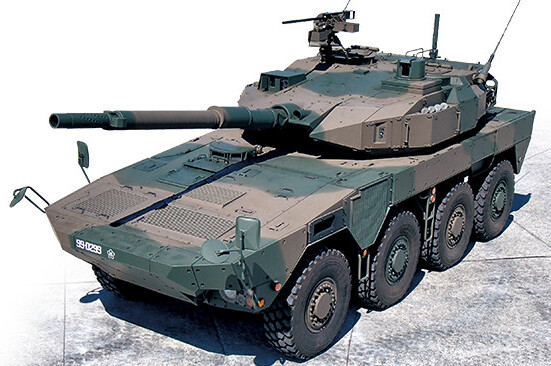
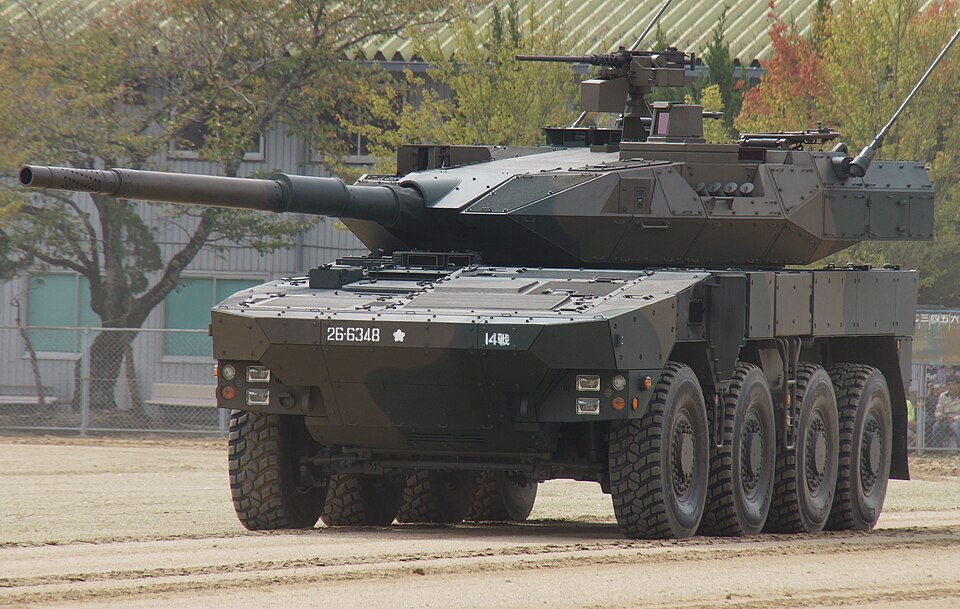
The centerprice of the design is the rifled 105 mm L/52 gun developed by Japan Steel Works, compatible was same-camiber NATO ammunitions in large stockpiles in Japan. This main gun is manually loaded as a cost-saving measure, but this was criticized in case of a use in hot climates or in summer in these southern islands, as putting a great strain on the crew since air conditioning was ommitted of the design for cost-saving measures.
The L/52 is nearly identical to the old Royal Ordnance L7, weighting around 1,300 kgs (3,000 Ibs) fir a barrel 5.89 m (19 ft 4 in) long. It fires a 105×617mmR Shell (4.13 in cal.) at max 10 rounds per minute and max range of 4,000 m (4,400 yd) with HASH rounds. Closer at 1,800 m (2,000 yd) the APDS is able to penetrate the armour of anyone of the latest Russian or Chinese Main Battle tanks. It was developed from the earlier JSW 105mm L7A1 L/51 licensed for the Type 74 MBT with an indigenous breech. In the MCV case, it has a also a tailored muzzle break.
Secondary armament comprises either a pintle-mounted 12.7 mm (0.5 in) M2 Browning machine gun in front of the commander's position. There is a 7.62 mm NATO coaxial Sumitomo Type 74 machine gun. The Browning M2 could be replaced by a single Type 96 40 mm Automatic grenade launcher or an FN Minimi 5.56 mm NATO light machine gun. For smoke concealment or firing anti-personal grenades there are two sets of four 76mm smoke projectors either side.
Type 16 MCV specifications | |
| Dimensions | 8.45 x 2.98 x 2.87m (27 ft 9 in x 9 ft 9 in x 9 ft 5 in) |
| Weight | 26 tonnes |
| Crew | 4: Driver, Commander, Gunner, Loader |
| Propulsion | 4-cyl. water-cooled TD 11.3 l. 570 hp (430 kW), 21.9 hp/t |
| Top speed | 100 km/h (62 mph) |
| Suspensions | Wheeled 8 x 8 Indep. Torsion Bar |
| Range (Fuel) | 400 km (250 mi) |
| Armament | 105 mm L/52 gun +12.7 mm M2 HMG +Type 96 40 mm AGL, see notes. |
| Armor | 13-20mm RHA, see notes |
| Production | 147 |
Deployment
So far, the MCV is present and assigned to the following:- 11th Brigade (10th Rapid Deployment Regiment)
- 5th Brigade (6th Rapid Deployment Regiment)
- 2nd Division (3rd Rapid Deployment Regiment)
- 6th Division: 22nd Rapid Deployment Regiment
- 9th Division: 9th Reconnaissance Combat Battalion
- 1st Division: 1st Reconnaissance Combat Battalion
- 12th Brigade: 12nd Reconnaissance Combat Battalion
- 3rd Division: 3rd Reconnaissance Combat Battalion
- 10th Division: 10th Reconnaissance Combat Battalion
- 13th Brigade: 13th Reconnaissance Combat Battalion
- 14th Brigade: 15th Rapid Deployment Regiment
- 4th Division: 4th Reconnaissance Combat Battalion
- 8th Division: 42nd Rapid Deployment Regiment
- JGSDF Fuji School (Combined Training) Brigade: Armored (Advanced) School Regiment
Northern Army:
North Eastern Army
Eastern Army
Central Army
Western Army
JGSDF Fuji School
The 2019 Competition
In June 2014, Mitsubishi Heavy Industries unveiled the MAV (Mitsubishi Armored Vehicle) at Eurosatory, France. A private-venture it is based on the Type 16 MCV as a prototype for testing, to be more modular, as an Armoured Personnel Carrier (APC) variant measuring 8 metres by 2.98 metres by 2.2 metres in height and 18 tonnes without addon protection and a max possible of 28 tonnes, featuring slat armour and all options, fulluy loaded. It was improved to resist landmines and IEDs with floating seats inside and V-shaped add-on armour. This APC carries 11 including commander and driver. Variants under consideration includes and ambulance, a C2 vehicle with a higher cabin roof. Mitsubishi markets the “Common Tactical Wheeled Vehicle” to standardise platforms based on the Type 16, notably a new infantry fighting vehicle with a 30mm autocannon, a self-propelled 120mm mortar already tested back in September 2022. In 2023 there was a reconnaissance combat vehicle with a 30mm cannon and retractable surveillance sensor, satcom.On 31 August 2023, the MoD budgeted FY2024 for the order to mitsubishi of 24 IFV, eight SP mortar vehicles. These are three MAV-based variants such as the “Type 24 Wheeled Armoured Combat Vehicle” (infantry fighting vehicle) and “Type 24 Wheeled 120mm Mobile Mortar” in the new Common Tactical Wheeled Vehicle. Both were seen at the 2025 Fuji Firepower exercises. The cancellation of the “Improved Wheeled Armoured Vehicle” programme to replace the Type 96 Wheeled Armoured Personnel Carrier led to a new budget of 2.1 billion yen to test new wheeled vehicles and by 10 September 2019, trials pitted the prototype from Mitsubishi, the Finnish Patria AMV and US (GLDS) LAV 6.0. But on 9 December 2022 the Patria AMV was selected for adoption.
Gallery
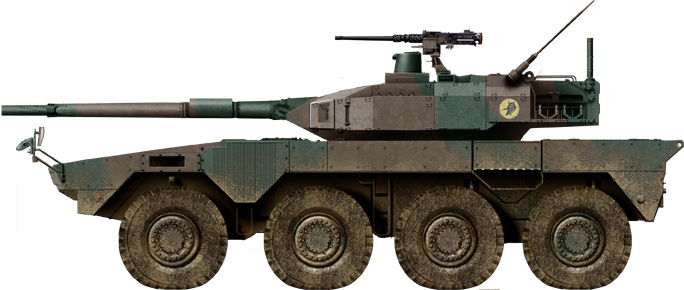
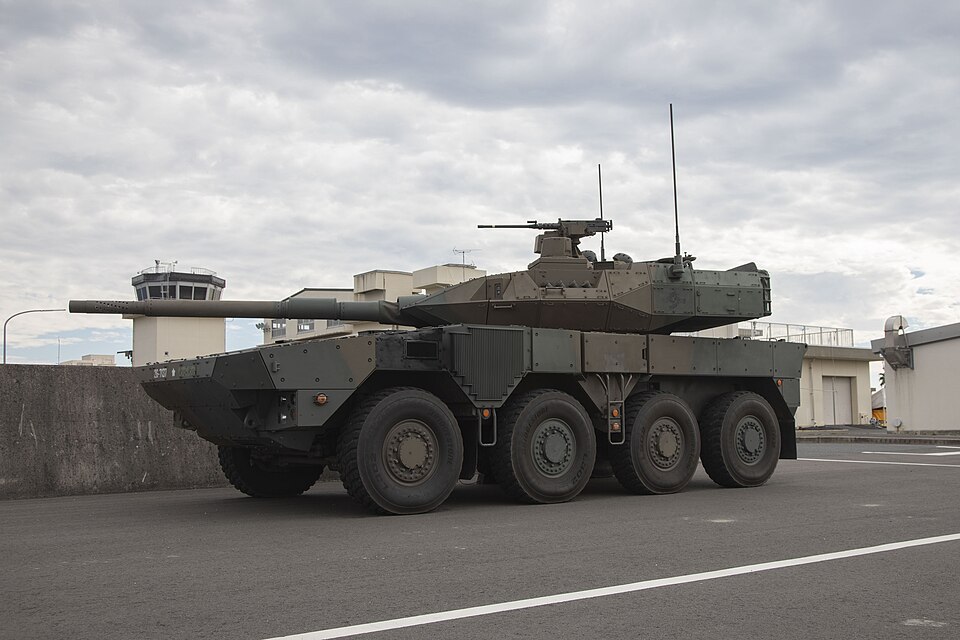
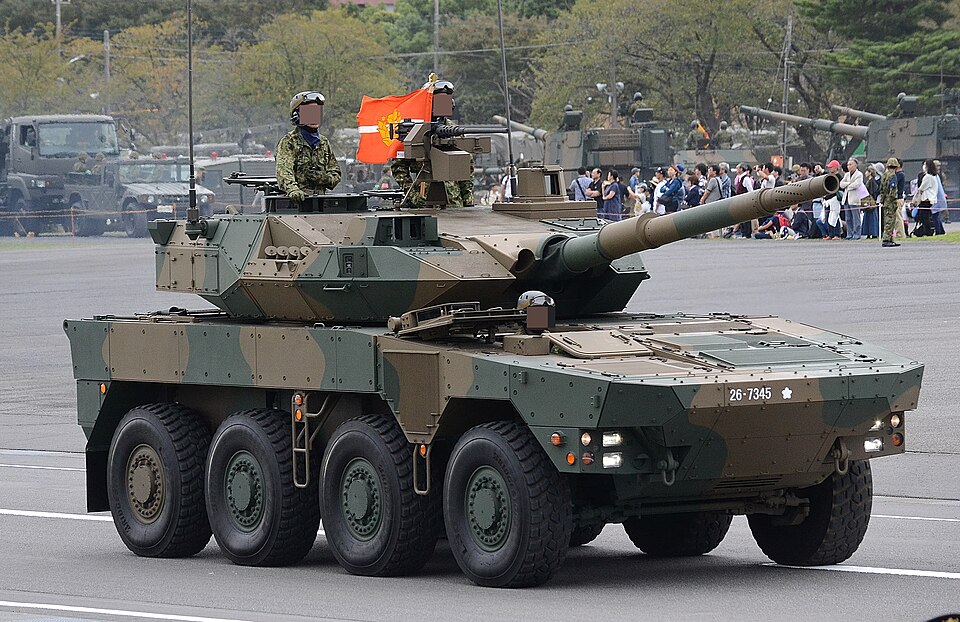
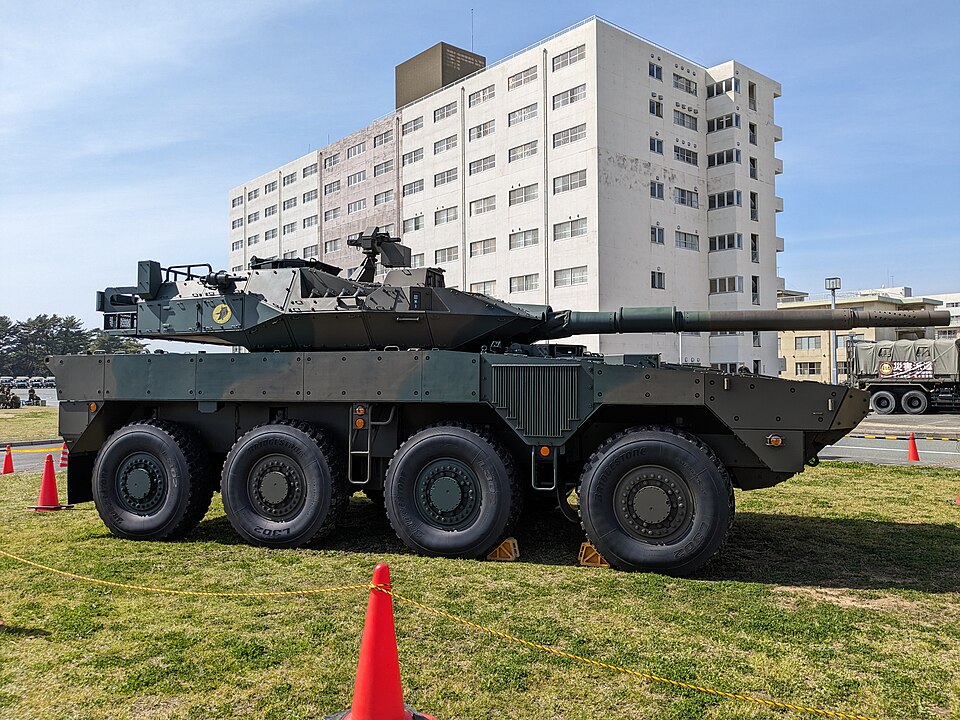
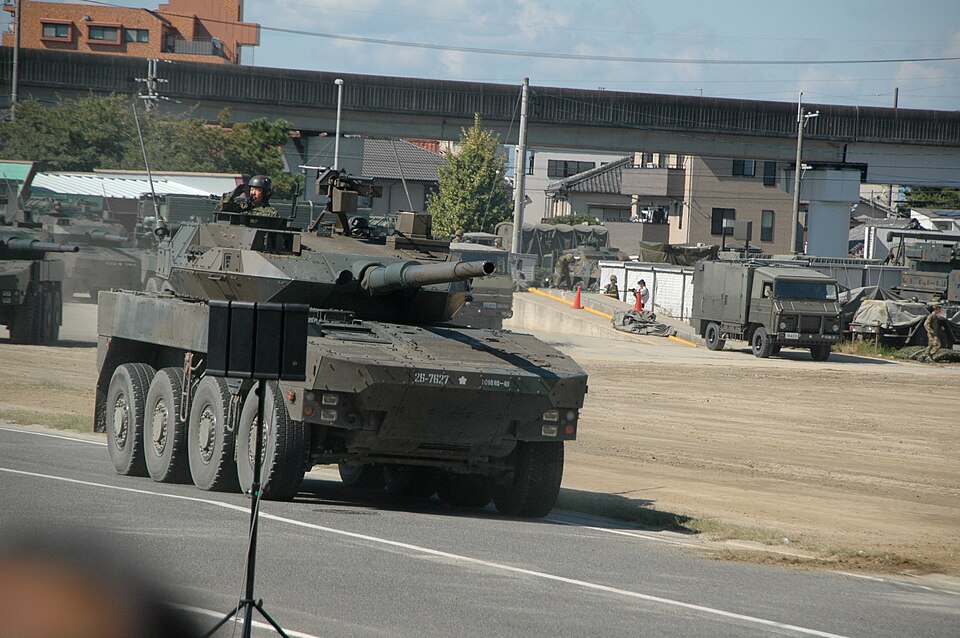
Type 16 MCV of Tokoyama Base
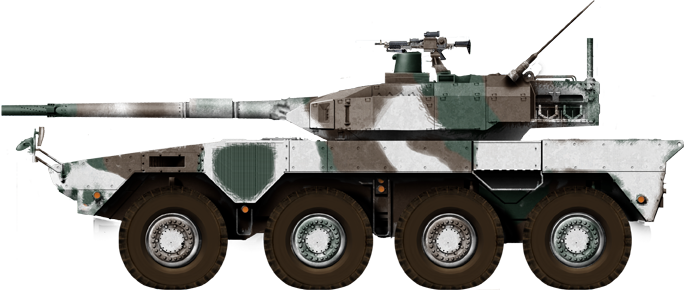
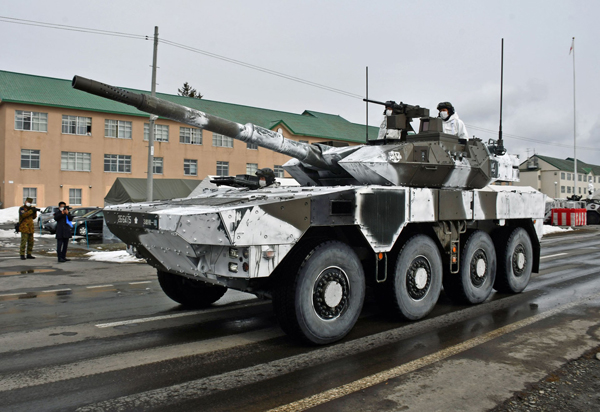
Type 16 MCV of the 3rd Rapid Deployment with their winter livery

Type Type 16 MCV links & resources
The Type 16 MCV on WikipediaOn Tank Encyclopedia (2018)
army-guide.com
weaponsystems.net
globalsecurity.org
armyrecognition.com
militaryfactory.com
commons.wikimedia.org
Kawasaki C2
Modern Tanks


Modern MBTs posters
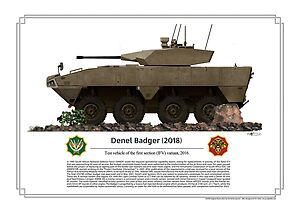
Denel Bagder (2018)
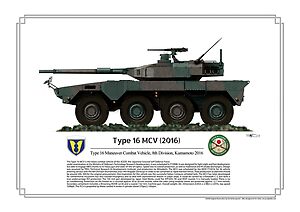
Type 16 MCV (2016)
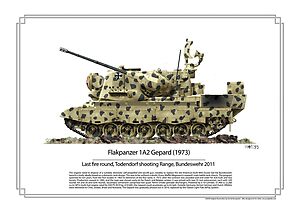
Gepard 1A2 last rounds 2011
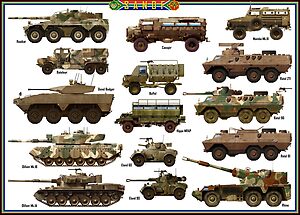
SANDF
Russian AFVs
Main Battle Tanks