TM-170
 West Germany - APC/Police Vehicle: 500+ Vehicles
Development
Around 370 TM-170 were produced in total and it was selected by the German Border Guard (Bundesgrenzschutz) and state police forces, to replace the Swiss-origin MOWAG MR 8 series. These were simple 4x4 wheeled APCs, dubbed "special vehicles" and designated SW1 and SW2. The TM 170 on its own, in this role, was designated the SW4 or Sonderwagen 4. The intermediate SW3 being was a ditectly armoured version of the Mercedes-Benz G-Class. The first order for 87 vehicles SW-4 were placed in July 1982 and deliveries running from 1983. It was officially in service by 1984. However its development went back to 1978 and it was first annouced back for the first time the same year in 1978 wth the first prototype ready and tested in 1979.The vehicle was originally designed primarily as an armoured personnel carrier, with a secondary role as internal security vehicle. However through its modular approach, it could be adapted for a wide range of other roles. It was notably specialized as an armoured ambulance, anti-tank vehicle, command post vehicle and reconnaissance vehicle. The TM 170 was selected by the German Border Guard and state police to replace the MOWAG MR 8 as seen above, and its first order for 87 was placed in July 1982, deliveries running from 1983. By mid-2003, 380 had been manufactured when the line stopped, both for home and export. The most recent acquisition of the TM 170s had been Kuwait, with 15 vehicles delivered in 1993.
In its police rome, the TM-170 was tailored for Public Order and Crowd Control, by Police forces. In Germany it is the Bereitschaftspolizei of state police forces, operating notably as airport security enforcement and under the supervision of the Federal Police or Bundespolizei. The former Bundesgrenzschutz was renamed into Bundespolizei in 2005. In total it acquired a park of 121 TM 170s, all since the 2010s phased out of service. In 1995/1996, these vehicles were transferred from the Federal Border Guard to the German Armed Forces, which initially intended to have them named "Hermelin" (German for). However, the Army decided instead to have them sold after negociations to North Macedonia instead. The German Federal Police planning to decommission the SW 4 to be replaced by Mowag Eagle IV and LAPV Enok 6.1. In 2019, the German Federal Police still possessed forty-six SW 4s in inventory. However the vehicle is sitll actively used by many militaries, police authorities and private companies.
Design
Hull and general layout
What is now a Rheinmetall Landsystems vehicle (originally Thyssen Henschel) was originally like the UR-416, based on the much lenghtened chassis of a Mercedes-Benz UNIMOG (4×4) cross-country vehicle. It's the success of the latter on export that motivated a reboot of the concept, using is excellent 4x4 capabilities. It does not only shared its chassis but also most of its Unimog parts and components. The hull of the TM 170 was however manufactured in all-welded steel into a monocoque design, providing protection from small arms fire and shell splinters only. The driver and co-driver sat in the forward cab, with sloped facets on the nose, and typically sloped flanks at 90° to deflect small arms fire. Righ behind them and un-separated was the main troop compartment. Also behind the driver and co-driver is located the one-man (standing) turret. The forward cabin has a split windshield with standard glaass, wipers, and two side windows with extra frame and folding panels for bullet protection. There is a rear roof hatch and a door in the sloped downards back panel. On both sides of the rear compartments are located two port pistols with one more on the back plate.The Driver sits on the left, commander to his right on the froward cab, behind the large windscreen. The front windshield and side windows as seen are coverable by individually operated armoured shutters hinged at the bottom. On top of the cab are located three roof-mounted day periscopes for observatio to continue monitoring when the armoured windscreen shutters are all up. Over each driver and commander's positions are located roof single-piece hatch cover, opening to the rear. The rear compartment is fitted with two side seating racks that could accomodate a maximum of five infantry or personal seated either side and facing inwards. This could be 10 fully equipped troops, all having their own individual seats. In addition to the doors one either side of the hull, opening on a hydraulic gimble, parallel to the body behind the cab. Each has a small shutter usable as firing port.
The vehicle was designed as modular, and could be fitted with the following in option:
-Auxiliary heater
-Fire warning and extinguishing system
-Hydraulically operated 5,000 kg capacity winch with 40 m, 13 mm diameter cable
-A public address system wirth loudspeakers on the roof
-Police flashing lights and extra cameras
-Mesh for the forward and side windows
-A radio, and an NBC filtering system
-Run-flat tyres, with a central inflation system.
The standard version is not amphibious but could ford about 1 meter of water without preparation, but it has not propeller or trim vane and the hull is not sealed. However a fully amphibious version was developed and marketed, but none were sold. The SW 4 also has for police and crowd control the multi-purpose attachment (MZA), fitted with a sighting device inside the vehicle. The MZA could use spotlights. Theere is also a dozer blade that can be operated from inside the vehicle to break barricades. The windows framed glass protection are available in steel and plexiglass, further protected the armored glass. The optional NBC protection uses overpressure and a an air compressor and filter. In addition in the crowd-control version there is a single-tube launcher for smoke grenades on the roof. Some also comes with a blackout lighting system.
Protection
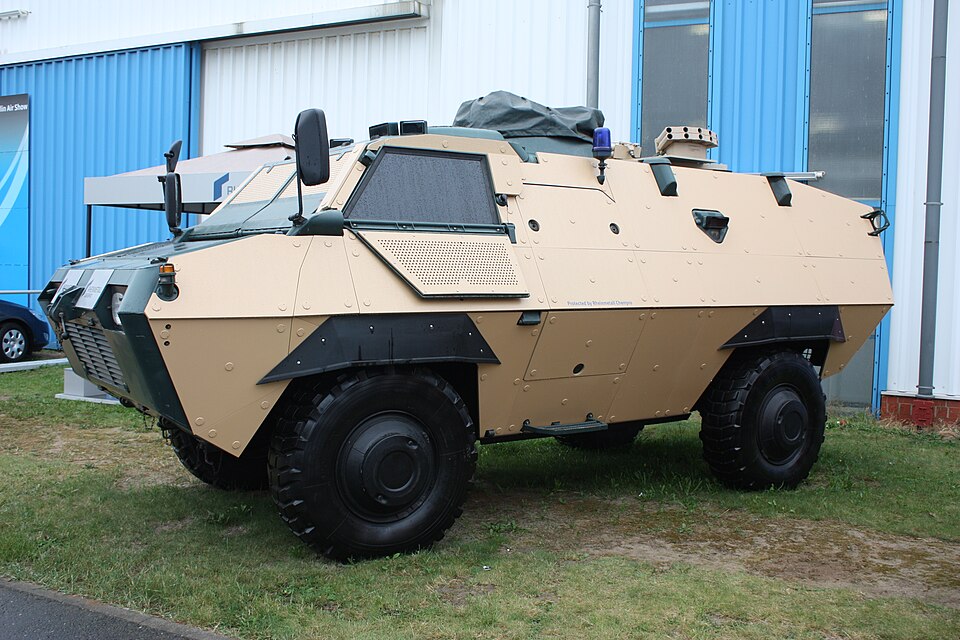
Up-armoured variant developed by Rheinmetall and Chempro
The hull of the TM 170 as seen above ois made of an all-welded steel cell, approx 5-6 mm thick with the slopes adding to ther artificial thickness for a a full protection against small arms fire (up to 8mm or 0.3 inches) and shell splinters. The engine is located in the nose like a standard truck and unlike a common APC (often on the side and middle). So the commander and driver sat behind the engine, with the troop compartment following immediately at its rear. The body is attached to the chassis at five points, by gimbal mounts. This enables to remove it quickly, to be lifted for repair/maintenance/overhaul or change modules and roles, as well as the engine. As seen above, these is an optional NBC protection. The back plate is topped by a hatch at the rear of the hull, folding downwards outwards. The forward ad side glass are all bulletproof. Later Thyssenkrupp worked on an armoured Special Vehicle TM 170 Hardliner which possessed features comparable to the TM 170 BGS. The entire hull could be covered wtith bolted or swivel-type add-on armoured plates.
Armament
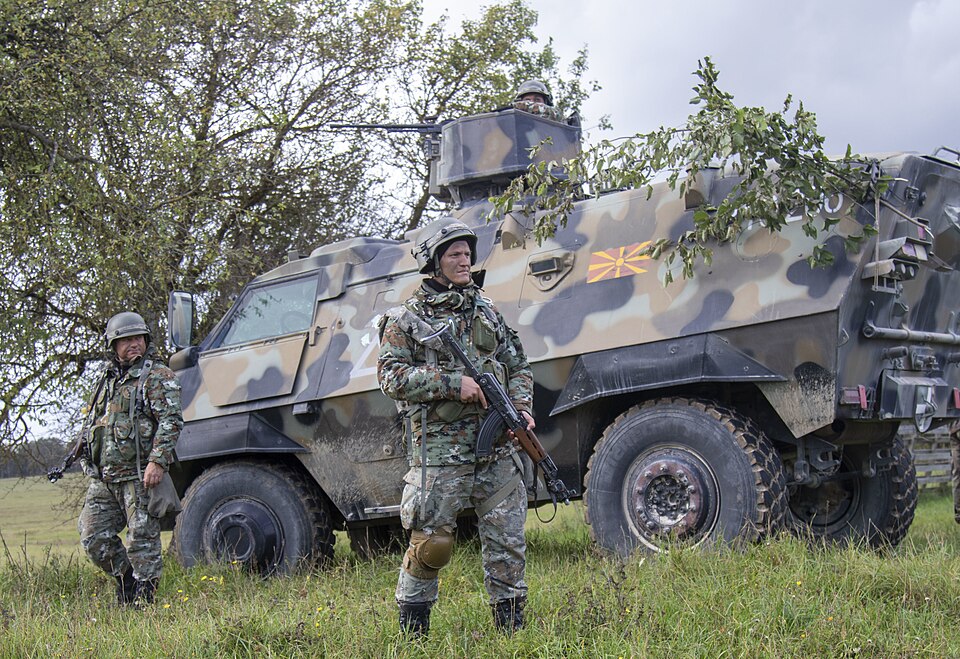
North Macedonian spec. force "Tiger" vehucle (Ex. saber junction)
The back door has a centrally mounted vision block with ball gun port underneath and small firing port. The same is repeated on either side of the hull, each with a firing port and vision block with ball mount underneath. The latter is compatible with standard small arms, making for three gun positions from within the vehicle, generally for a SMG having a traverse of 16° left and right, elevation of +23°, depression of -8°. The centre of the roof and its large circular single-piece hatch where a variety of armament installations can be mounted.
Thus, in addition to two small arms, the vehicle has a turret with a pintle or ring-mounted standard (7.62 mm) machine gun. The turret was made by Kuka, now Rheinmetall Landsysteme and could be modified to also received up to a 20 mm or even 25 mm Rheinmetall cannons. This turret would received side and back cover for the user, and be armed with 7.62 mm or 12.7 mm machine guns. Although not a weapon per se, when used for riot control, the TM 170 could receive a 1,000 litre water tank and CN/CS gas tank for a water cannon that could eject water/gas mixture up to 50 m at 360°.
The North Macedonian Army APC was armed with a single "PKT" light machine gun at 7,62 mm with standard ammunition 7,62 x 54 R with a -10/+60 degree elevation and depression. Ballistic protection combines steel, ceramic and composite materials. The protection area over the cupola is about 0,7 m2. The forward nose can resist heavy MG fire (12,7mm) and AP rounds of all calibers. The main headlight joint to the LMG line of sight can light up over 400 m. On the right side, the North Macedonian vehicle has a bank of three smoke grenade dischargers of the type 902B "TUCHA" angled at 45°. It could create a smoke screen 200-300m around lasting for up to 2 minutes.
Mobility
The Mercedes engine forward is coupled to a manual gearbox, with the driver able to select either 4×4 drive off-road or 4×2 drive for roads with a differential lock. As sais above, these vehicle are of the run-flat type with special tyres as standard and they have an exhaust outlet on the left rear side of the hull, high enough. All vehicle types have a fording depth of 1.3 m. As well as the standard version of the TM 170 a fully amphibious version was developed and marketed, fitted with a trim vane and stowed when travelling. When afloat the amphibian version has a swimming top speed of 10 km/h, powered two hydraulically operated propellers that could traverse a full 360°. Its size and weight made it compatible with most airlifters in service.Variants
TM 170 A8 airport surveillance
This version was developed for the surveillance of high-value strategic areas, such as airbases, airports, as well as public and government buildings. They have video-recording units for day and night observation, radio sets and information decoder. The day/night camera is located on a telescopic arm to see above the vegetation or a wall at 6 m above the ground.TM 170 M3
The final production model was announced in 1993. Improvements consists of a new Mercedes-Benz OM 366 LA EURO 1 turbocharged 6-cylinder in-line diesel, with direct injection rated for 214 hp for a top speed flat of 100 km/h. The fuel tank holds 170 litres for a range of about 680 km. Other specifications are like the standard TM 170 vehicle, run-flat tyres, air conditioning, independent heater in crew compartment, automatic fire warning and extinguishing system, Public address system with siren and blue flashing light, NBC, Hydraulic winch, front-mounted dozer blade, protection mesh, Searchlight, tear gas/smoke grenade launchers.Barracuda APC
Daewoo Heavy Industries & Machinery Ltd of the Republic of Korea make a very similar vehicle called the Barracuda. Full details of this are given in a separate entry. This has been produced for home and export markets.Operators & Services
The German Border Guard was given delivery of 121 TM 170, handed over to the German Army and then to North Macedonia, 115 in 1999 and 105 in 2000, referred to as the "Hermelin" ((Stoat/Ermine). UN reports pointed out Kuwait as a buyer for fifteen TM 170 in 1993. Production is complete and the vehicle longer marketed as of 2025. The more recent Condor replaces it.Thyssen Henschel
 Austria: Federal Police, unknown numbers.
 Egypt: Reported to have 25 TM-170s.
 Germany: Formerly used by German law enforcement and Bundesgrenzschutz.
 2 Icelandic SAR association (donated 2001) for high wind rescue missions at Akranes and Öræfi ("dragon" and "taliban")
 Kuwaiti Army (15 to confirm obtained in 1993)
 Luxembourg, Grand Ducal Police.
 North Macedonia, 115 transferred 1999, 105 in 2000 from germany. 100 serviceable in the special force Unit "Tiger".
South Korean Production
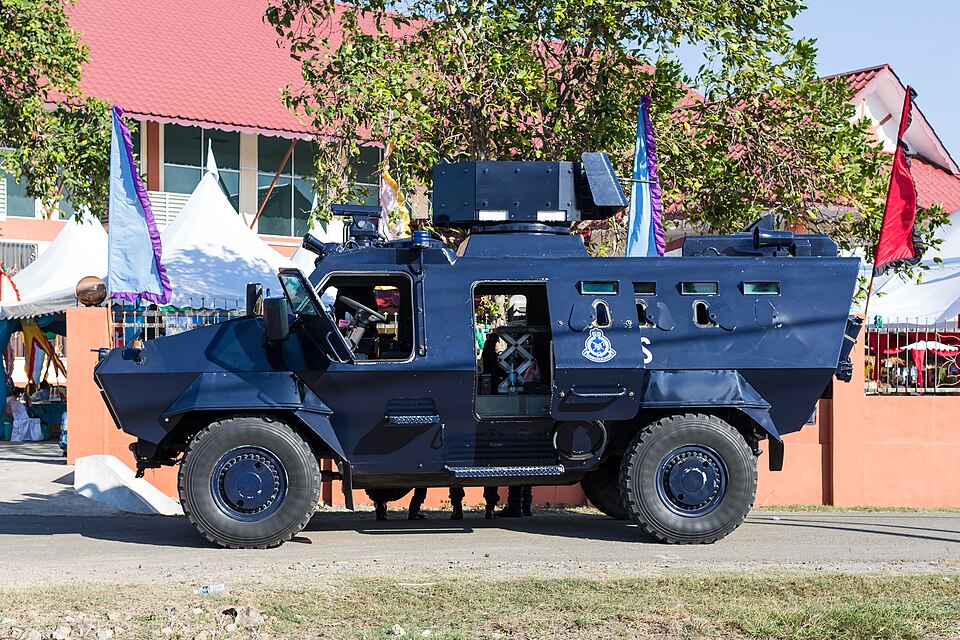
Barracuda of Indonesia
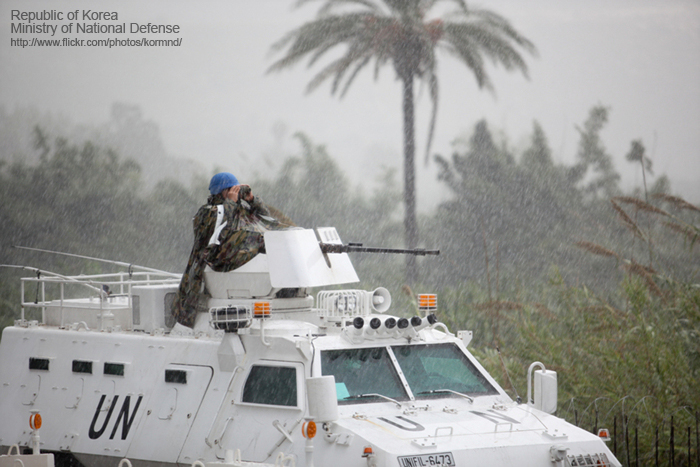
South Korean vehicle in UN livery
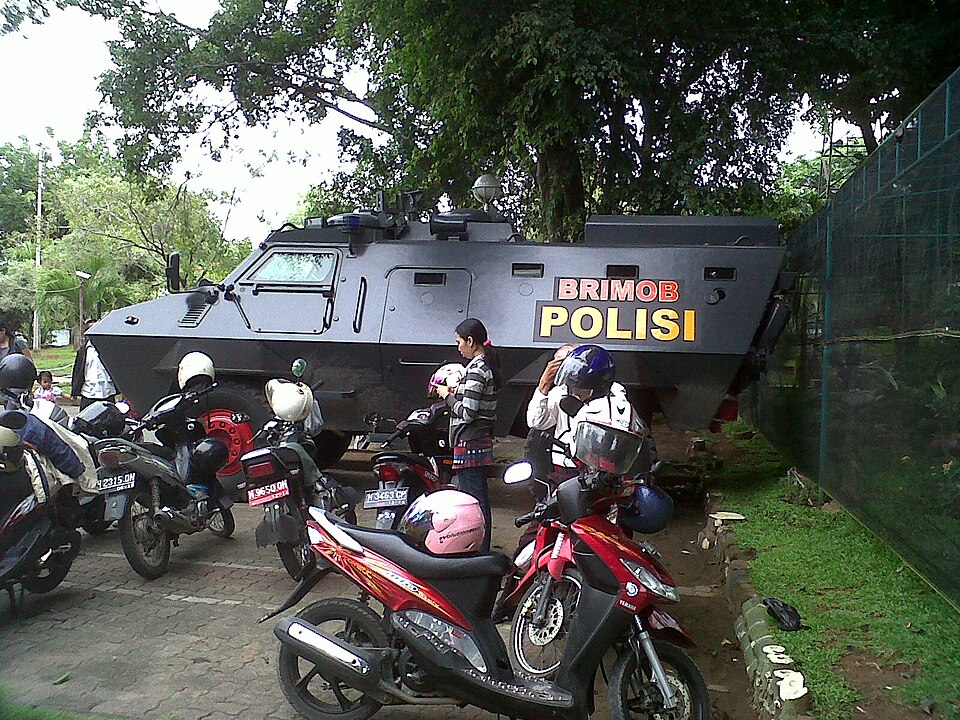
Indonesian Barracuda with its water cannon
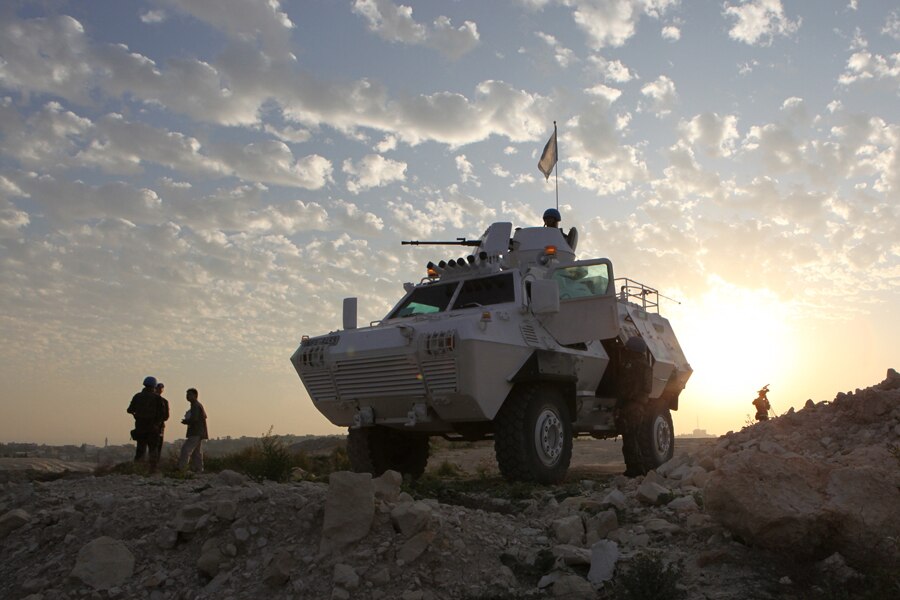
S. Korean vehicle (UN) of the Dong Myung Unit in Lebanon
South Korean Doosan Infracore Defense Products, affiliated to Hyundai and Shinjeong as well as Korea Vehicle Corporate started producing copies of the TM-170 in the 1980s with unclear licence arrangements. Doosan offers the vehicle as the "Barracuda", Shinjeong markest it as the S-5, Korea Vehicle Corporate as the "Black Shark", exported to Indonesia, Malaysia and Vietnam.
Hanhwa Defence
 25 Barracudas sold by 2024, Indonesian National Police.
 Iraqi army, unknown numbers.
 South Korea.
Shinjeong Development
Indonesia: 21 S-5s exported in 2004 (5 million) as anti-riot vehicles 2007. Malaysia: 4x S-5s exported in 2008 to the Malaysian Police South Korea: Deployed in 2004 (UN) in Iraq, 2 purchased by the Korean National Police Agency.
 Vietnamese Public Security Police. Cảnh sát cơ động (Mobile Police) for anti-riot duties.
Korea Vehicle Corporate
Indonesia 2012, 2022, 2024.
Gallery
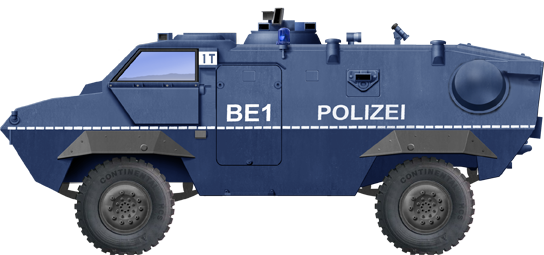
Vehicle of the Berliner Polizei
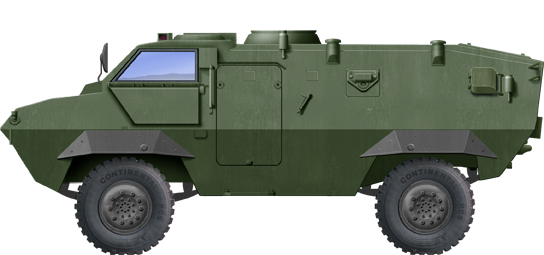
Standard TM-170 in military version
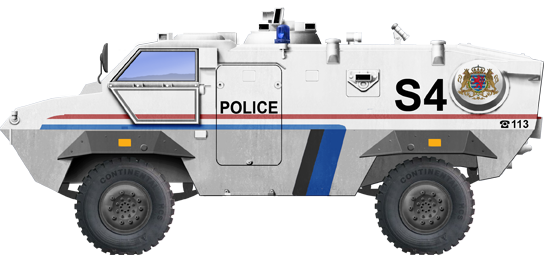
Luxemburg Guards vehicles
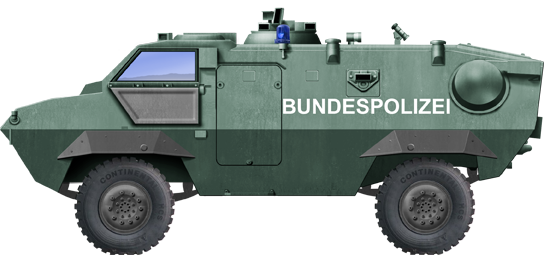
SW-4 of the Bundespolizei
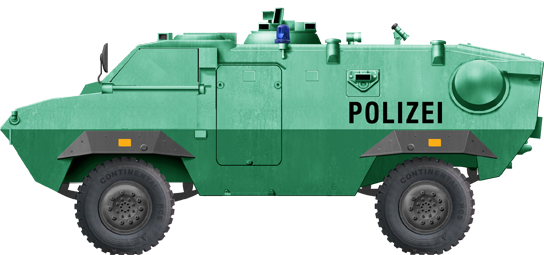
Vehicle of the Austrian Police
More to come.
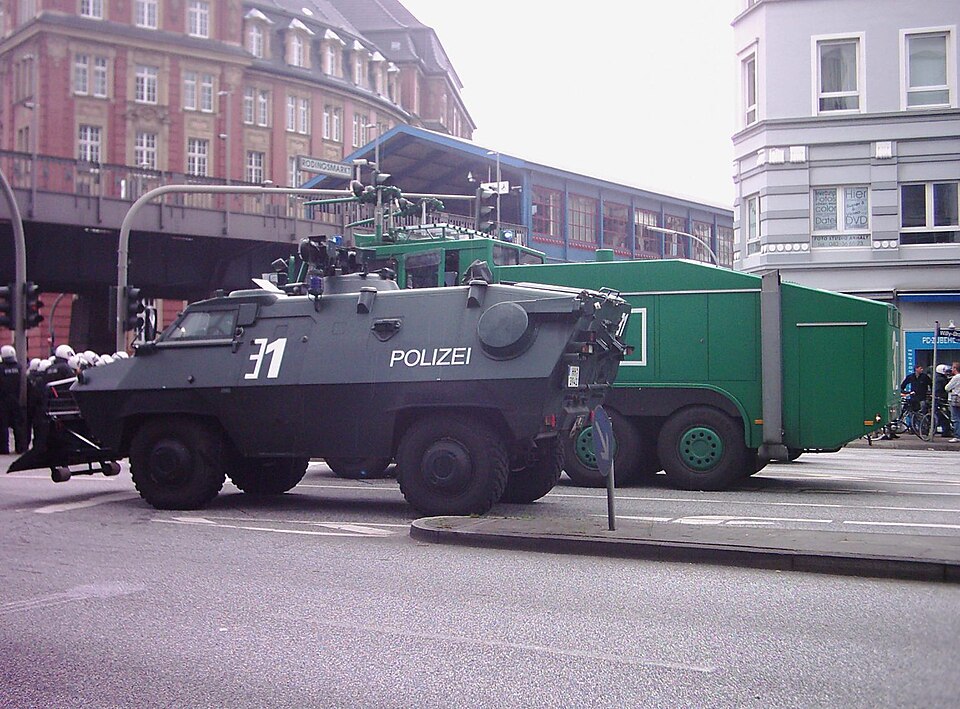
Former German law enforcement vehicle of the Bundespolizei in Hamburg.
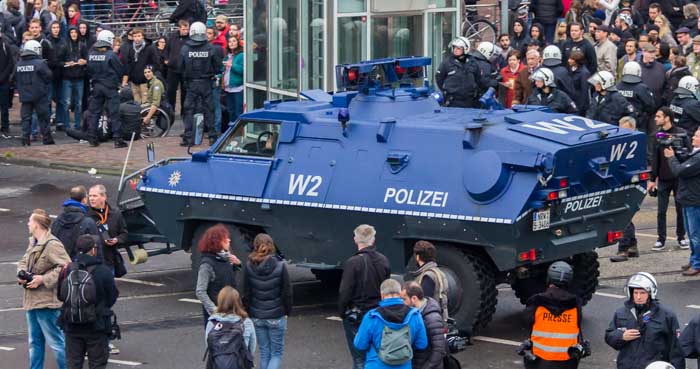
German Police vehicle deployed in October 2015, with a dozer blade
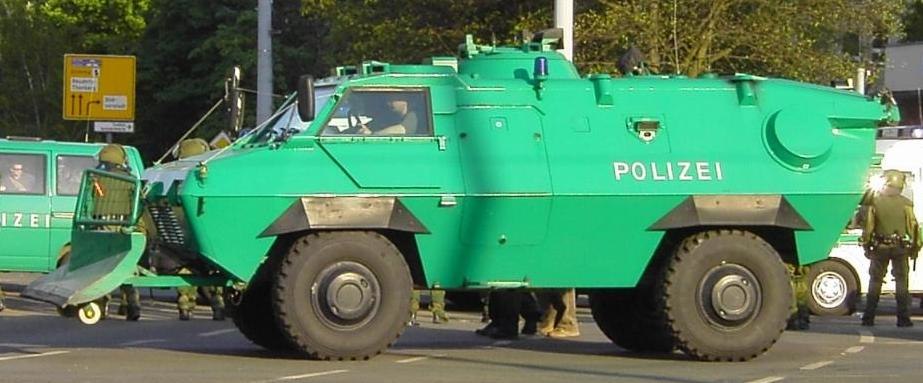
APC of the german police
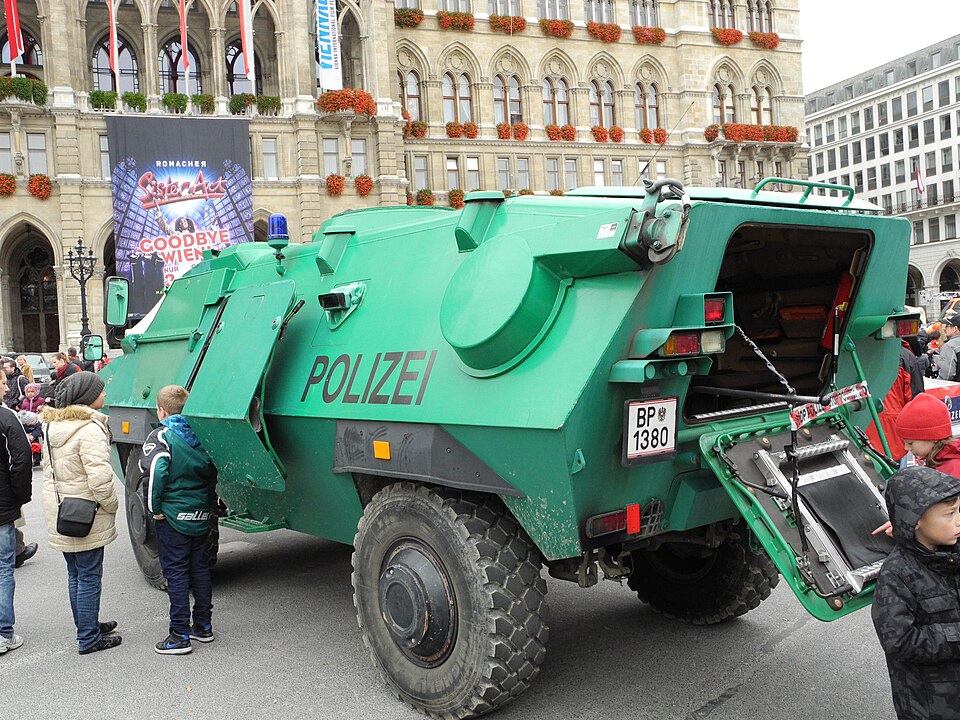
TM-170 of the Austrian Federal Police
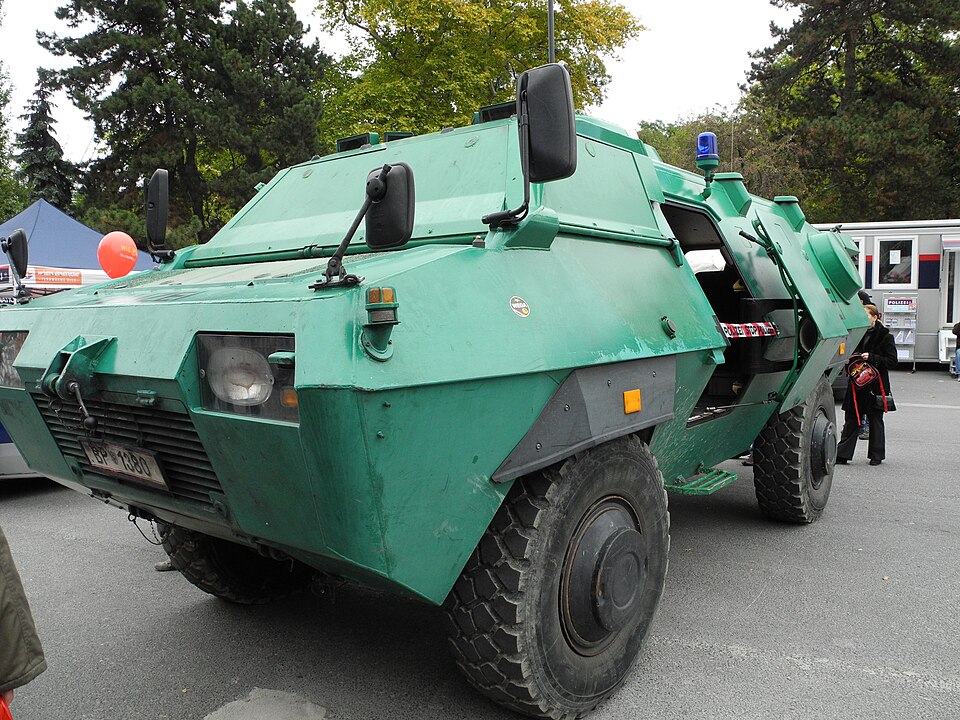
Austrian vehicle, front shutters up.
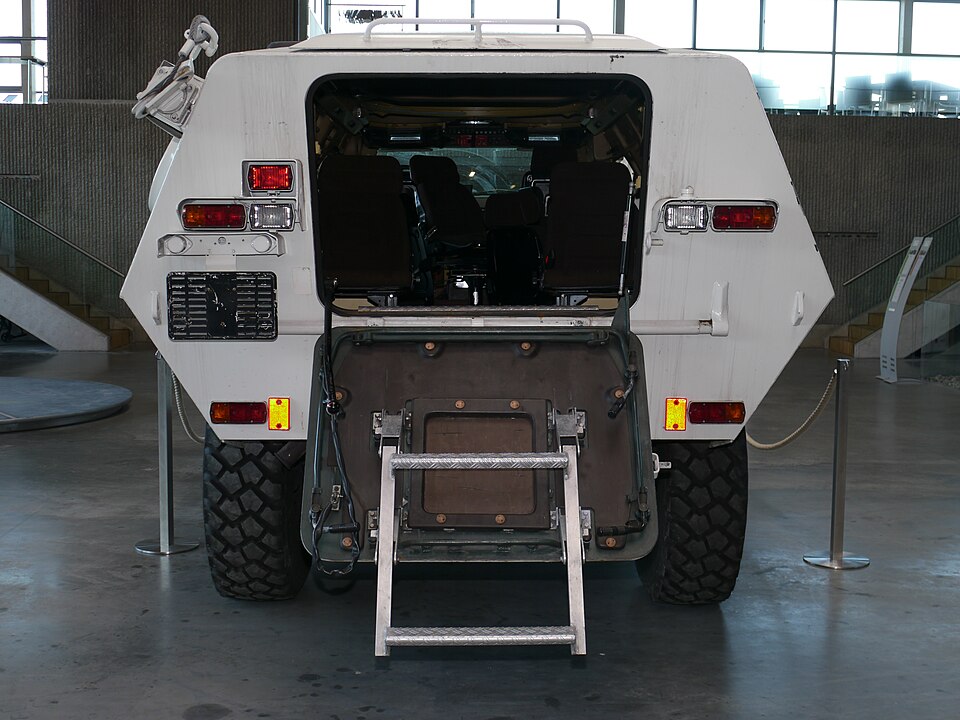
Rear of the Finnish vehicle
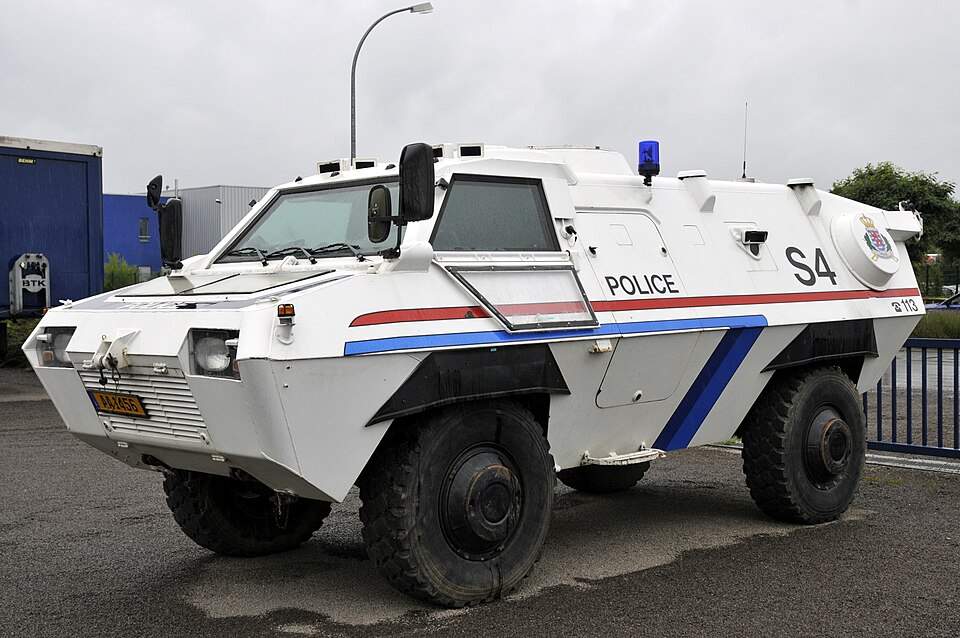
TM-170 of the Luxemburg Duchy Guards
Read More
Books
ISAF Vehicles in Afghanistan: 2007 (Kabul and Kandahar Areas) - Mushroom Model PublicationsBook Review by Patrick Keenan-Editor: Dick Taylor
Jane's Tank Recognition Guide (4th Edition) Christopher Foss.
Links
army-guide.comde.wikipedia.org
globalsecurity.org
tanknutdave.com
Vietnamese TM-170
shinjeong.co.kr
warwheels.net Doosan Barracuda
Barracuda deagel.com
en.yna.co.kr
North Macedonian Vehicle
Luxembugian TM-170
warwheels.net
sunnlenska.is Finnish TM-170
Finnish TM-170
militaryfactory.com
forecastinternational.com
en.wikipedia.org
commons.wikimedia.org
Videos
Cold War Tanks


Cold war tanks posters
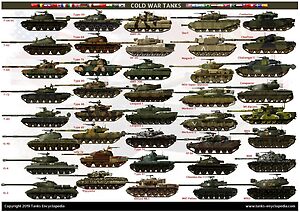
Cold War Main Battle Tanks
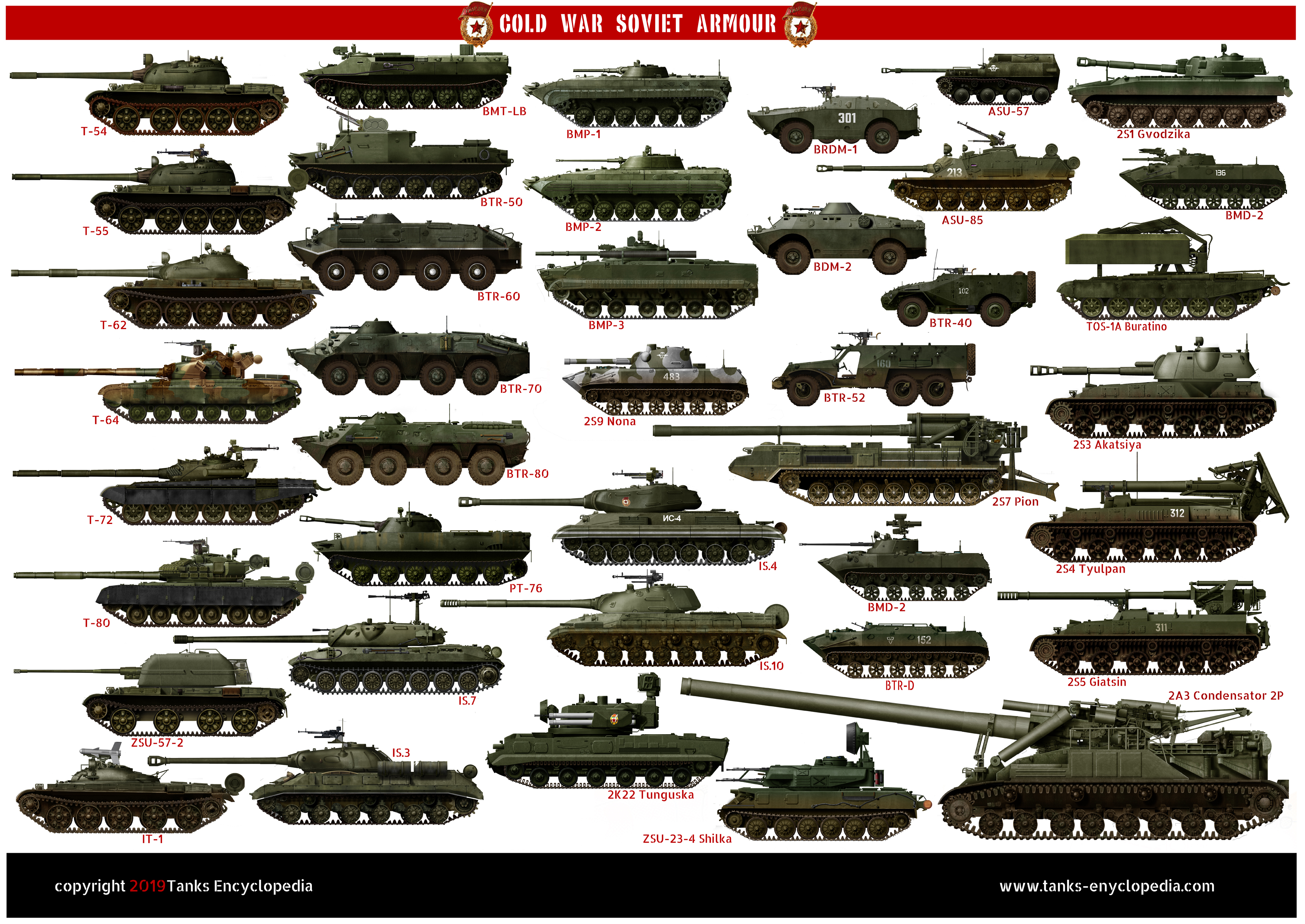
Cold War Soviet Army
Museums, Movies, Books & Games
The Tanks and Armor in pop culture
Tanks and armored vehicles in general are only really grasped when seen first person: The mass, the scale, it's all there. Explore also the way tanks were covered in the movie industry, in books and in video games.Movies:
Best tanks movie on warhistoryonline.com
On imdb.com
On bestsimilar.com/
miltours.com
liveabout.com/
watchmojo.com
Video Games:
pcgamesn.com
historyhit.com
levvvel.com
vg247.com/best-tank-games
mmobomb.com/
alienwarearena.com