Alvis Stormer
 United Kingdom (1981) 220+ built
Development of the Alvis Stormer
The Stormer has a long genesis that went back to the cold war CVR(T) development programme. It started in the mid-seventies, when MVEE developed a concept and prototype with a sixth extra axle, first shown at the 1978 the British Army Equipment Exhibition at Bovington. In 1980, Alvis purchased the manufacturing and marketing rights to the FV4333 from the MoD and in June 1981, Alvis announced that the FV4333 was redesignated the "Stormer". Production started in 1982, with the first three vehicles sent for evaluation in the United States. Malaysia also placed an order in late 1981 for 25 of them, alongside 26 Scorpion 90. Eventually tento of these Malaysian Stormers were fitted with a 20mm cannon turret, the remainder with a twin 7.62mm GPMG turret.Meanwhile, development went on and led to the Alvis Sagitar concept armoured fighting vehicle under Alvis Limited in 1981-83 as part of what was proposed to the United States Army Tank Automotive Command (TACOM), for the Mobile Protected Weapon System (MPWS) and Mobile Protected Gun System (MPGS) programmes. Alvis submitted three studies for the first requirement on a modified chassis derived from the Stormer but with a lower hull design, one with a two-man turret with the 76 mm L23A1 gun (as on the Scorpion) and twin launcher for the Hughes TOW ATGM. The second had the same turret but 75 mm ARES automatic cannon and the third had a concept RAF L118 low-pressure gun, a modified version of the 105 mm L19 for HE or a new FSAPDS round.
MVEE also developed its initial 6-wheeled chassis for a new family of Light Armoured Vehicles (FLAV) intended to replace the CVR(T), FV432, Fox and Ferret, Saxon and Saracen. Since the CVR(T) already existed, Stormer was to be developed as a larger FV432. The basic APC was the initial prototype, but other variants in FLAV were soon conceptutalized. The final Malaysian vehicle were delivered with an Helio FVT 900 one man turret and 20 mm Oerlikon Contraves automatic cannon. Alvis also worked at home on the Low Profile Experimental Vehicle (LPXV) as a private venture from the 1980s to early 1990s. It was shown in 1988 with a French GIAT Industries TS-90 two-man turret and associated Belgian Cockerill 90 mm CN90F4 rifled gun, and sometimes referred to as Storm 90.
In 1986, at last, the Stormer was selected as base vehicle for the MoD for a new lightweight air defence vehicle for the competing Shorts Starstreak High Velocity Missile System and British Aerospace Thunderbolt. This gave the Stormer Air Defence prototype, completed with a dual Stinger missile launcher and 25 mm GAU-12/U or 30 mm GAU-13/A cannon. In 1991, Alvis also showcased the LPXV for the UUS Army's Armoured Gun System (AGS) programme with a 105 mm EX-35 rifled gun and tailored for deployment from a C-130. It was also promised to be compatible with the Cadillac Gage LAV-105 turret and its XM35 low-recoil gun+ autoloader. In 1998 in UK the program became the Future Family of Light Armoured Vehicles (FFLAV). The company also developed an electronioc warfare variant, the Alvis Vetronics Integration Demonstrator (AVID) programme (elevated sensor mast) somewhat competing with the VERDI-2 and acting as communications and data hub, roomy enough for extra data networking and processing equipment.
Eventually Alvis Vickers was integrated into BAE Systems Land & Armaments, but the chassis was estimated to have still a lot of potential, and the chassis was made even more modular. By default of a firm, large MoD order, the comany continued to market it abroad, and now still marketed by BAE in configurations such as the two-person turret 25 mm cannon air defence variant, an engineer vehicle, recovery vehicle, ambulance, mine layer, 81 mm/120 mm mortar carrier, command and control vehicle, bridge layer, logistics vehicle with options such as NBC (Nuclear-biological-chemical) protection system, amphibious kit, passive night-vision equipment and air-conditioning system.
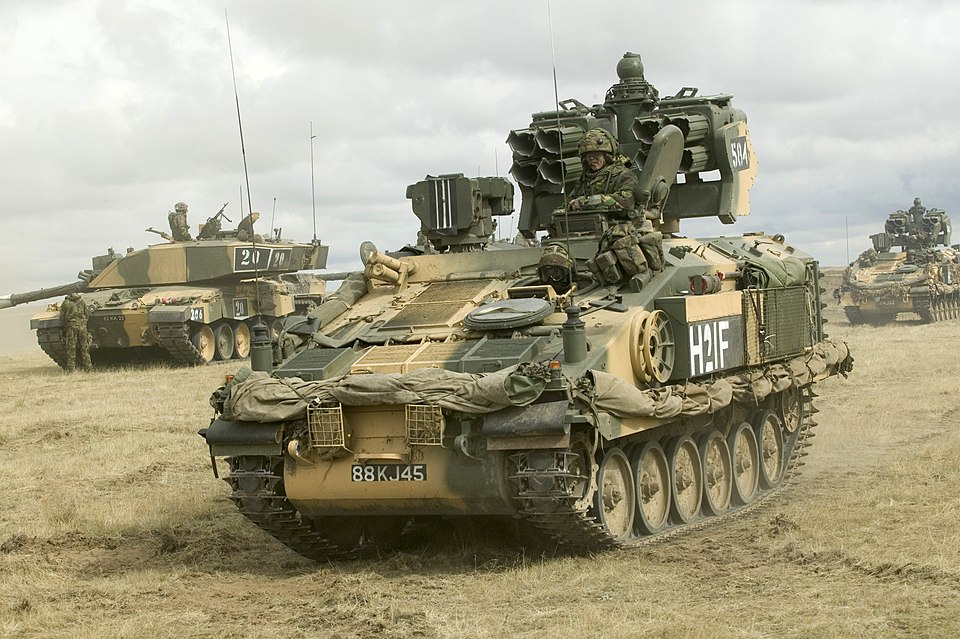
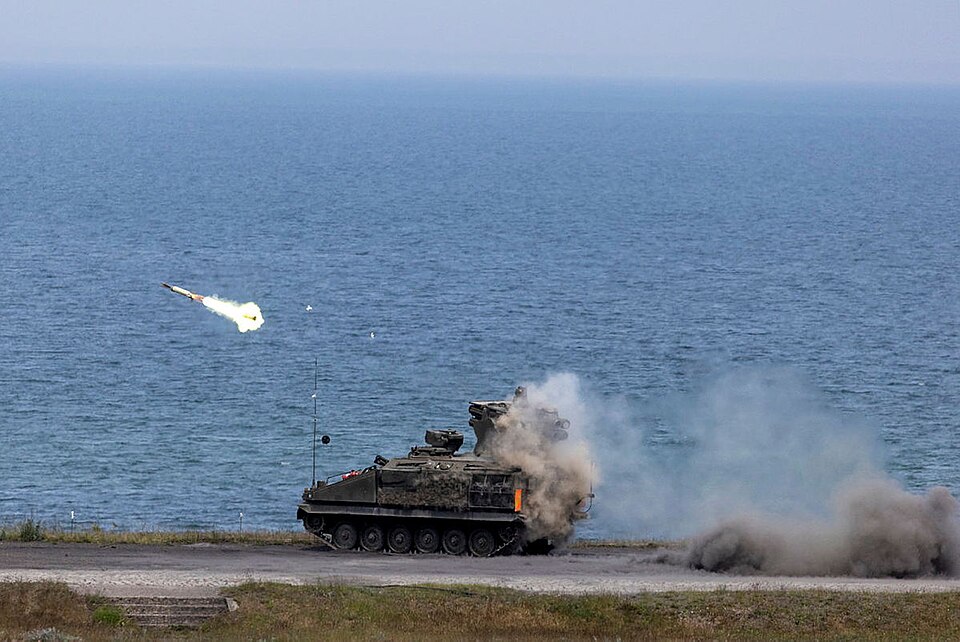
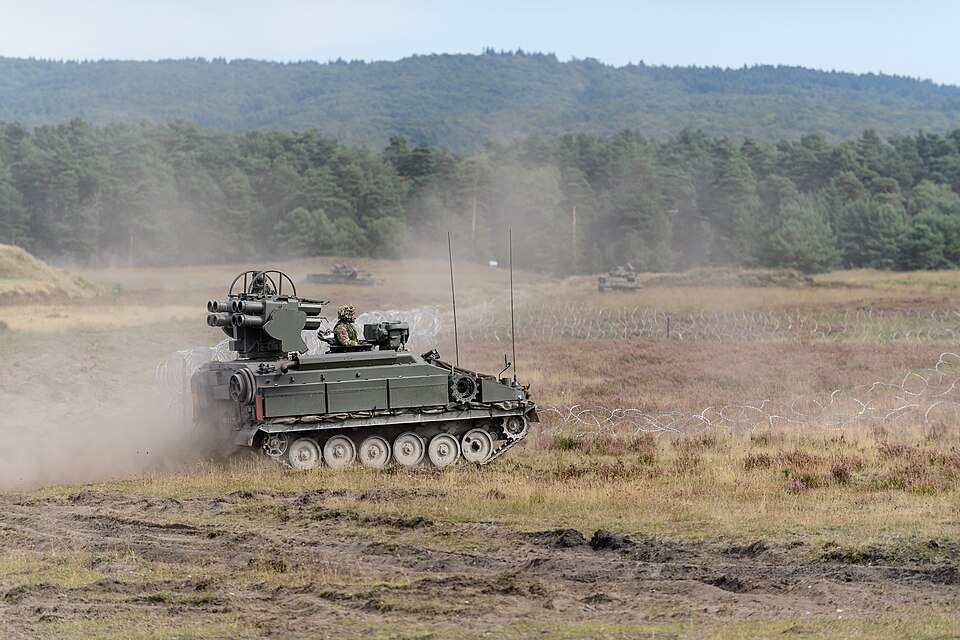
For a platform designed in the 1980s, its numerous variants (see below) remained prototypes, but at last two variants were chosen by the MoD recently: One is the Startreak HVM or Martlet launching vehicle for short air defence, for the Army 2020 plan (three regular, two reserve artillery batteries), later converted to the HVM Lightweight Multiple Launcher (LML) with reduced training. The other is a minelayer version called the Shielder Minelaying system (next update). This post currently shows the Stormer HVM.
Design of the Alvis Stormer
General Layout
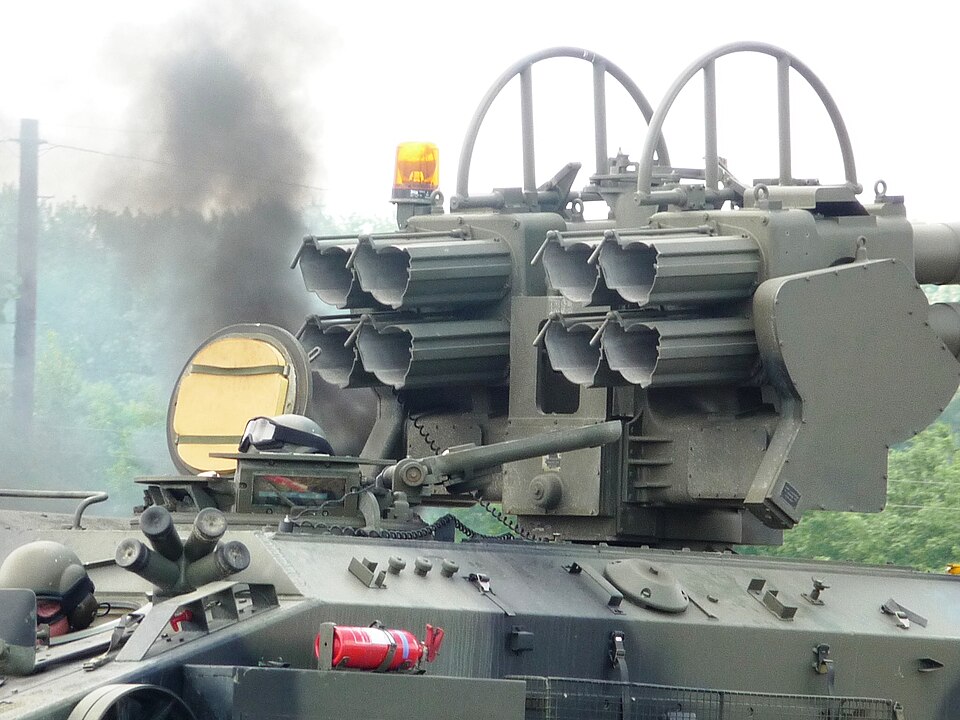
The Stormer is externally looking like regular CRV(T) platform vehicle with its tracked chassis and wedge-like hull, light and nimble, albeit the extra axle proper to the Stormer enabled a larger rear utility compartment, adding 0.48 metres, with this sixth road wheel. The final vehicle has a mass of 12.7 tonnes (13.5 tonnes for HVM variant), Length 5.27 metres, width 2.76 metres (2.40 metres over tracks), and the height was a generous 2.49 metres at the hull roof, inside that was another story entirely. Ground Clearance was 0.425 metres. The configuration was common to the CRVT family and Scorpion for example with the driver located on the right slope, with the commander's position behind. The two extra operators were located close by, with the massive missile launcher system behind. The APC was a completely different beast for example which has two forward and 12 in the rear compartment, six per side.Protection
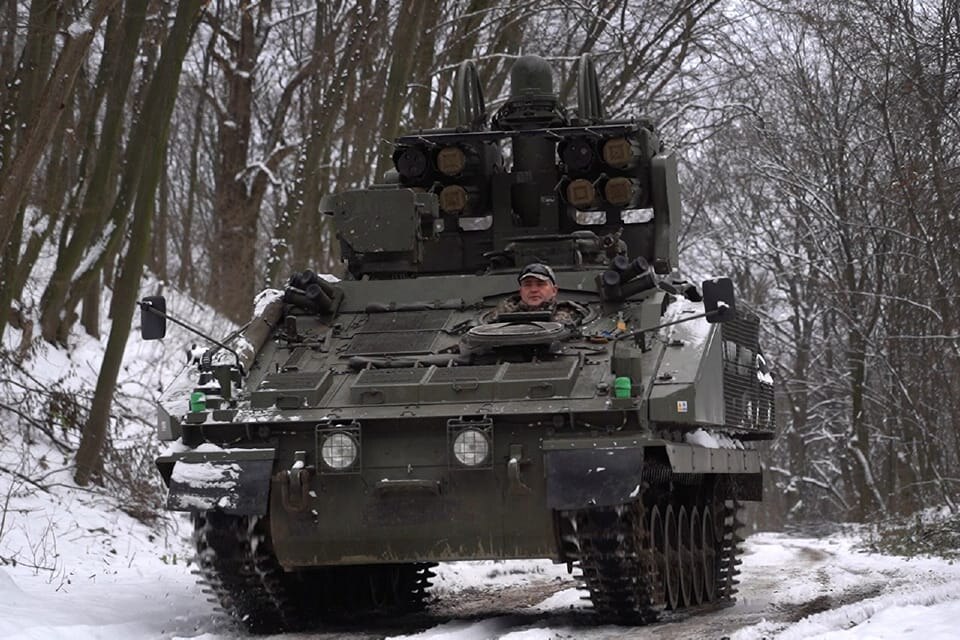
The Stormer is protected very much like the CRVT family at large, with a welded aluminium hull proof against 7.62 mm AP hits and 155 mm shell fragments (8 mm forward and on all sides). The nose slope makes for a protection up to 12.7 mm standard rounds. Collective NBC protection is optional, and depends notably of the use of the also optional air conditioning system. The vehicle however has a baseline internal spall liner, and a fire extinguisher system in the engine compartment, and missile compartment at the rear, plus manual system in the crew compartment. For active protection, the Stormer is fitted with two banks of four spoke dischargers installed on the upper front face. The HVM in particular as used by the Ukrainians was up-armoured with side modular add-on anti-RPG armour and slat armour.Mobility
The Stormer whatever the version is powered by a Perkins T6.3544 water-cooled, six-cylinder turbocharged diesel engine. Rated for 250 hp at 2,600 rpm, it is coupled to a David Brown T300 or TN15D automatic transmission depending on the customer's option (First for the OVM) with seven forward and seven reverse gears. It comprises a controlled differential steering system, for a reduced turning radius or even pivot turns. With 21 hp/tonne and its suspensions comprising six torsion bar with hydraulic dampers, the vehicle is no slouch, at 80 km/h (50 mph) on roads. Its operational Range reaches 650 km (400 miles) thanks on 405 litres diesel in flat terrain, normal use. It could climb a 60% gradient, keep stable on a 35% side slope, can ford 1.1 metres without preparation. Albeit the initial vehicle was designed to be transported by a C-130 it's probably no longer the case for the HVM variant.Firepower
Starstreak HVM
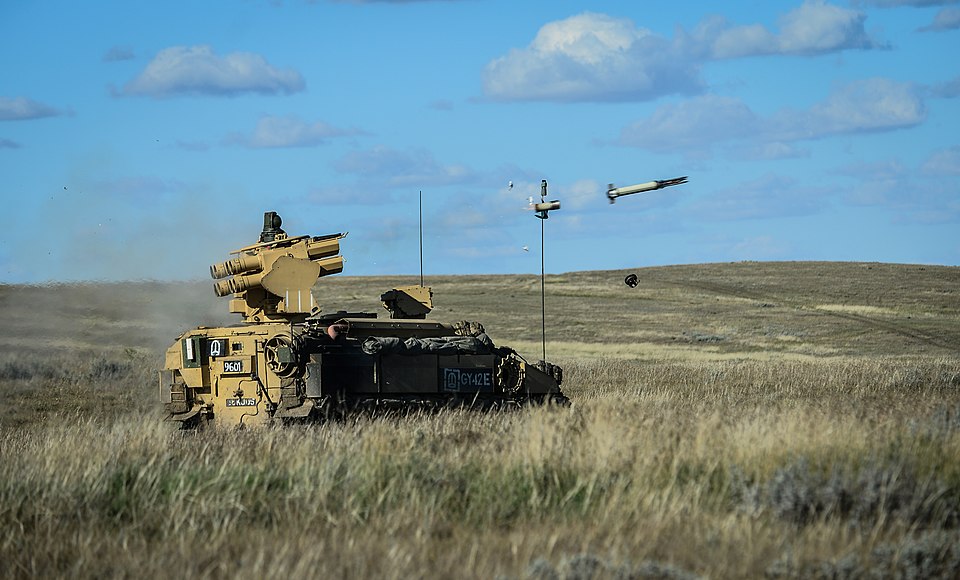
The Starstreak is a British short-range surface-to-air missile (SAM) initially designed to be used as a man-portable air-defence system (MANPADS) of from heavier systems. Designed by Shorts Missile Systems in Belfast, Northern Ireland and now owned and distributed by Thales Air Defence it was also named the Starstreak HVM (High Velocity Missile). After launches, it accelerates to more than Mach 4, making it the world's fastest short-range surface-to-air missile. Each missile employs a system of three dart type projectiles which can make multiple hits on the target. Each of these darts has an explosive warhead. When coupled with the proper launcher it was installed on the Alvis Stormer chassis to create the Stormer HVM. The system is fitted with a roof-mounted air defence alerting device, providing target detection and prioritisation. A panoramic weapon sight is located at the front of the vehicle. The missile entered British Army service in 1997, but it's production started in 1986 with 7,000 manufactured so far. In 2012, Thales relaunched the system as ForceSHIELD.Specs
Mass: 14 kg (31 lb), 1.397 m (4 ft 7 in) long, diameter 13 cm (5.1 in).Effective range Starstreak-II 7 km (4.35 mi). Flight ceiling 7 km (22,966 ft)
Warhead 3 explosive sub-munitions 0.9 kg (2.0 lb) Tungsten-alloy Darts, 450 g (16 oz) PBX-98/Dart
Engine: 1st stage Royal Ordnance 'Brambling' cast double-based propellant blip rocket motor, then 'Titus' cast double-based propellant.
Guidance: SACLOS, Laser-beam guidance
specs. Alvis Stormer | |
| Dimensions | 5.27 x 2.76 x 2.49 m |
| Total weight | 12.7 tonnes |
| Crew | 4: Driver, Commander, 2 Operators |
| Propulsion | Perkins T6.3544 6-litre, 6-cyl. diesel 250 hp (186 kW) 21 hp/t |
| Transmission | David Brown T300 |
| Suspension | 6x Torsion bar |
| Speed | 50 mph, 80 km/h |
| Range | 400 miles, 650 km |
| Armament | Starstreak HVM/Martlet ATGMs |
| Armor | 30 mm front |
| Total production | c220 |
Variants
Stormer HVM
The main variant decribed above. Enough were ordered initially to fill three regular and two reserve artillery batteries but the latter were converted to HVM Lightweight Multiple Launcher (LML).Stormer 30
Tracked reconnaissance vehicle, turreted with a 30 mm Bushmaster II automatic cannon, TOW missile launcher either side. 200 rpm and 180 ready rounds before the need to reload. Prototype fully air transportable by Lockheed C-130 Hercules and under sling by a Sikorsky CH-53 helicopter.Stormer Air Defence
Prototype air defence vehicle described in the development section, late 1980s, for the dual Stinger launcher, 25 mm GAU-12/U/30 mm GAU-13/A cannon.High Mobility Load Carrier
Essentially the first version marketed of the utility "flatbed stormer", it has a payload of 4 tonnes at the rear, and its gross weight is 12 tonnes. Like the Shielder below it still includes provision for a vehicle commander in addition to the driver.Shielder minelaying system
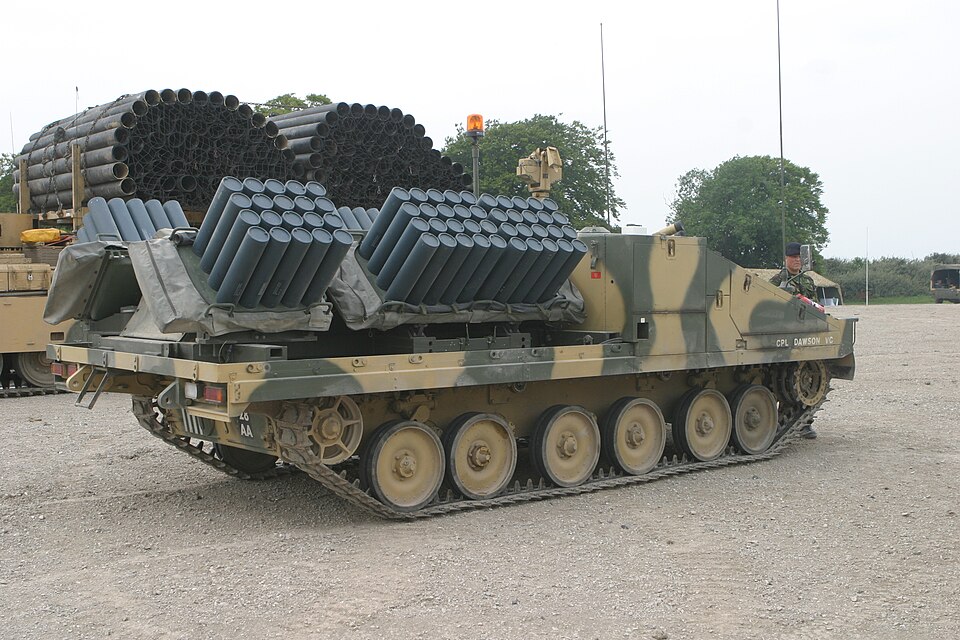
The Shielder minelaying system is a development of the basic Stormer chassis (called the "flatbed stormer"), a system for the British Army to create anti-tank barriers quickly. It uses a system already developed by the US-based Alliant Techsystems Volcano mine system. Ordered in 1995, it was first deployed in 1999. In the barebone chassis, with forward part still compsising a drive, operator behind the engine, a flatbed area at the rear is used to mpunt 40 Volcano dispensers, each containing 6 mines. The dispensers can launch mines to the sides and rear underway, no need to stop. Each mine has a programmable life and they self-destruct eventually. The dispenser control unit provides fire signals as well as testing and arming of the self-destruct mechanism of these mines. In total, 39 Volcano kits were ordered and mated on the same number of chassis delivered by Alvis/BAE, in service as of 2009. In 2013-14 it was announced for retirement.
Exports
c150 Stormer HVM, 39 Shielder minelaying vehicles (retired). In the gulf war, a few Launched Scatterable Mine System (VLSMS) variants were also purchased and deployed. Replaced by the Shielder afterwards. 4 Stormer "Combat Vehicles" (version not precised) purchased 1993
 25 Stormer APC delivered in 1981, no longer active.
 40 Stormer TNI-AD, declined into an APC, Ambulance, Bridgelayer for those identified.
 At least 6 including Stormer HVMs sent since 2022. Three confirmed lost by Oryx.
Gallery on the Alvis Stormer
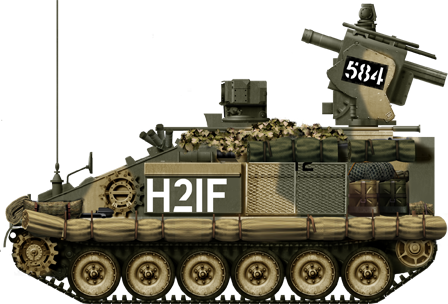
The HVM in Operational Markings in the 2020s.
Sources
upi.comindomiliter.com/
odin.tradoc.army.mil
thinkdefence.co.uk
army.mod.uk

Cold War Tanks


Cold war tanks posters
Cold War Main Battle Tanks
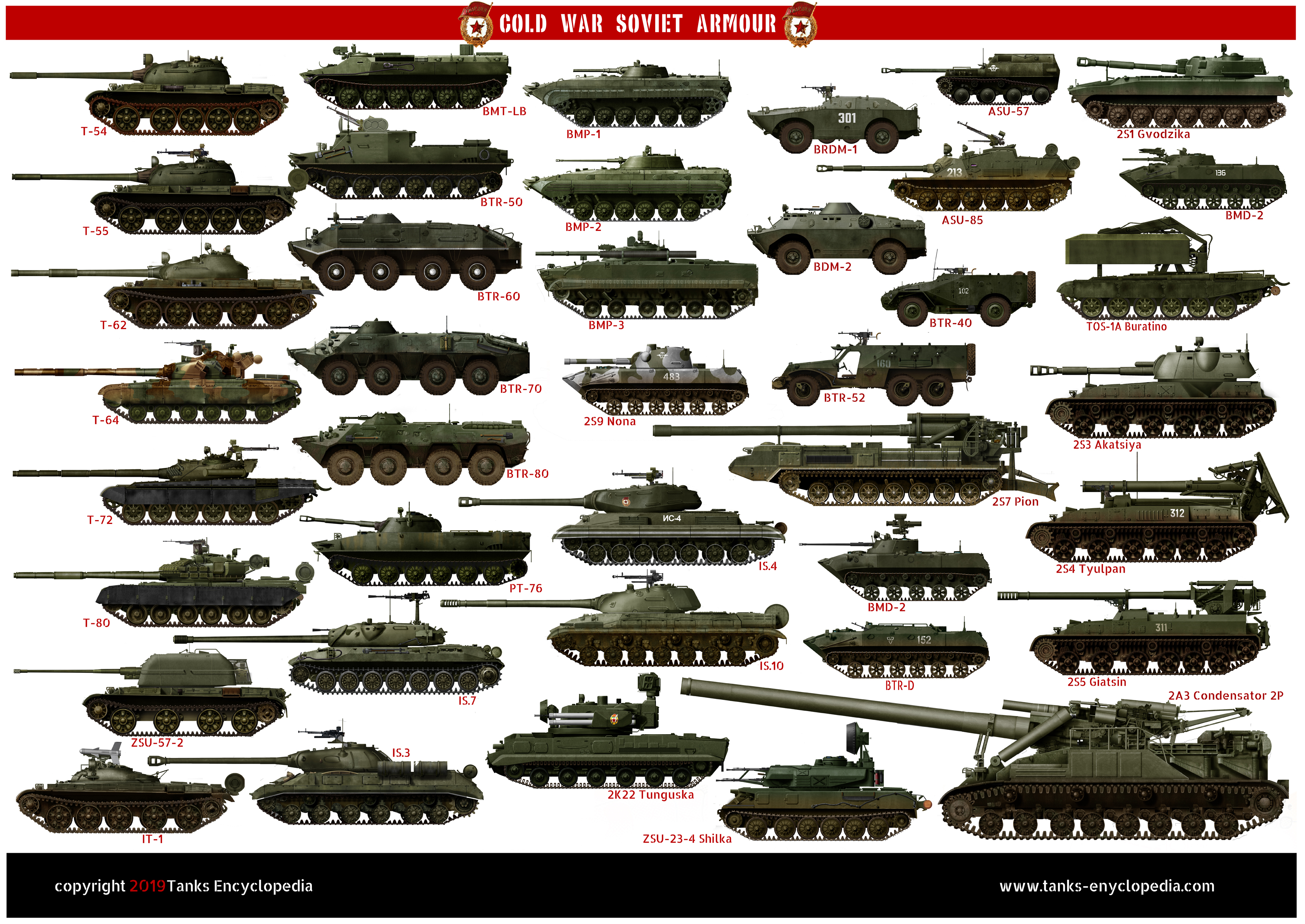
Cold War Soviet Army
Museums, Movies, Books & Games
The Tanks and Armor in pop culture
Tanks and armored vehicles in general are only really grasped when seen first person: The mass, the scale, it's all there. Explore also the way tanks were covered in the movie industry, in books and in video games.Movies:
Best tanks movie on warhistoryonline.com
On imdb.com
On bestsimilar.com/
miltours.com
liveabout.com/
watchmojo.com
Video Games:
pcgamesn.com
historyhit.com
levvvel.com
vg247.com/best-tank-games
mmobomb.com/
alienwarearena.com