BTT-1 (1962)
 Soviet Armored recovery Vehicle. c200 converted.
Design
Development
 WW2 showed to the western allies the importance of recovery vehicles. This was already a well known practice from the Germans on the eastern front, due in part to the high technicity and costs of the medium and heavy tanks fielded from 1942. Many ARV types were designed based notably on the Panzer IV, Panther and Tiger chassis. This was observed by Soviet officers, but not taken in account to create a proper ARV since the tank manufacturing concept was very different and emphaized lower quality, simplicity and short-term durability with "good enough" performances. The Soviet industry was geared to simply out-produced the Germans and this excluded the use of ARVs, especially since 1944 when there was a constant offensive to the west.
The British and especially the US took a different approach, as recovered tanks were a bonanza either fdor conversions to other applications ot to repair existing damaged tanks in field workshops. The main british WW2 ARV was for example the Churchill ARV Mk.I & Mk.II, the specialized Sherman BARV, and on the US side the M3 Lee/Grant based Tank Recovery Vehicle M31 and M31B1/B2 as well as the Sherman-based M32 TRV. Seeing this interest, the USSR planned an ARV for its more complex tanks engineered from the T44 onwards. This attempt was the BTT-1.
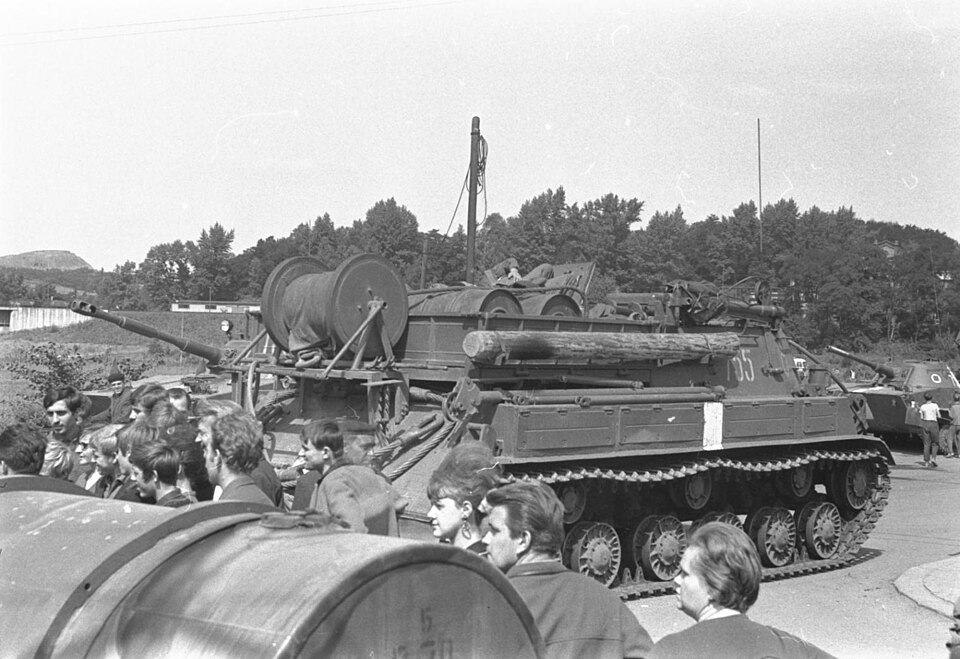
BTT-1 in Czechoslovakia 1968
The choice of the largest chassis in inventory enabled to concentrate on a single vehicle type to recover all Soviet tanks, from the largest ISU-152 and ISU-122 self propelled guns still in inventory to the even larger IS-III heavy tank, and late IS-I/IIs down to the T34 family and derivatives. Hence the BTT-1 and ISU-T were related vehicles based on the ISU-122. The latter was indeed redundant after WWII, so that conversion for other uses seemed sensible.
ISU-T
The ISU-T was the first, an early version made in the early 1950s. This consisted in removing the gun, placing a metal sheet over the top. Thus simple and cheap conversion had a winch and extra steel cables to just tow any tank but nothing more. No crane, no toolings, no fancy equipment. In 1959, the BTT-1 was designed as a successor given reports of the ISU-T shortcomings compared to contemporary western ARVs. The Soviet staff wanted a more serious, better equipped vehicle.BTT-1
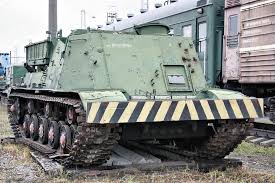
The BTT-1 was essentially the same basic conversion as the ISU-T, but including this time a basket mounted on the rear deck, a winch and crane as well as fittings for an optional dozer blade of various sizes as well as extra towing equipment. In 1960, modernization started with a more powerful generator added to allow welding, performing vehicles repairs in the field. This became a swiss knife of a vehicle, but there was little standardization across the board. Some featured a locally added A-frame crane, with many variants existing at the same time depending of the units and area. It seems the original conversion was performed at LKZ/Leningrad Kirov plant and that it entered service in 1962 with a development started in 1959 and acceptance tests likely in 1961.BTT-1T
It was similar to BTT-1 but an added generator for power welding torches and other electrical systems.BTT-1K
A field modification with large A-frame crane facing forwards when in use bit folding towards the rear, when stowed underway. It depended on two large pulleys on the roof of the superstructure to pull cables when rearwards facing so that the main winch could be used as hook. Bith T and K are unofficial.Overall, details on the BTT-1 are pretty scarce. It was however exported in limited numbers to Egypt, Poland and Czechoslovakia. The latter quickly saw the limitations of this model and devises its own ARVs, among the best of the Warsaw Pact. Egypt was the only one using its BTT-1s in combat, alongside a regiment of ISU-152s acquired in the early 1960s. At least one was captured by Israeli in 1967 or 1973. The last surviving one is at Yad La-Shiryon Museum today, with at least another in Russia.
Layout
It's possible that in addition to the basic ISU-122, ISU-122S and ISU-152 chassis were converted as well but there are no official records. The gun is removed and the opening is simply plated over, like on the ISU-T, and that large steel plate. The right side driver hatch is still there however. A winch is added, fitted into the superstructure at the rear. There is a flatbed installed over the engine deck to carry various tools and large engineering equipment. It could be covered by a waterproof, insulated tarpaulin to protect the content from corrosion. The latter version is fitted also with a large a-frame crane folding forwardso for extra pull combined with the main winch, powered by the engine. Unlke the The ISU-T whic is just a heavy tractor, the BTT-1 uses a heavy winch, is equipped with a rear earth anchor when lowered to get the best pull from the winch and there is also a small 3 t crane, a small generator, with a larger one installed later (as an A frame) on gradual improvements to do some field repairs using blowtorches. The hull featires many straps and fittning points on all sides, including a saw, and like the original chassis, extra fuel tanks over the rear mudguards.Mobility
The BTT-1 was powered by the same orignal 520 hp V-52K diesel from the ISU-122 coipled with a manual gearbox with 8 gears, including 3 reverse. Mobility was still good thanks to the large span tracks, a ground clearance of 0.42 m, six twin roadwheels per side plus three return rollers, forward idlers and rear drive sprockets. This provided a good cross country mobility on all terrains, but at a speed limited to 40 km/h on roads but 15 to 20 km/h off-road for a range of 350 km on road, 140 km or less off-road unladen, based on a power to weight ratio of 11.3 hp/t. It would climb a wall 1 m high, gap a trench 2.5 m wide and ford 1.3 m or water without preparation but was not amphibious. Tactically its weight prevented any transport by air as well.Protection and Armament
The BTT-1 inherited the steel armor from the original ISU-122 which was extremely thick to face any German medium tank. It provided a good level of protection for the crew from classic AP shells when on the move. This cast panels steel armor was indeed up to 90 mm thick for the structure, 30 mm for the roof and 20 mm for the bottom. However it could not stand modern western APFSDS and HEAT rounds in any way. During recovery tasked the crew was however exposed and even inside, there was no NBC protection. There were no smoke grenade launchers either, not even the hot exhaust sprinkler present from the T-54 onwards. There was no automatic fire extinguisher but classic bottles instead.Armament was limited to a 12.7mm DShKM (0.5 inches) heavy machine gun Mount with a pintle mount on the roof for both AG and AA defence. Ammunition comprised a 50 rounds magazine ready to fire, but more were carried inside, and it had a 360 degrees traverse, manual like the elevation, un-stabilized and with simple optical spider sights. The crew of two men had their own pistols and potentially a few more weapons, mines and grenades.
specifications | |
| Dimensions (L-w-h) | 7.56 x 2.08 x 2.66 m roof |
| Total weight, battle ready | 46 Tons fully loaded |
| Crew | 2 (driver, mechanic/operator) |
| Propulsion | V-54K diesel, 520 hp at 2.000 rpm |
| Speed | 40 kph road, 15-20 kph off-road. |
| Range | 140-350 km depending on terrain |
| Armament | 1x 12.7mm DShKM HMG |
| Armor | See notes, 20-90 mm steel |
| Total production | |
Illustrations
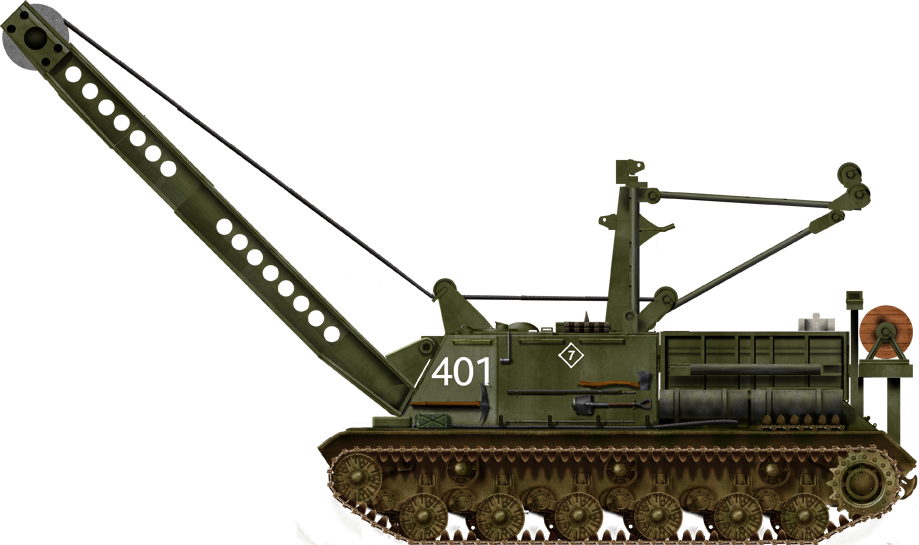
Soviet late BTT-1K with A-Frame and gantry taking part to the Czech invasion of 1968
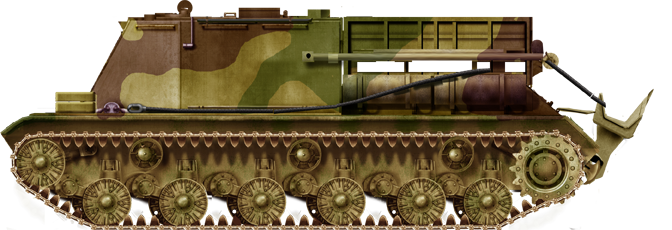
Egyptian BTT-1, war of 1973.
Gallery
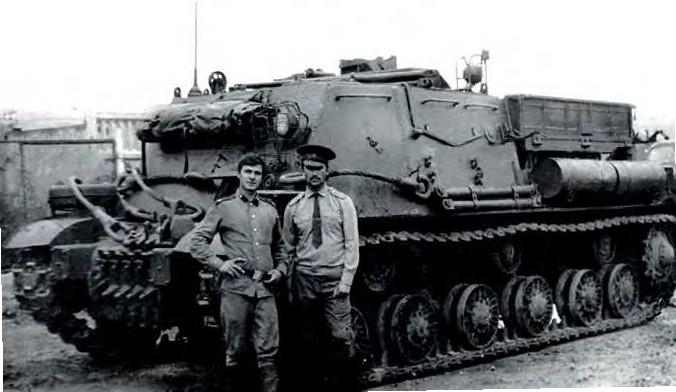
BTT-1 cdts. keymilitary
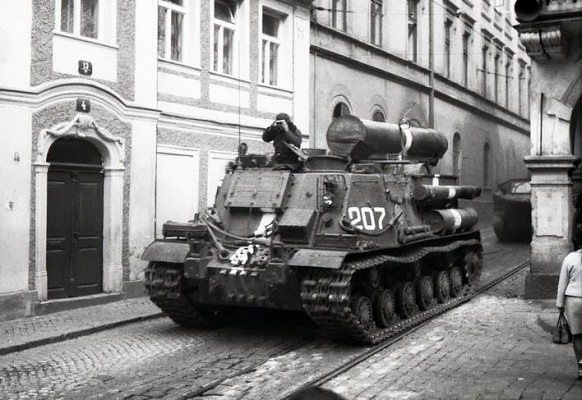
BTT-1 in Czechoslovakia 1968
BTT-1 in Czechoslovakia 1968
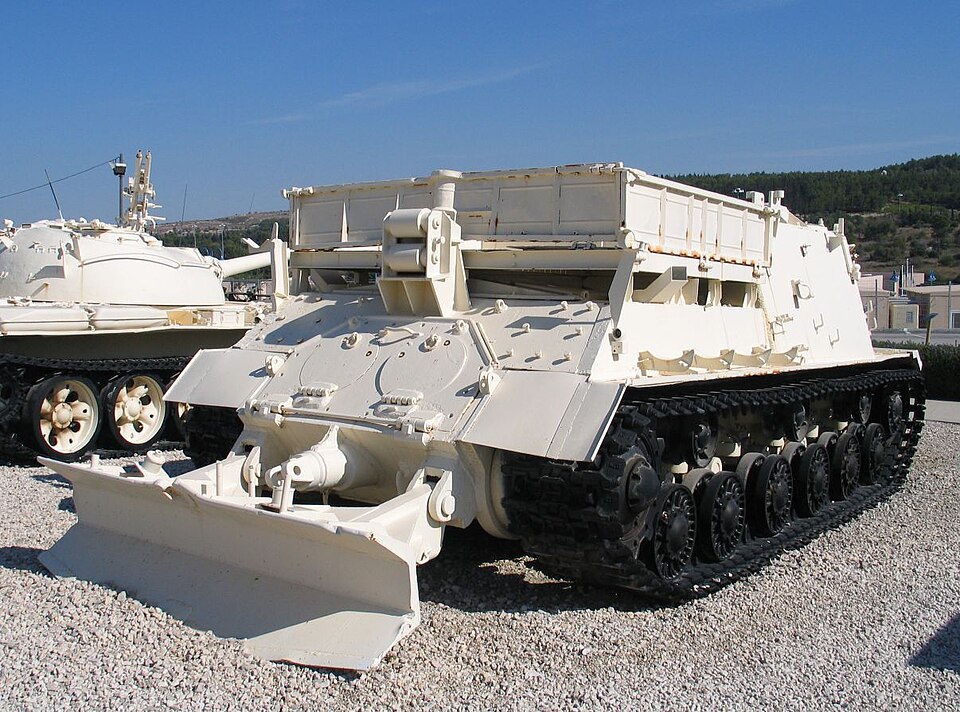
Captured ex-Egyptian BTT at Yad la Shiron
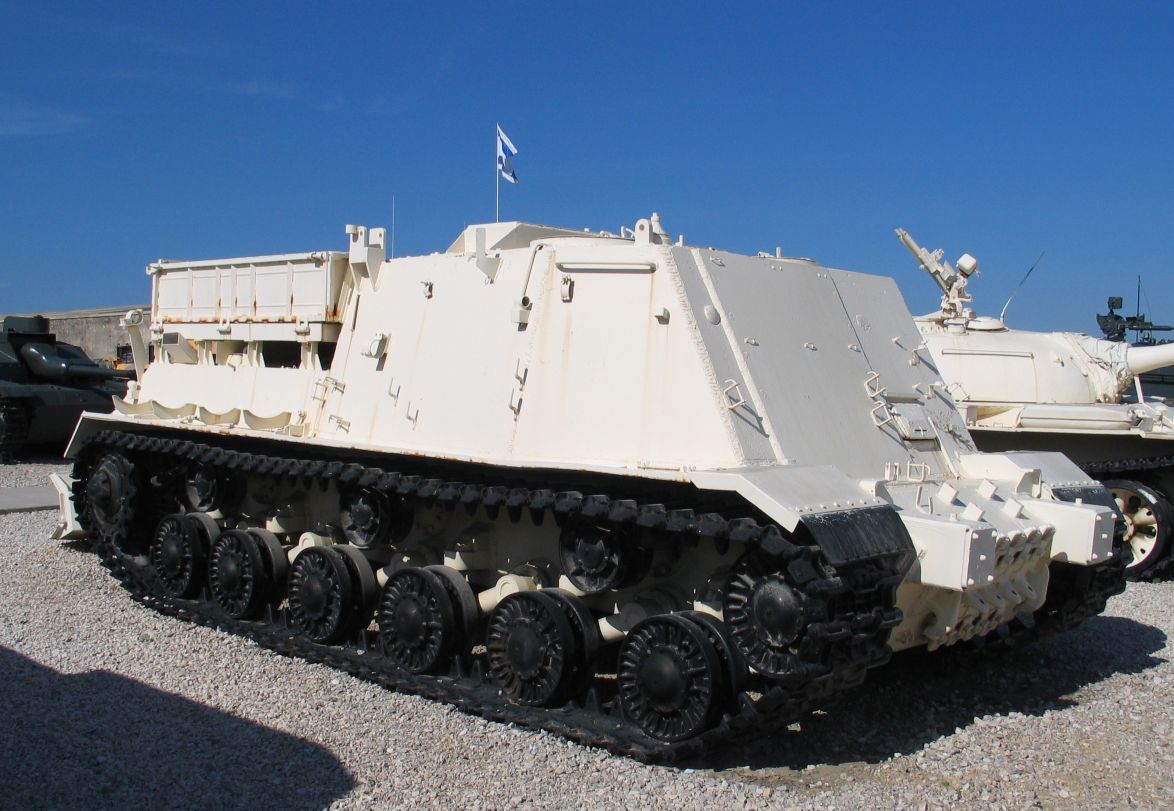
Captured ex-Egyptian BTT at Yad la Shiron
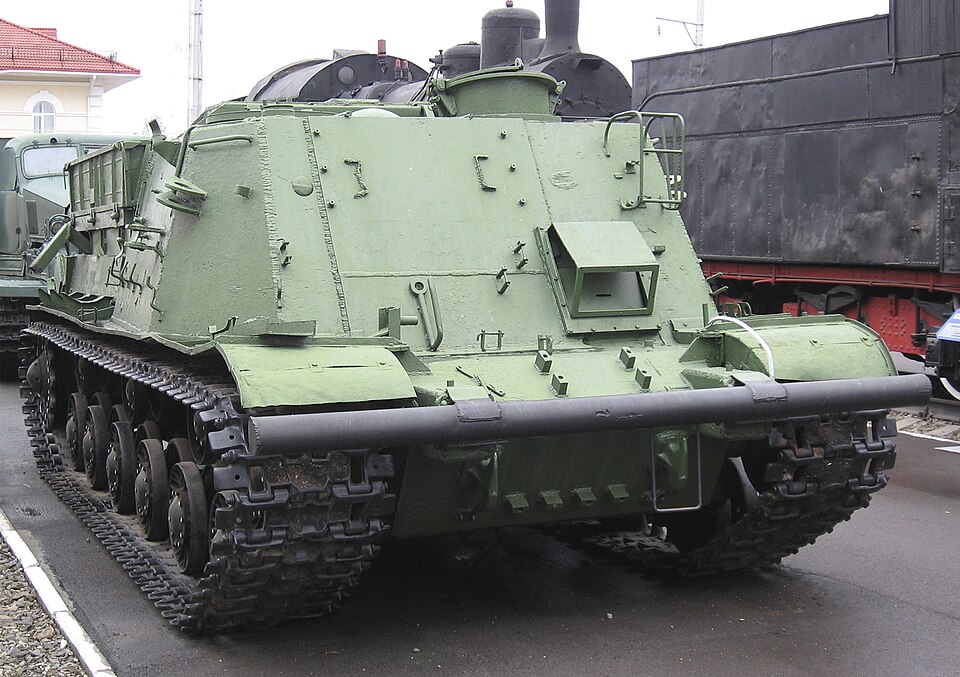
BTT preserved in Russia
Related links
weaponsystems.net/keymilitary.com
twenot-forums.nl/
Model Kit
shadock.free.fr/ tons of surviving ones
commons.wikimedia.org
Cold War Tanks


Cold war tanks posters
Cold War Main Battle Tanks
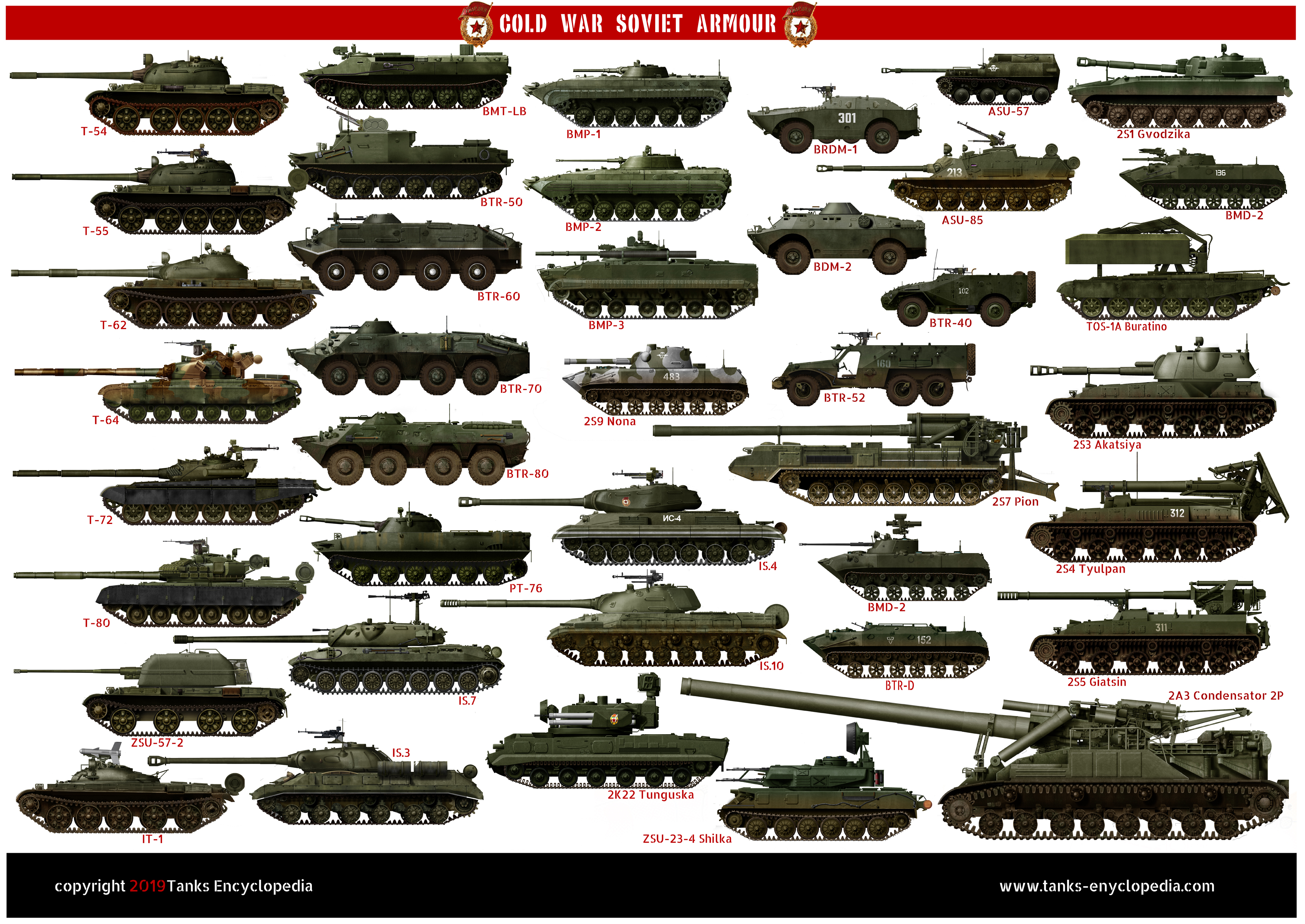
Cold War Soviet Army
Museums, Movies, Books & Games
The Tanks and Armor in pop culture
Tanks and armored vehicles in general are only really grasped when seen first person: The mass, the scale, it's all there. Explore also the way tanks were covered in the movie industry, in books and in video games.Movies:
Best tanks movie on warhistoryonline.com
On imdb.com
On bestsimilar.com/
miltours.com
liveabout.com/
watchmojo.com
Video Games:
pcgamesn.com
historyhit.com
levvvel.com
vg247.com/best-tank-games
mmobomb.com/
alienwarearena.com