M106 (1964)
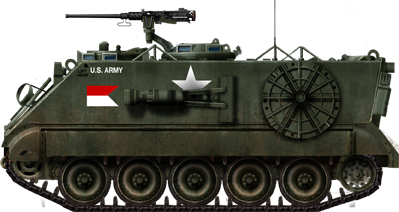
 Self-propelled Tracked Mortar, 2,621 built 1963-79.
Development
The idea of a self-propelled mortar in which the crew would be protected, from the inside of an armoured vehicle, was not new in the 1950s. It was already tested in WW2 when M3 and M2 half track crews routinely used mortars from inside the vehicle. There was even a tailored version called the xxx. But the M2/M3 was not amphibious or well protected enough to survive the cold war battlefield. The concept of fully protected APCs (Armoured Personel Carrier) started in 1944 with early prototypes and ended with the mass-produced M113 by the FMC Corporation from 1959 onwards.Practically from the start, the M106 was one of the key versions of thr M113 to be generated from the base vehicle. As a variation of the M113 armored personnel carrier, it was designed to carry the 107 mm M30 mortar. It was tested at Aberdeen Proving Grounds as the XM106 in 1960, later called the T257E1. This protottype, based on the original M113 chassis with Chrysler 75M petrol engine already had the circular hatch but two panels for cover. The mortar was installed on a turntable and the two mortar crew could stand through the circular hatch. The turntable could be cranked for a precision traverse and bearing. The remainder of the elevation mechanisms were stock M30 mortar. Ammunition racks on both sides replaced seats.
After being tested and fixed, the T257E1 (The XM106 Self-propelled Mortar was originally known as the T257E1 before standardization), it was eventually introduced in 1964, alongside the similar M125 81 mm mortar carrier, both deployed in Vietnam. In 1963 the production was setup at FMC. It ran from there to 1969-70 when the A1 was introduced. There were 862 M106, including 841 for US forces alone, 1,409 M106A1, including 990 for US forces and 350 M106A2, including 53 for the US forces, showing exports scales for the later type. The M106A1 had the diesel engine, while the M106A2 was to the A2 standard.
Design of the M106
General Outlook and Layout

From the official doc.
The M106 is an adaptation of the M113. It share eveything with the base vehicle, notably its driver's position and hatches, same engine layou and tranmission and rear doors. However there are several key differences. Outside the vehicle, the roof on its middle section had been cut open for a new set of hatches made for the mortar. This standard mortar-carrier version had its M30 mortar mounted on a turntable in the rear cargo bay. The roof opened in a three-part circular hatch above, and this mortar rested on a suspended plate fixe din place on floor brackets, but it could be loaded off and fired dismounted. On key aspect was also the external circular plate and the associated mount both suspended by external brackets on the left side, with tooling and maintenance items stored on the right side. The aft external plate als acted as supplementary armour against RPGs.
The external appearance was about the same, as the weights and dimensions: A Weight of 11.7 t for the full combat load with mortar adnd shells stored, for a still compact length of 4.93 m and a width of 2.69 m for the hull, but up to 2.87 m wide external with stowage, including the base plate. In height it was lower actually than the M113 ACAV, at 2.50 m over the Browning MG mount. The weight grew on the next versions, to 13.07 tons (11.86 mt) and 13.44 tons (12.19 mt) for the A1 and A2. Accordingly gorund pressure went from 8.2 psi (0.58 kg/cm²) to 8.3 psi (0.58 kg/cm²) and 8.6 psi (0.60 kg/cm²) respectively. The A2 was made a bit less wide at 8.81 ft (2.69 m). Ground clearance in the frst two cases was 16 in (406 mm) and 17.125 in (435 mm) for the M106A2.
Protection
It was unchanged compared to the standard M113, A1 and A2. This was the 5083 Aluminum alloy armour, from 35 to 45 mm, immune from small-arms fire (7.62mm and smaller) and fragmentation munitions only, all around. The nose at least had an angle. It could also receive a field applique armour fitted below the chassis for anti-mine protection, with limited efficience as it was not V-shaped. The issue of this armour was its flamability, so autimated fire extinguishers were located in the engine, driver, and combat compartments. The vehicle was also NBC proof if needed. Forward were located smoke projectors. By night, the driver had the M19 infrared periscope for driver.Powerplant & Performances
This was the same as the M113, A1 and A2. The baseline powerplant was the same initial the Detroit Diesel 6V53T 209 horsepower (156 kw) gasoline engine coupled with an Allison X200-4 series. Later on the M106A1 this was the Chrysler 75M 8-cylinder petrol rated for 215 hp at 4.000 rpm coupled with a Transmission TX-200-2A, 4 forward, 1 reverse gearbox. Fuel capacity was 85 gal (322 l) gasoline for a range of 185 miles (298 km) on the initial M106, then 95 gal (360 l) diesel for 295 miles (475 km) on the A1 and 300 miles (483 km) for the A2. Top speed remained on average 40 mph (64 km/h) and swim speed, since it remained buoyant and amphibious, was 3.5 mph (5.6 km/h) with minipal preparation but raising the trim vane and activating th pumps. The vehicle could also climb a Grade of 60%, a side slope of 30%, cross the trench 5.5 ft (1.68 m) wide, and climb a vertical wall of 2 ft (0.61 m).Armament

At overloon
M30 Mortar
 The 4.2-inch (107mm) M30 mortar was located in the rear compartment, on an internal turntable mount. Like the original it used manual loading and in all, 88 (M106A1) or 93 (M106) rounds were loaded in the side canisters, as well as 54 fuzes. The mortar could elevate at +42° or +63°, manually and traverse 43° left to 46° right, also manually. Its rate of fire is 18 rpm max., 3 rpm sustained and for an effective firing range from 770 m to 6,840 m (840 yd to 7,480 yd). It could fire the following:
-HE M329A1 (range 5,650 m/6,180 yd) weight 27.07 pounds (12.28 kg)
-HE M329A2 (range 6,840 m/7,480 yd) weight 22 pounds (10.0 kg)
-WP M328A1 (range 5,650 m/6,180 yd).
-ILLUM M335A1 (range 5,290m/5,790 yd) 70-second burn time @500,000 candlepower
-ILLUM M335A2 (range 5,490m/6,000 yd), 90-second burn time @850,000 candlepower.
.50 cal M2HB
The 0.50 inches (12.7 mm) caliber M2HB machine gun ("Ma Deuce") was installed on the same pintle mount in front of the Commander's cupola. It was belt feed with 600 rounds in box. Same as for the M113. The base crew of 4 (squad leader, gunner, assistant gunner, and driver/ammunition bearer) were also armed, with at least each a service Browning pistol, grenades and at least two M16s for point defence.Variants
M106
First operational variant, Chrysler 75M petrol engine. 860 vehicles produced.
M106A16
It was based on the M113A1 chassis with 6V53 diesel engine, five less shells were carried. c1.400 produced.
M106A26
Featured the improved M113A2 suspension and engine cooling. The elevation of the mortar increased. Total 350 produced, unknown if new or converted from M106A1.
M106 specifications | |
| Dimensions | 16.2 x 9 x 7.3 ft (4.9 x 2.7 x 2.2 m) |
| Weight | 12.9 short tons (11.7 t) |
| Crew | 6: Driver, Cdr, Mortar Crew |
| Propulsion | Detroit Diesel 6V53T 210 hp (160 kW) |
| Transmission | Allison X200-4 series |
| Suspension | Torsion bar |
| Speed (road) | c45 kph road, as M113 |
| Range | 90 US gallons (340 L), 285 miles (460 km) |
| Armament | M30 4.2 in (88x 106.7 mm rds) mortar, M2 Browning |
| Armor | 5083 Aluminum |
| Total production | 2,621 overall. |
Operators

In hellenic Sevrice (still active)
 Argentina: 25 M106A2, still active.
 Cambodia: 17 M106A1 with a 107 mm mortar, still active.
 Egypt: 65 M106A1 and 35 M106A2, still active.
 Greece: 257 M106A1/A2 (E-56 EBO 120mm/137), 3 M125A1 M29A1 mortar
 Italy: 420 OTO M106 with French Brandt 120 mm model F1, no longer active
 Peru: 24 M106A1
 Libya: Unknown numbers, likely most destroyed 2014 and civil war.
 Morocco: 32-36 M106A2
 Norway: 24
 Portugal: 18 (3 M106 and 15 M106A2)
 South Vietnam: Unknow numbers provided 1973.
 Taiwan: 90 M106A2 still active.
 Switzerland: 12 cm Mw Pz 64 (Minenwerferpanzer 64) and 12 cm Mw Pz 64/91. 132 retired 2009.
 Ukraine: 10 M106A2 provided from 2022. So far no loss (Oryx).
 Vietnam: Captured during the Vietnam War but modified with the 100mm mortar SC100TX.
Combat Use

No full data found yet. In research. According to photos, the M106 was mostly deployed from 1965. One of the units that used it in combat was the 3rd Squadron, 11th Armoured Cav. in 1967. It was fully embraced by the mechanized infantry units. The M106 remained active until 1975, since many were used by the SV Army in 1973-75. It was somewhat effective as a Close Support (Infantry) weapon (despite the often thick jungle terrain), especially at night by opening with illumination rounds, followed by HE rounds.
It could provide immediate, on-the-spot fire support, often crucial during ambushes or engagements with the Viet Cong or North Vietnamese forces. The 5/60th Infantry, part of the 9th Infantry Division, operated extensively in the Mekong Delta, where mobility and firepower were vital for their operations. The "Bandido Charlie" company had a reputation for aggressive and effective combat operations, and the M106 would have been a key asset in their arsenal, helping to maintain their effectiveness in various engagements. It proved especially efficient in urban combat, during the Têt offensive as well, notably to supress snipers and troops stationed on rooftops.
The US Army used last the M1064A3 in the 1982 Nicaragua Operation, and upgrade to the A3 standard using the M121 120 mm mortar. It saw no action in the gulf war, apart from allies like Egypt. The M106 led to a sub-variant, the M125, similar but armed with a lighter M29 81 mm mortar (and carrying more ammo). After intensive trials in 1988, the US Army adopted instead the Israeli 120 mm Soltam K6. Some M106s were upgraded to the M1064A3, swapping the 107 mm mortar by a 120 mm mortar. So the M106 was officially retired from service in 1988, with transitional units passing them to the National Guard.
Illustrations

M106 in Vietnam, used by a cavalry unit, 1967.
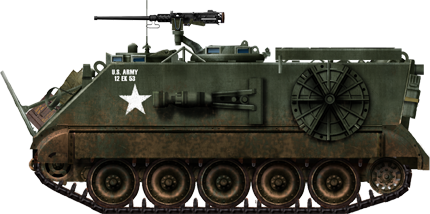
M106A1 in Vietnam, 1970s
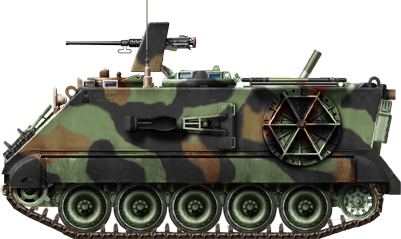
M113A2 of the Berlin Brigade in the 1980s
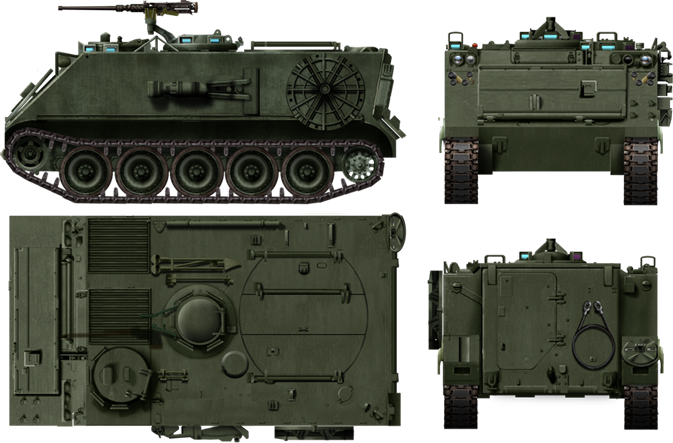
4 views
Photos
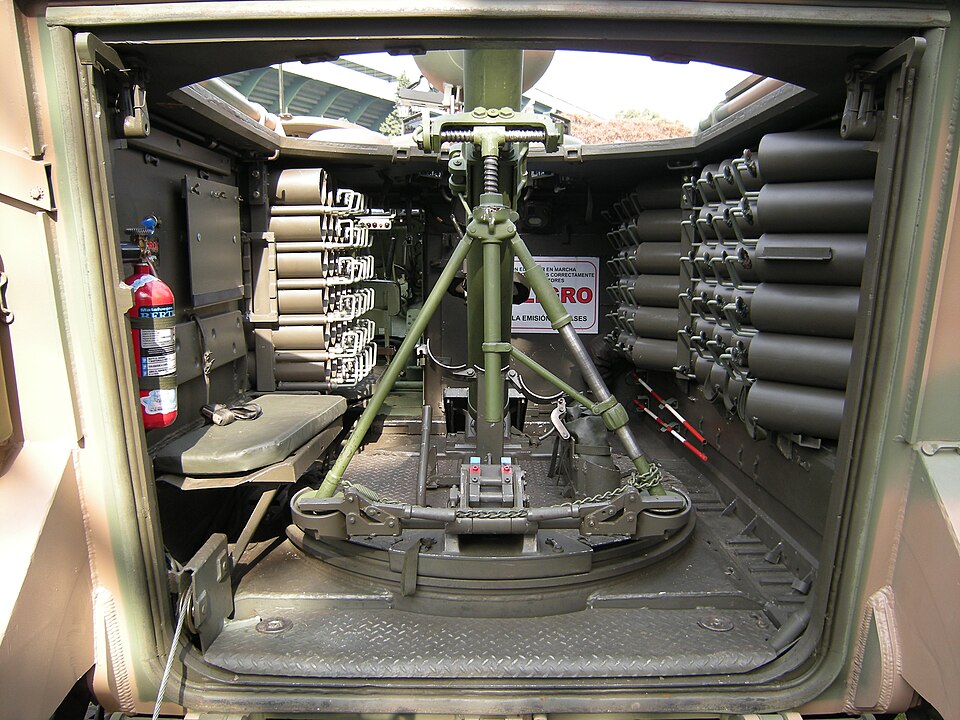
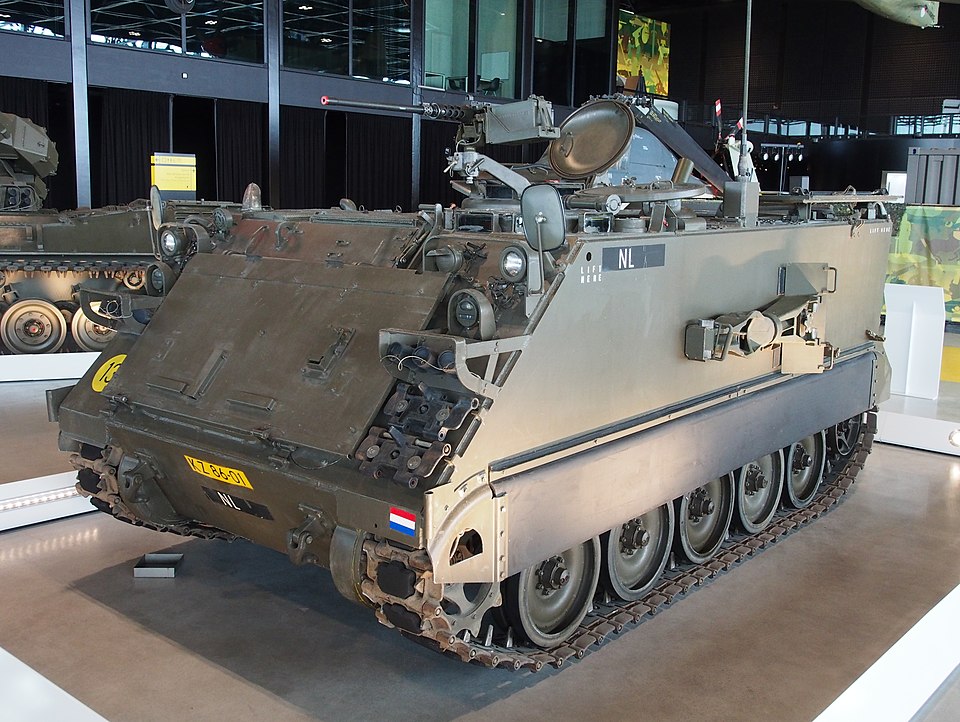
Dutch M106A1 at Overloon Museum


From the Italian Army

A2 in MERDC colors, 1980s

Danish M106A2

M102 mortar in a M106A2. All: From Pinterest
More
Links
militaryfactory.com
Video
Model Kit:

On scalemates

Cold War Tanks


Cold war tanks posters
Cold War Main Battle Tanks
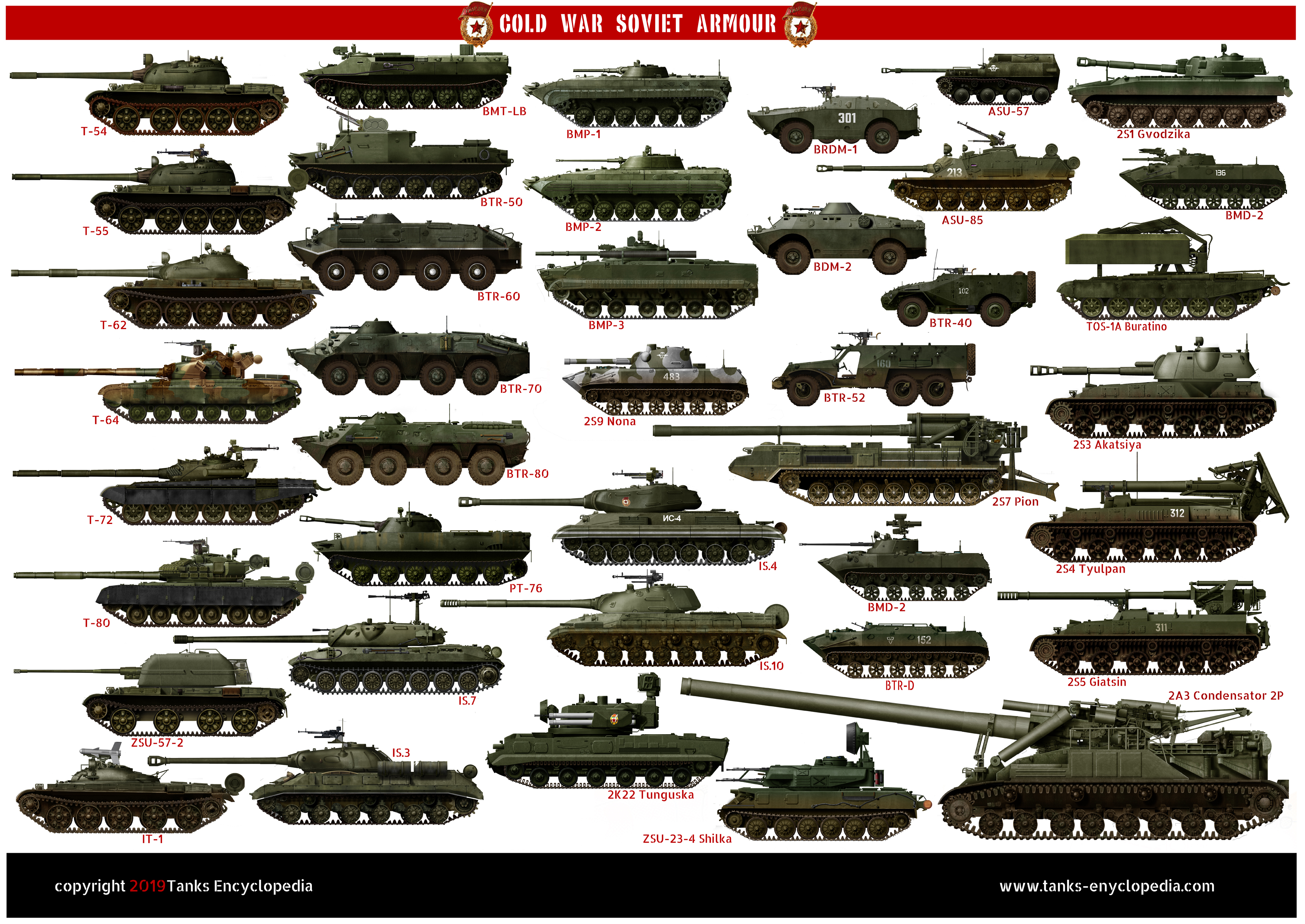
Cold War Soviet Army
Museums, Movies, Books & Games
The Tanks and Armor in pop culture
Tanks and armored vehicles in general are only really grasped when seen first person: The mass, the scale, it's all there. Explore also the way tanks were covered in the movie industry, in books and in video games.Movies:
Best tanks movie on warhistoryonline.com
On imdb.com
On bestsimilar.com/
miltours.com
liveabout.com/
watchmojo.com
Video Games:
pcgamesn.com
historyhit.com
levvvel.com
vg247.com/best-tank-games
mmobomb.com/
alienwarearena.com