Lako Oklopno Vozilo
 Croatia: Armoured Personal Carrier 1993: 100+ produced
Development
During the Croatian War of Independence (March 1, 1991 – November 12, 1995) the Croatian army lacked a proper light armoured personnel carrier (as most Soviet-era assets were now in the hands of the Serbian Army), so the Croatian Ministry of Defense (MoD) asked local companies to to provide a solution for a light, fast and reliable armoured personnel carrier which could be produced quickly in large quantities. It also needed only locally-sourced parts and no imports from abroad as there was a UN arms embargo running over ex-Yugoslavia at large. Under such emergency, with combat casualties amounting, all mechanical companies of the country rose to the occasion and a selection was done."Torpedo" from Rijeka, was already the main provider of civilian 4x4 utity work trucks for the private and public sector. I managed to develop its own design and before the war, had secured a large number of imported parts for these. So it was not long before it could create a prototype armoured personal carrier (APC) from these parts. The result was based on the TK-130 T-7 4x4 military truck, licensed-produced as well as improved compared to the Slovenian TAM 110 from TAM. The Army immediately ordered 50 LOV-1 (For Lako Oklopno Vozilo or lit. "Light Armored Vehicle") by late 1993, with the armoured body assembled and fitted out by RH ALAN. The initial batch was delivered the next year in 1994, presented to the public on a military parade in May 1995, in Zagreb. However by November, when all units had been equipped, the war ended.
As a result, the rushed design was now compared to other existing APCs on the international marker, and the limitations of the design were all to clear. Albeit the company soon declined a number of specialized variants of the basic chassis, a bit like the Serbian BOV-1 (Borbeno oklopno vozilo), eventually the model had too many limitations and ultimately all LOV-1s were replaced by Patria AMV (close to 200) and MRAP vehicles depending on the mission, like 20 Mine-Resistant Ambush-Protected Vehicles M1224 International MaxxPro PLUS donated by the US government in 2014. This added to the 162 M1240 A1 Oshkosh M-ATV, 50 M1151 enhanced-armament carrier HMMWV, 18 M1114 up-armoured armament carrier HMMWV. As of today, even the specialized variants are retired, in storage or scrapped. By mid-2007 as the production has long closed incuding for spare parts, not exports of the RH ALAN LOV family was made. Its internal name was also "LOV-OP". It's possible that no other vehicle was built outside the 50 ordered in 1993, provided the variants were all included prototypes.
Design of the class
Hull and general design
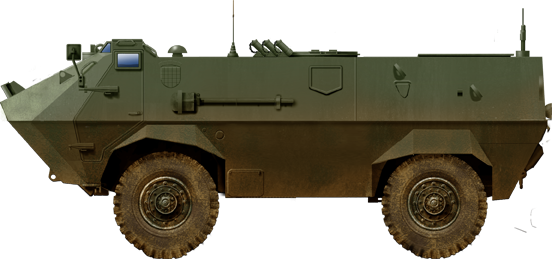
While beong fully armoued at all angles, this APC was capable of carrying, outside the crew of two forward, up to 10 fully equipped troops in the ear compartment, entering or existng through a double door. The chassis as said above was the Torpedo TK-130 T-7 (4×4) truck. Since it keep its original structure, the rear troop compartment could be replaced by a utility flatbed, and keep a towing eye for also towing artillery and other weapons or an utility trailer up to 2,500 kg. It used of course largely available COTS (commercial automotive components) off the shelff, and thus the vehicle was developed in such way it had one of the lowest life cycle costs of its time.It hull, wrapped around the original chassis, was made of all-welded steel armour protected against 5.56 mm or 7.62 mm API small arms rounds from 30 m, and shell splinters from 40 m as well as light anti-personnel mines. The thickness of the RHA plates was likely around 5 mm, but enhanced by the sloped shapes at 30-40°. It seems later vehicles received an add-on belly armour against better land mines. The driver is seated on the front left under a small cockpit just large enough for his head, and protected on three sides by bulletproof windows. He has also a single electric windscreen wiper. The vehicle had a ground clearance of 315 mm, and track of 1,86 meters and a wheelbase of 2,85 meters.
Above his cockpit raised slightly above the hull standards a single-piece hatch cover, forward opening. The commander sat to the right, with a rectangular roof hatch rear opening, and has a day periscope which could be traversed left or right. On either hull side of the forward cab was a single forward-opening door. To the rear, was located the engine compartment, towards the front, below and between the commander's and driver's positions.
The rear compartment for the troops is served by two back doors opening outwards. The right door had a spare wheel and tyre, left door a firing port. There were no side firing ports, but roof hatches to fire standing on the move. The troops were seated on two benches acting as storage areas, facing each others inwards. The benches could be stowed up to clear the floor and receive two stretchers, acting as medevac. There was still however a single firing port either side with a small rectangular window covered by a shutter. The roof hatches opened left and right.
Powerplant
for a Deutz model BT6L 912S turbocharged air-cooled diesel, coupled to a ZF model Z5-35S manual transmission and two-speed transfer case. The power is transmitted at all time on all four wheels, but the rear wheels could be disconnected when on road. The Suspension comprised leaf springs and hydraulic shock-absorbers attached by rubber cushions. At the front, under the nose, a small hook protruded, for a winched steel cable 38 m long and 10 mm diameter for unditching (capacity 50 kN). The LOV APC could reach 110 kph on road and cross 500 km on the same based on its 170 liters capacity tanks.There is also a central tyre pressure-regulation system to adjust pressure from the cab, between 0.45 and 0.70 bar whereas the tyres themselves hare of the run-flat type to travel up to 50 km punctured by small arms fire. The cab has an engine independent heating and ventilation system and like the truck, there was an adjustable steering column. The vehicle, in some specialized variants coud receive also an auxiliary power unit. Not amphibious, the LOV-1 coud still cros water one eter deep, or a 65% gradient, 35% side slope, climb a 50 cm wall, and had a 13 meters turning radius.
Armament
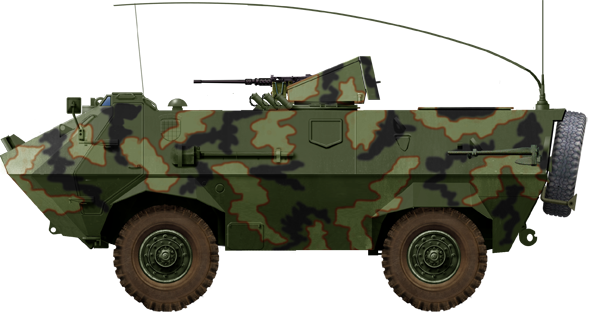
On the basic APC it was limited to a ring-mounted, forward .50 (12.7 mm) heavy Browning M2HB machine guun manned by one of the troopers aft acting as gunner. His position had lateral and rear protection. In addition of the small arms carried by the troops, the vehicle was generally also fitted woth eight 82 mm electrically operated grenade launchers, for smoke or anti-personal ordnance. Note that specialized variants could be heavily armed (see below).⚙ specifications | |
| Weight | 8,800 kilograms (8.7 long tons) |
| Dimensions | 5.89 x 2.36 x 2.10m (19 ft 4 in x 7 ft 9 in x 6 ft 11 in) |
| Propulsion | Torpedo-Deutz BT6L 912S TC AC diesel 97 kW (132 hp), 15.0 hp/tonne |
| Transmission | ZF model Z5-35S manual |
| Suspension | Torsion bar |
| Speed | 85 kph (53 mph) on flat. |
| Range | 500 kilometres (310 mi) |
| Armament | 12.7 mm M2 Browning machine gun, c1000 rounds |
| Protection | 7-8 mm steel (0.3 inches) |
| Crew | 2 + 8 |
Variants

LOV-ED
LOV-IZV reconnaissance
Same roof-mounted .50, grenade launchers. but extra comm. equipment, 8-barrel 60 mm RLs, 20 mm RT-20 rifle, 40 mm grenade launcher.LOV-Z CP
Command post: 6-man crew, extra commu., field tel. switchboard (10 channels), soundproof insulation, air conditioning, 2.5 kW generator.LOV-ABK
NBC reconnaissance with radioactive radiation and chemical agent detection and collective NBC protection, AC overpressure, sas and external combi uniforms.LOV-RAK
24/128 mm rocket launcher variant: Rear cut down for a 128 mm, 24-round MRL, made by RH ALAN for export. Remote firing.LOV-ED
Electronic warfare variant, with the rear comp. using jamming equipment and large roof-mounted antenna.RH ALAN also developed the UP1 and UP2, the first an artillery fire-control vehicle, and the Strijela 10 CROA1 SAM system developed on a lenghtened 6x6 chassis based on the TAM 160. It was modifed to support the KB Tochmash 9K35 Strela 10 (SA-13 'Gopher') SAM system. This vehicle was notably covered by Jane's Land Based Air Defence.
 LOV T2: The T2 light armored vehicle or LOV T2 for short is a Croatian armored combat vehicle based on the LOV armored vehicle. It never entered mass production due to lack of funding. Development of the LOV T2 armored vehicle began in 1996, and the first prototype was completed in 1997. The appearance of the front part of the armored body has been changed, with new bulletproof glass that provides greater visibility for the driver and passenger, a winch that is located inside the vehicle, modern equipment and the possibility of installing a more powerful engine and automatic transmission.
Deployments:
Croatia declared independence on June 25, 1991, bu following the brioni agreements accepted to postponed it to October. Croat forces were constituted, mostly keeping the same uniforms and equipments, badged with the checkered red-white banner, and they declared their loyalty to the Government of Croatia, in the first secession from the Socialist Federal Republic of Yugoslavia (SFRY). Soon they ran into the firm opposition from the Yugoslav People's Army (JNA) and local Serb forces of Croatia that considered it a rebellion. Combat operations against with the JNA ended as soon as 1992, when the new vehicle was designed. Next started a time of border skirmish and internal "cleaning up" operations agains Serbs on the Croatian territory.In 1993 the war displaced itself in Bosnia and Herzegovina. Hundreds of thousand sof refugee wents both sides, and by 1994, the Croatian Army had an estimated 3,000 to 5,000 troops fighting in Bosnia. In March 1994 after a US agreement, an alliance between Bosnian and Croatian armies against the Serb forces were created and the fight went on against the Krajina enclave with Operation Cincar near Kupres and by November and later Winter 1994 operation near Dinara and Livno.

Improvized APC fightng at Vukovar
Operations Flash was a brief Croatian Army (HV) offensive against the proto-state Republic of Serbian Krajina (RSK) on 1–3 May 1995, after ceasefire and economic cooperation agreements signed between Croatia and the RSK and all organised RSK resistance formally ceased on 3 May with most troops surrendering the next day near Pakrac, and mop-up operations continuing for two weeks. Prior to that, the Croats used whatever improvized APC they could muster. In later campaigns indeed, the Croatian army used blitzkrieg tactics with Guard brigades punching through enemy lines and completing encirclements of enemy units. It also worked with 15 foreign mercenary advisors, watched carefully by the US State Department to ensure no violation of the UN arms embargo.
Operation Storm was the last major battle of the Croatian War of Independence, a decisive victory for the Croatian Army across a 630-kilometre (390 mi) front against the Serbian Krajina (RSK), and strategic victory for Bosnia and Herzegovina which took part also in this offensive.
Gallery


Read More/Src
Books
Od Tina do Strijele: izrada oklopnih vozila u Hrvatskoj 1991.-1995.Links
tanknutdave.com/army-guide.com
issuu.com
maketarstvo.net
pmulcahy.com
army-guide.com
aalan.hr
naoruzanje.paracin.co.yu
Operation_Storm
List_of_equipment_of_the_Croatian_Army
hrvatski-vojnik.hr
forum.warthunder.com
en.wikipedia.org
In Croatian
balkanwarhistory.com
Videos
Model Kits
3D
Modern Tanks


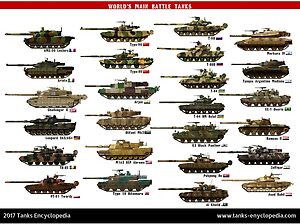
Modern MBTs posters
Denel Bagder (2018)
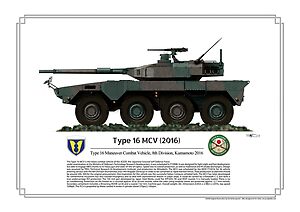
Type 16 MCV (2016)
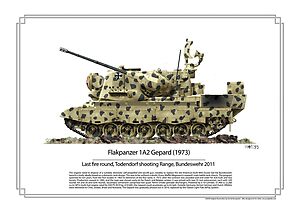
Gepard 1A2 last rounds 2011
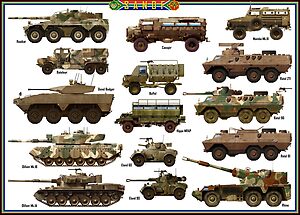
SANDF
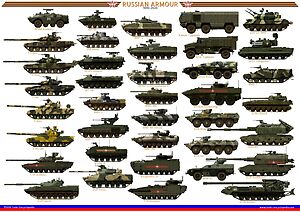
Russian AFVs
Main Battle Tanks