Antitank Missiles
General Introduction

In WW2, there were not yet ATGMs in the modern sense, but rocket propelled grenades. Used at infantry level as an answer against tanks, they were the following:
Panzerfaust
Disposable recoilless launcher firing a large shaped-charge warhead. Introduced in 1943. Extremely simple and cheap. Effective range: 30–100 meters depending on model.
Could penetrate over 200 mm of armor, enough for any Allied tank. Produced in several versions (Panzerfaust 30, 60, 100, 150). Advantages: cheap, powerful, easy to train with. Disadvantages: very short range, single-shot.
Panzerschreck (Raketenpanzerbüchse)
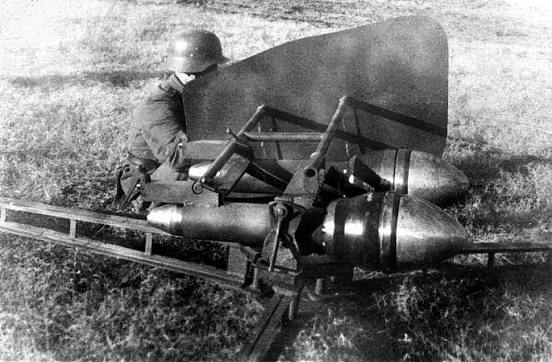
Inspired by the American Bazooka. Fired an 88 mm rocket. Crew-served weapon with reloadable launcher. Effective range: around 150–180 meters. Often equipped with a blast shield to protect the gunner. Advantages: greater range than Panzerfaust. Disadvantages: heavier and more cumbersome.
M1/M9 Bazooka
First operational infantry rocket launcher. Introduced in 1942. Fired a 60 mm shaped-charge rocket. Effective range: 100–150 meters. The Bazooka revolutionized infantry anti-tank warfare and influenced later German and Soviet designs. Advantages: reusable, relatively light. Disadvantages: early warheads struggled against the heaviest German armor.
PIAT (Projector, Infantry, Anti-Tank)
Introduced in 1943. Not rocket-powered. Used a powerful spring and spigot mortar system. Fired a shaped-charge bomb. Effective range: About 100 meters against tanks. Longer ranges possible for indirect fire. Advantages: No rocket backblast. Could be fired from enclosed positions. Powerful warhead. Disadvantages: Heavy recoil. Difficult to cock, especially after misfires.
The PIAT famously destroyed German tanks during the Normandy campaign and at Arnhem.
Soviet Weapons
No RPG was operational before 1945 despite many prototypes made (RPG-1). Instead, the Soviet army used the RPG-43 and RPG-6 Anti-Tank Grenades, Hand-thrown shaped-charge grenades. Required soldiers to get dangerously close to enemy tanks. Effective against side and rear armor. Captured Panzerfausts. The Red Army widely employed captured German Panzerfausts from 1944 onward. Soviet experience with these weapons helped inspire post-war RPG development.
Other Infantry Anti-Tank Methods: Before shaped-charge launchers became common, infantry relied on: Anti-tank rifles (British Boys, Soviet PTRD and PTRS). Magnetic mines.
Satchel charges. Molotov cocktails. Demolition charges. These remained useful against lighter vehicles and vulnerable tank areas but became increasingly dangerous to employ as armor improved.
Cold War RPGs

The Cold War saw the RPG evolve from a relatively short-range anti-tank weapon into one of the most widespread infantry weapons in history. While early postwar tanks became increasingly protected, RPGs remained attractive because they were cheap, portable, easy to train with, and effective against a wide range of targets.
Origins: The RPG-2
The Soviet RPG-2 was heavily influenced by wartime German Panzerfaust concepts. Characteristics: Reusable launcher. 40 mm launch tube. Large shaped-charge warhead. Effective range: about 100–150 m. Armor penetration: roughly 180–200 mm. Advantages: Extremely simple. Reliable in harsh conditions. Cheap to manufacture. It was the Kalashnikov of RPGs.
Limitations: Poor accuracy at longer ranges. Slow projectile. Limited effectiveness against newer tank armor. The RPG-2 was exported widely throughout the Warsaw Pact, Asia, Africa, and the Middle East.
The RPG-7: The Icon
The RPG-7 became the most successful anti-tank launcher ever produced. Key features: Reloadable launcher. Rocket-assisted projectile. Optical sight. Wide variety of ammunition.
Typical effective ranges: 200–300 m against moving targets. Up to 500 m against stationary targets.
The true strength of the RPG-7 was its adaptability. New warheads continually improved its effectiveness without changing the launcher itself.
Warhead Types: HEAT (anti-tank), Tandem-charge HEAT (post-Cold War), HE fragmentation, Thermobaric, Anti-personnel.
Millions were produced and many remain in service today.
China and Other Warsaw Pact Variants
Type 56: China manufactured large numbers of RPG-2 copies.
Type 69: Chinese version of the RPG-7. These weapons became common across Asia, Africa, and the Middle East due to extensive military aid programs.
RPGs in Cold War Conflicts

Vietnam War: RPGs proved highly effective against Armored personnel carriers, Bunkers, Defensive positions, Low-flying helicopters. American crews learned that even when an RPG could not destroy a vehicle outright, it could disable tracks, optics, or crew.
Arab-Israeli Wars: During the 1967 and especially the 1973 wars, Egyptian and Syrian infantry used large numbers of RPG-7s. Combined with anti-tank guided missiles such as the Soviet-made 9M14 Malyutka ("Sagger"), RPGs inflicted significant losses on Israeli armor during close-range engagements.
Soviet-Afghan War (1979–1989): RPG-7s were used by both Soviet forces and Afghan Mujahideen. They became multipurpose weapons: Ambushes against vehicles, Attacks on fortified positions, Harassment fire at long range, Limited anti-helicopter use. Mountainous terrain often favored infantry carrying RPGs over heavier anti-tank systems.
Western Equivalents: Although "RPG" is usually associated with Soviet weapons, NATO developed similar systems.
M72 LAW (United States): Disposable launcher, Single shot, Lightweight, Widely used from the Vietnam War onward.
Carl Gustaf Recoilless Rifle (Sweden): Reloadable. Longer range than RPGs. Large variety of ammunition. Still widely used today. Unlike the RPG-7, the Carl Gustaf is technically a recoilless rifle rather than a rocket launcher.
The RPG's success came from five factors: Low cost — far cheaper than guided missiles; Portability — one soldier could carry launcher and ammunition; Reliability — few moving parts; Versatility — useful against tanks, bunkers, buildings, and troops; Mass availability — exported worldwide by the Soviet Union and its allies. By the end of the Cold War, the RPG-7 had become a standard feature of infantry forces across dozens of countries and insurgent movements. While anti-tank guided missiles increasingly took over the long-range anti-armor role, RPGs remained indispensable for close combat and continue to be used extensively in conflicts around the world.
Cold War ATGMs

If the RPG was the infantryman's close-range anti-tank weapon, the Anti-Tank Guided Missile (ATGM) became the Cold War's answer to increasingly powerful tanks at ranges of 1–5 km. ATGMs allowed infantry to destroy tanks far beyond the effective range of RPGs and many tank guns of the 1950s and early 1960s.
Why ATGMs Appeared. By the 1950s:
Main battle tanks were becoming heavier and better armored. Conventional infantry anti-tank weapons had limited range. Recoilless rifles were bulky and exposed crews.
Guided missiles offered: Long engagement ranges; High armor penetration; Relatively light launchers; The ability to defeat tanks without deploying anti-tank guns
First Generation ATGMs (1950s–1970s)
These systems required the operator to manually steer the missile all the way to the target.
French SS.10
The French were pioneers in ATGM development. SS.10 (1955): First widely deployed ATGM. Wire-guided. Range: about 1.5 km. MCLOS guidance (Manual Command to Line Of Sight).
The operator watched the missile and guided it with a joystick. Problem: extremely difficult to use under combat conditions.
SS.11
An enlarged and more powerful successor: Range: around 3 km. Used by many NATO countries. Mounted on helicopters, vehicles, and ground launchers. The SS.11 helped establish the armed anti-tank helicopter concept.
Soviet 1st Generation: 3M6 Shmel ("Snapper"):
The Soviet Union introduced ATGMs somewhat later. Entered service in the late 1950s. Vehicle-mounted. MCLOS guidance. Difficult to operate effectively.
It demonstrated the concept but had limited combat success.
The Sagger Revolution: 9M14 Malyutka (AT-3 Sagger)
Introduced in the early 1960s, the Sagger became one of the most influential ATGMs ever built. Characteristics: Portable. Wire-guided. Range up to 3 km. Penetration sufficient against most NATO tanks of the era. Thousands were exported worldwide. 1973 Yom Kippur War: The Sagger achieved its greatest fame during the 1973 Arab-Israeli War. Egyptian infantry used dense networks of:
RPG-7 teams, Sagger teams, Anti-tank strongpoints. Israeli armored forces initially suffered significant losses when advancing without adequate infantry support. The war demonstrated that tanks operating alone were vulnerable to modern anti-tank weapons.
Second Generation ATGMs (1970s–1980s)
These systems introduced SACLOS (Semi-Automatic Command to Line Of Sight). Instead of manually steering the missile, the operator simply kept the sight on the target. This dramatically increased hit probability.
MILAN
Developed jointly by France and West Germany. MILAN (1972): SACLOS guidance. Range: around 2 km. Portable infantry system. Widely adopted by NATO. One of the most successful ATGMs of the Cold War.
TOW
The BGM-71 TOW (United States) was introduced in 1970. Tube-launched, optically tracked, wire-guided. Range exceeding 3 km. Vehicle, helicopter, and ground-mounted versions. The TOW became NATO's principal heavy ATGM and remains in service today.
Konkurs
Full name 9M113 Konkurs (AT-5 Spandrel): Soviet answer to Western second-generation missiles. SACLOS guidance. Range: 4 km. Vehicle and infantry versions. High reliability. Widely exported throughout the Warsaw Pact and beyond.
Helicopter-Launched ATGMs
One of the Cold War's major innovations was the anti-tank helicopter. Early Systems. French SS.11. Soviet Falanga. American TOW.
Specialized Attack Helicopters became the AH-1 Cobra (USA), Mi-24 Hind (USSR), BO 105 PAH (West Germany). These platforms could rapidly engage armored formations from standoff distances.
The NATO vs Warsaw Pact Battlefield:
By the 1980s, planners expected any war in Central Europe to involve massive armored battles. NATO: TOW, MILAN, HOT, Attack helicopters. Warsaw Pact: Sagger, Fagot, Attack helicopters carrying Falanga and later Shturm missiles. Both sides anticipated creating layered anti-tank defenses combining Tanks, Infantry ATGMs, Attack helicopters, Artillery. The Impact on Tank Design
ATGMs fundamentally changed armored warfare as well: In response, tanks gained Composite armor, Explosive Reactive Armor (ERA), Smoke grenade launchers, Improved fire-control systems and Greater emphasis on combined-arms tactics. A tank was no longer expected to survive by armor alone.
Antitank Rockets
Rockets until 1918
A definition: Rockets had been around since medieval times, these contraptions were used notably by Genghis Khan armies, by the Koreans and the Chinese, by the and by British in the XIXth Century. From "bamboo flame sticks" to proper Congreve rockets, we will not go through this early rabbit hole and see military use aganist tanks from WWI. In this war, rockets were mass-manufactured, but not for ground use, rather for air use: Allied Fighters were equipped with Le Prieur rockets as an efficient balloon-busting method. The British however developed one ordnance known under the name "Vickers-Crayford rocket gun". In reality this infantry support gun developed in 1917 to deal with fortifications was a light, portable limited recoil gun capable of firing Incendiary, AP, and HE cartridges. Offically name the 1.59-inch breech-loading Vickers Q.F. gun, Mk II this was merely a close support, close range weapon to deal with fortified positions and in no way, shape of form fired rockets.
In the past, rockets had been effective for their psychological effect and extra range. However in WW2, trench mortars and artillery were just better, with an even greater psychological effect, destruction range and unmatched precision. As the war became static, hitting a trench with rockets was just ludicrous. Even when Tanks appeared, the Germans learned to deal with them with K-bullets, antitank rifles and light guns. Not rockets. As for note, Robert Goddard patented the liquid fuel rocket in 1914, the same year WWI started, and his research on rocket design wouldn’t be published until 1919. If that would have been known earlier, perhaps the German command might have been interested to develop early ballistic missiles instead of risking squadrons of heavy bombers and zeppelins over London and Paris. But the war stopped in 1918.
A belligerent however might had a head start in 1917, when the same Goddard presented its models of rockets to the two branches, Army and Navy after April 1917. He even reworked his concepts to present a precursor to the bazooka on November 6th 1918. Interested by the Le Preieur Rockets they also used, they British developed rocket guidance systems during the war, both wired and radio controlled, but the was ended before any realistic prototype.
From Interwar Developments to WW2
The Russian Case
In the Interwar, there might have been some proposals, and indeed Soviet Russia, of all future belligerents, very much embraced the idea of rocket artillery. It needed for that to develop solid fuel, and thanks to specialists such as Nikolai Tikhomirov at the Soviet Gas Dynamics Laboratory (GDL), the first ancestors of 1942 Katyusha were tested in March 1928. I however only flew to 1800 m and was not accurate. Thus, their first appplication was to assist take-off of aircraft (JATO). In 1930s Georgy Langemak tested firing rockets from aircraft and the ground but it wait until June 1938 to have a workable military rocket designed by the RNII, with prototype launchers for the modified 132 mm M-132 rockets.
It was test launched from a ZIS-5 truck but this proved unstable, so V.N. Galkovskiy proposed a new launching system with longitudinally mounted rails and by August 1939, the result was the BM-13. However until 1945, the "Kayusha" whic existed in many variants were used as mobile mass artillery until 1945. It was perfect over an enem over open terrain and accuracy matched less than the fire concentration and psychological effect. It was never intended to destroy tanks concentrations, being only an anti-personal weapon first and foremost. The Russians uses a variety of anti-tank non-gun/rifle weapons during the war, like the RPG-43 grenade, which used a high-explosive anti-tank (HEAT) shaped charge for good effet. Also of note, the Llyushin LL-2 Sturmovik, the famous mass-produced attack aircraft, carried the RS-82 and RS-132 rockets, both designed to destroy armored vehicles with a single hit. However they were so inaccurate that experienced Il-2 pilots used their 30mm cannons with AP shells instead each time. They were still efficient against concrete pillboxes and other fortified fixed targets. On tank concentrations they also used HEAT shaped charge bomblets as well.
However the closest to home were the start of the RGP family of course. The RPG-1 (Ручной противотанковый гранатомёт, Ruchnoy Protivotankovy Granatomyot; or "hand-held antitank grenade launcher") succeeded to the failed RPG-1 designed in 1944 by G.P. Lominskiy, from the Main Artillery Directorate, Small Arms and Mortar Research Range. It was ana adapted pistol and tube firing a mass-made 1.6 kgs shaped charge warhead for 3.6 kgs total. Max range was barely better than the Panzerfaust despite being more complex, up to 75 m (246 ft). The RPG-1 was deigned as smaller, lighter than the Panzerfaust but reusable like the Bazooka. It was never adopted for production, having issues of firing cap, and propellant and could only penetrate 140 millimetres (5.5 in). Postwar, the RPG-2 improved on it and ultimately this led to the cold war legendary RPG-7 (1954). No ATGM-like prototype was started before the end of the war, but in the Soviet equivalent of Operation Paperclip, plans and prototypes of the X7 (see below) and its replacements were seized.
The German Case
The Germans too, developed rockets early on in the interwar, notably with pioneer Fritz Van Ohain (1911–1998), and started playing with jet engines after testing rocketry. The Nebelwerfer, German rocket artillery, was treaty already in the artillery section. Whatever the model, these rockets were not intended for anti-tank use. Rather, they were used by Chemical troops. If they hit anything armoured and defeated it, this was by pure luck. But when targeting tank concentrations this was less to destroy them than their crews, resting, maintaining or supplying their vehicles out in the open... However unlike the Soviets, the Nazis were keen on testing self-propelled ammunitions to defeat tanks. In addition to a range of anti-tank grenades, the development of shape-charges already renewed interest for traditional artillery, as practically any field gun, whatever its muzzle velocity just had to be precise enough to hit its target at short range with one of these. Hollow charges created an incandescent jet inside any armoured vehicle, though any steel thickness, transforming the inside of the target into an hoven.
Thus, using an infantry launcher for such warheads seemed a cheap and efficient way to deal with allied tank superiority. This took several forms: The first of these was the Panzerschreck. It appeared a bit later than the US Bazooka and operated the same way so many authors postwar stated that it was a straight-out copy. However its development long predated the use of bazookas and if it was deployed from 1943 instead f 1942 for the US Bazooka, the base principle was worked on earlier. In addition to light recoiless guns also firing HEAT charges, the Raketenpanzerbüchse 54 became a favorite until 1945, but with 300,000 made it was still costly to make. In the meantime, many older guns, no longer sufficient to deal with the latest eastern front medium and heavy tanks, in particular the infamous 3.7cm PAK 36 "door knocker" could be reconverted by having a supply of Stielgranate 41 shaped charge. The latter was mass produced from early 1942, to some 630,000. They coud defeat 180 mm (7.1 in) of plate thickness, officially. The confidential 4.2 cm Pak 41 was not so lucky.
Of course the Panzerschreck was the "regular" weapon but there were never enough of them. So by 1942 it was asked to develop a much simpler, rudimentary weapon able to fire a shaped charge. This became the "tank fist" or "panzerfaust". A whole family was derived of these singe-use protectors. It had a simple tube with percussion, and see as just a replacement for thrown grenades, albeit it had a small range still, max 60m (197 ft). The immense advantage was its simplicity and low cost (15-20 RM), with as much as 8,254,300 maufactured in all variants, Panzerfaust 30, 60, 100, 150, and 250. From 1944 onwards, it made tanks very much easy and conspicuous targets in urban combat, a lesson for the future.
Hower at the other high end of this, some estimated the Panzerschreck was too short range so someone had a bright idea to adapt to anti-tank use the airborne X4 anti-aircraft semi-guided rocket, carried by Me262s and Ta 183 in 1945. This was the Ruhrstahl X-7 "Rottkapchen" or "little red riding hood" from the fairytale. It had a conventional HE warhead exchanged for a 2.5 kg shaped charge. About 300 were only made due to the lack of engines, but it was deployed in combat, proved able to defeat most Russian tanks at 1200 m, including the IS-I. It's importance could not be underestimated as it was really the first ATGM used in combat.
The British Case
Defeating German tanks was also an issue as the latter became better protected. Current AT guns such as the 2-pdr sooon fond their limited and other models only regained pertinence, alongside the fantastic 17-Pdr, by the use of shaped charges, invented independently in Britain by Henry Hans Mohaupt. They perfected the hollow charge concept that already existed and developed the first effective lined cavity shaped-charge penetrator. Mohaupt was the best counterpart of German engineer Franz Rudolf Thomanek in that in 1938. Mohaupt concept was created in 1939 and desmonstrated in 1940 to British officials, which rejected it, and later to the US.
However the infantry anti-tank weapon that was to replace the famous BOYS rifle, now considered too weak, heavy and unwieldy for practucal use in 1941, was the PIAT for "Projector, Infantry, Anti Tank". Designed by Major Millis Jefferis in 1942 it entered service in 1943 and was adopted for mass production. It was derived by the spigot mortar system (later used in the Navy as the hedgehog) and designed to fire a 2.5 pound (1.1 kg) shaped charge bomb using a cartridge in the tail of the projectile for a range of approx. 115 yards (105 m).
https://en.wikipedia.org/wiki/PIAT
The US Case
HEAY projectiles were the first link in the road that led to the development of the most famous US infantry weapon against tanks, the Bazooka. This came essentially back to British engineer Mohaupt desmonstration to allied officials in 1940. The price is asked for however was denied by the U.S. Army Ordnance Department, however long story short in 1941 all patents were acquired and classified, leading to the 2.36-in high explosive anti-tank (HEAT) and machine gun grenade and the 75- and 105-mm HEAT artillery projectiles in 1941.
The Japanese Case
https://en.wikipedia.org/wiki/Type_4_70_mm_AT_rocket_launcher
https://forum.enlisted.net/t/8cm-navy-anti-tank-rocket-launcher/172021
Antitank RPGs:
https://en.wikipedia.org/wiki/Rocket-propelled_grenade
https://www.russianspaceweb.com/rockets_wwII_germany.html
https://en.wikipedia.org/wiki/German_rocket_propelled_bombs_of_World_War_II
https://en.wikipedia.org/wiki/Panzerschreck
https://groups.google.com/g/rec.aviation.military/c/yrQsP7IR1Zs?pli=1
https://en.wikipedia.org/wiki/Bazooka
Antitank Missiles:
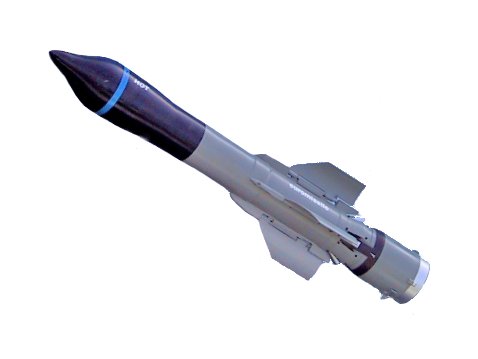
Granddady of ATGMs: The 1944 Rotkäppchen
The development of the world's first true Anti-Tank Guided Missile (ATGM) was pioneered by Nazi Germany during World War II with the Ruhrstahl X-7, also known as Rotkäppchen ("Little Red Riding Hood"). It was ordered by the Waffenamt (Army Ordnance Board) in 1943 to combat overwhelming Soviet armor, the project was led by Dr. Max Otto Kramer at Ruhrstahl AG. It was essentially a smaller, ground-launched derivative of the Ruhrstahl X-4 wire-guided air-to-air missile.
The missile had a distinct shell-shaped body measuring roughly 0.95 metres long (with a total wingspan of 1.5 metres) and weighed 9 kg (35 kg when accounting for its total system weight and launching apparatus). It was powered by a two-stage WASAG solid-fuel rocket motor. The first stage provided a powerful burst of thrust to launch it off its rail, while the second stage sustained a cruise speed of around 245 mph (360 km/h). It featured two large, curved asymmetrical wings attached at the rear. To stabilize the flight, the missile was designed to slowly rotate along its longitudinal axis at about one revolution per second. It carried a 2.5 kg to 3.5 kg hollow-charge (shaped charge) warhead capable of penetrating over 200 mm of steel armor. Range was approximately 1,200 metres. This was more than enough to decisively knock out any Allied or Soviet heavy tank at the time, including the T-34 or IS-2.
The Guidance System
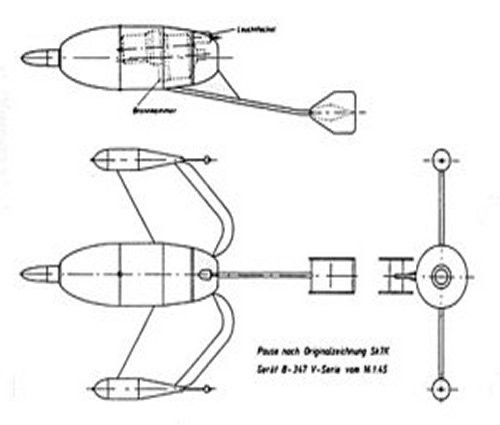
The Rotkäppchen utilized a Manual Command to Line of Sight (MCLOS) system. Upon launch, two ultra-thin insulated copper wires unspooled from pods mounted on the missile's wingtips. A ground operator tracked the target through an optical sight and used a joystick to send steering corrections down the wires, which manipulated a single spoiler mounted on an extended tail arm to adjust the missile's trajectory. Later was developed the Zielsuchgerät ("target aquisition device"). The next Steinbock used infra-red transmitting of the guidance command and therefore didn't require the wires. An automated tracking device was the Pfeifenkopf or Pinsel project. Als developed were the Rochen-600, Rochen-1000 and Rochen-2000 for ranges of 500m , 1500m and 3000m.
Combat History & Legacy
Production took place at the Ruhrstahl factory in Brackwede. Around several hundred units were manufactured, but the vast majority were consumed during extensive performance testing. While there are unconfirmed reports and persistent military rumors that a handful of X-7 missiles were used by tank-hunting detachments on the Eastern Front in the final months of the war, it was never formally deployed or mass-fielded. Despite coming too late to influence the war, captured X-7 components directly laid the foundation for the explosion of post-war first-generation Western and Soviet ATGMs, directly inspiring systems like the French Nord SS.10 and the Soviet AT-3 Sagger.
Vehicles for Deployment

No vehicles were officially produced or deployed with the Ruhrstahl X-7 Rotkäppchen, as the missile was primarily designed for and tested using a 1.5-metre portable ground launch rail on a tripod. However, because the missile was meant to counter massive formations of Soviet armor, German engineers did draft preliminary conceptual designs to mount the X-7 onto armored fighting vehicles (AFVs) to improve mobile tank-hunting capabilities.
Planned and Conceptual Platforms: Sturmgeschütz (StuG) Chassis: Preliminary design drafts and tactical discussions explored mounting the X-7 launching rails to the sides of the low-profile StuG III or StuG IV tank destroyers. This would have allowed the crew to engage Soviet tanks at long range (up to 1,200 metres) before they came within range of the StuG's main gun.
Sd.Kfz. 251 Half-tracks: Concepts existed for outfitting the standard German armored personnel carrier with X-7 launch racks on the sides of the hull (similar to how they mounted the unguided Stuka zu Fuß artillery rockets).
The "Entwicklung" (E-Series) Tanks: In the theoretical planning for Germany's next-generation standardized tank program—specifically the E-50 and E-75—there were conceptual proposals to mount dual X-7 launch rails directly onto the flanks of the tank turrets.
1. "Typenkompass – Deutsche Raketen und Lenkwaffen" by Manfred Griehl.
- Australian Malkara
- Argentina: Mathogo
- Belarus: Shershen
- Brazil: MSS-1.2 * FOG-MPM * ALAC
- Canada: ERYX
- China: CM-501G * AFT-10 * PA02-MA * PA01-GA * TS-01 * HJ-73 * HJ-8 * HJ-9 * CM-502KG * HJ-11 * HJ-10 * BA-9 * BA-7 * AR-1 * AKD-10 * Type 98 anti-tank rocket * Type 78/65 * AFT-10 * HJ-12
- Croatia: AT-4
- France: APILAS * Entac * ERYX * SS.10 * SS.11 * MILAN * MMP
- Germany: Cobra/Cobra 2000 * Mamba * HOT * PARS 3
- Hungary: 44M HU
- India: DRDO ATM * Amogha * Nag * MPATGM * VEM Jasmine
- Indonesia: Saxhorn-2/Metis-M
- Iran: RAAD * Tosan * Dehlavie * Saeghe * Toophan
- Israel: Orev * MAPATS * LAHAT * Spike * Nimrod
- Italy: Mosquito
- Japan: Type 64 MAT * Type 79 Jyu-MAT * Type 87 Chu-MAT * Type 96 MPMS * Type 01 LMAT
- Jordan: Terminator
- North Korea: Bulsae-1 * Bulsae-2 * Bulsae-3
- South Korea: Hyungung (Raybolt)
- Pakistan: Baktar Shikan
- Poland: Pirat (ATGM)
- Serbia: Bumbar * ALAS
- South Africa: ZT3 Ingwe * Mokopa
- USSR/Russia: Drakon (IT-1) * Taifun * 3M6 Shmel (AT-1 Snapper) * 3M11 Falanga (AT-2 Swatter) * 9M14 Malyutka (AT-3 Sagger) * 9M111 Fagot (AT-4 Spigot) * 9M112 Kobra (AT-8 Songster) * 9M113 Konkurs (AT-5 Spandrel) * 9K114 Shturm (AT-6 Spiral) * 9K115 Metis (AT-7 Saxhorn) * 9K115-2 Metis-M (AT-13 Saxhorn-2) * 9K116-1 Bastion (AT-10 Stabber) * 9K118 Sheksna (AT-12 Swinger) * 9M119 Svir * 9M119M Refleks (AT-11 Sniper) * 9M120 Ataka (AT-9 Spiral-2) * 9K121 Vikhr (AT-16 Scallion) * 9M123 Khrizantema (AT-15 Springer) * 9M133 Kornet (AT-14 Spriggan) * 9M133M Kornet-M * Hermes-A
- Sweden: Bantam * RBS 56 BILL * RBS 56B BILL 2 * MBT LAW
- Switzerland: Cobra
- Turkey: Cirit * Mızrak-O * UMTAS * Karaok manpad
- United Kingdom: Malkara * Red Planet * Swingfire * Brimstone * Vickers Vigilant * MBT LAW
- United States: M47 Dragon * Javelin * SRAW BGM-71 TOW * AGM-114 Hellfire
- Ukraine: RK-3 Corsar * Skif (ATGM)
AT-3 Sagger (9M14)

In redaction
Models and Variants:
- Dimensions:
- Total Weight:
- Warhead:
- Speed:
- Range:
- Guidance:
TOW Missile

The TOW (Tube-launched, Optically tracked, Wire-guided) missile is a versatile anti-tank missile system used by various armed forces around the world. The TOW missile can be launched from a variety of platforms including ground vehicles, helicopters, and tripods. It is Optically tracked and wire-guided. The operator tracks the target using an optical sight, and the missile is guided to the target via wires that trail behind it. The range varies by model but typically ranges from 3,000 to 4,500 meters. It is equipped with a high-explosive anti-tank (HEAT) warhead capable of penetrating heavy armor.
Models and Variants:
-TOW 2A (BGM-71E): Features a tandem warhead to defeat reactive armor.
-TOW 2B (BGM-71F): Attacks the target from above, where armor is typically thinner.
-TOW 2B Aero: Extended range version of the TOW 2B.
-TOW Bunker Buster: Designed for use against fortifications and buildings.
- Dimensions: 1.16–1.17 m with probe folded x 152 mm (1.41–1.51 ext.), wsp 0.46 m
- Total Weight: 54.5 lbs (24.7kg)
- Warhead: 3.9–6.14 kg (penetration 430–900 mm RHA)
- Speed: 278–320 m/s
- Range: 3,000 m, most variants 3,750 m
- Guidance: Optically tracked, wire-guided (wireless radio-guided in RF variants)
The TOW missile has been used in numerous conflicts since its introduction in the 1970s. Its effectiveness against armored vehicles has made it a staple in anti-tank warfare. It was notably used during the Vietnam War, the Gulf War, and in various conflicts in the Middle East. On ground Vehicles it was mounted on Humvees and Bradley as well as the West German Jaguar 2 among others. On Helicopters it was used by the Apache, Cobra and MBB-105 among others. It was also man-portable on a tripod. In operations, the launcher is set up and the missile is loaded, target Acquisition is done when the operator identifies and locks onto the target using an optical sight. The missile is launched and the operator continues to track the target, the missile being guided by wire trailing behind it until impact.
Newer versions of the TOW featured improved targeting and tracking capabilities, increased range, enhanced warhead effectiveness.
Mines
Blast type Antitank Mines:
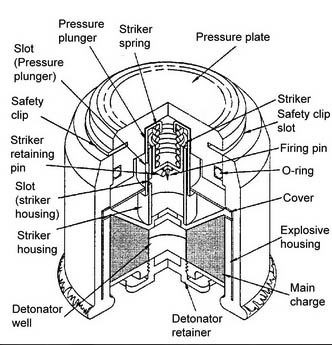
AC NM AE T1, ADWAT, AT-8 (Cuba), ATM-72/74/75/96, BLU-91, C-3-A/B, Cardoen AT, CC 48/42/2-42/3, DM-11, Flachmine, FMK-3/5, Hawkins grenade, LPZ, M/47, M1/M1A1, M4, M5, M6, M7, M15, M19, M51/52 MACI, M/71, M75, M/80, M453, M1935/1936, MAT/5/6, MAT-62B/76/84-F5, MATS/1.4, MATS/2, MATS/2.6, MGP-31, MI AC PR, Mk 2/3/4/5/7, MKT Mod 72, MKTBT, Model 41-47/47-52/67, Model 1948, MP-APVL 83-F4, MPP-B Wierzba, Na-Mi-Ba, No 6/8/25/26, NV-41, P2/P3 Mk2, Panssarimiina m/36/39/40/44, Pappmine, PDM-1/1M/2/2M/6, Pignone P-1/2, PM-60 mine (K-1), PMZ-40, PRB M3, PRB-111, PT-56, PT Mi-Ba, PT Mi-Ba-II, PT Mi-Ba-III, PP Mi-D, PT Mi-K, PTM-80P, SACI, SB-81, SBP-04/07, SH-55, T-IV, T-AB-1, TC/2.4/3.6/6, Tellermine 29/35/42/43, TM-46, TMM-1, TMA-1/2/3/4/5, TMB-1/2, TMN-46, TMSB, TM-35/38/41/44/46/57/62/65, TMD-1/2/40/44, TMD-B, TMM-1, Topfmine A/B/C, TQ-Mi, Type I bakelite, Type 2 AT, Type II bakelite, Type 3 mine, Type 9 wooden ATM, Type 63/72/93/96/99, Volcano mine system, VS-1.6/2.2/3.6, VS-AT4, YaM-5 box mine, YM-II/III mine.
Shaped charge/Misznay Schardin effect Antitank Mines:
Adrushy, ARGES, AT2, ATM 6/7/2000E, BAT/7, FFV 016/028, HAK-1, Hohl-Sprung, HPD-1/2/3, K441/442, Kasia 100/170, L14A1, KB-PTM, KRIZNA-D, M21/24, MC-71, MIACAH F1, MI AC Disp F1 Minotaur, MIFF, Mine Anti-Tank Non-detectable 1A/3A, MN-111/121/123, MPB, MSM MK2, MUSA/MUSPA, No 8 mine, Panzer stab 43, PARM 1/2, PD Mi-PK, PT Mi-D1, PT Mi-P, PT Mi-U, PTM-3, Pz Mi 88, SATM, SB-MV/1, SLAM, T-93, TM-72/83/89, TMK-2, TMRP-7, Type 84, UKA-63, VS-HCT/2/4, VS-SATM1 mine.
Full-width Antitank Mines:
Barmine, BAT/7, FFV 028 (Stridsvagnsmina 6), MSM MK2, Riegel mine 43, Riegel mine 44, V-3 (N5) mine, VS-HCT/HCT2/HCT4 mine.
Side-attack Antitank Mines:
Addermine, Anti-Transport, ARGES/MACPED, ATIS, ATM 6, ATM 7, AVC 100, AVC 195, FFV 018, L14A1, Kasia 100/170/200, M24, MON-100/200, MPB, PARM 1/2, PD Mi-PK, PMN-150/250, TEMP 30, TM-83, wide area M93 HORNET mine.
 Antitank Encyclopedia