Combat Vehicle 90
 Infantry Combat Vehicles: 1,400 built 1993-today
The Swedish version has the original Bofors 40 mm autocannon turret. Export versions however comes with the Hägglunds E-series turret woth a 30 mm Mk44 or 35 mm Bushmaster. It was superseded by Alvis Hägglunds (from 1997) and BAE Systems Hägglunds from 2004, adding more weight to its international marketing. Before going with the Ajax, Britain actually seriously considered acquering it, and even the US, in the process of replacing its 40+ years old Bradley, also looks at it. The vehicle was of course tested in a veriety of terrains, and if it was designed for subarctic conditions its good mobility in snow and wetlands while carying eight infanty (the average platoon in Europe) while being well protected, is highly regarded as one of the very best IFV in Europe, especially on the limited tracked segement. It was also declined into a forward artillery observation, command and control, anti-aircraft, armoured recovery vehicle, electronic warfare versions and more.
Development & Design
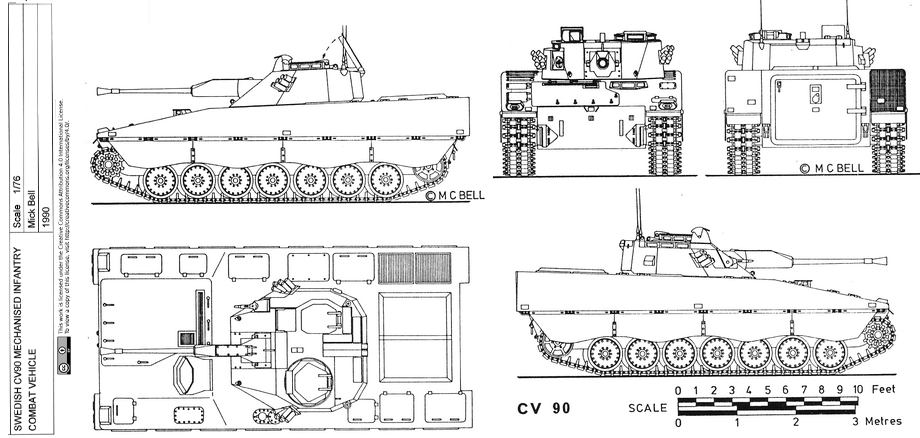
Back to the late Cold War, and arguably at its hottest in 1983, the Swedish Army required a new high mobility armoured vehicle with both air defence and anti-tank capability while having a high survivability and protection. In 1985, the "stridsfordon 90" project group was created. This commission was composed of Swedish Armed Forces (Försvarsmakten) representatives (FMV) as well as members of the Swedish industry with champions like Hägglunds and Bofors. They had to write specs for a "unity vehicle", initially a Swedish air force concept and made it usable by the Army. By 1986, the prototypes strf 9040 and strf 9025 were ordered, five constructed. In 1988 the 9025 version was abandoned and work concentrated on the 9040 only for extensive trials from 1988 to 1991. By then the team started tinkering about new specialized variants. The first deliveries started in 1994.
Since then the CV90 has went through four evolutions over the years, meeting customer or just time-chamging requirements and focusing on enhancements. Production of first fiel batches started in 1993 and went on until 2014 with over 1,200 ordered. By November 2000 Finland ordered 57 CV9030 under €250 million (2008 value) and the cost went from €4.42 million per vehicle down to €2.92 million per vehicle after new orders. By December 2005, Denmark ordered 45 CV9035 for €4.18 million per vehicle, the Netherlands 184 CV9035 for €3.9 million per vehicle, Norway was the first customer actually with 104 CV90s by the late 1990s but added more in 2010s for 164 total and variants, with an upgrade for 10 billion kr. The current conflict of Ukraine 2023, resulted in a new acquisition, for active combat by President Volodymyr Zelenskyy to Stockholm, to start production of the vehicle in Ukraine. Netherlands is the other associated producer, starting to manufacture 180 vehicles, so further reinforcing the "standard" quality of the Vehicle in Europe, a story recalling the famous Leopard 2 for MBTs.
General Layout
The CV 90 is a rather large IFV, larger for example than the Austro-Spanish Ulhan/Pizarro, larger than the Bradley, yet a bit lower and lighter than the current British Ajax. Its general philosophy is very much closer than a Marder but better adapted to the sub-artic conditions, traduced into the large tracks and superior mobility in difficult terrains. Its low and edgy profile enables good frontal protection and lesser visibility. The All-welded steel hull can be upgraded with add-on armour to protects against 30 mm APFSDS (armour piercing fin-stabilised discarding sabot) rounds making a high-tier IFV in terms of protection, and the low silhouette is coumounded by low radar, acoustic and infrared signature. Fully sealed, the vehicle also had the usual fire detection and extinguishing system plus full nuclear, chemical and biological (NBC) protection and central heating.The CV 90 has an overall length of 6.8 m (22 ft) for a width of 3.2 m (10 ft) and height of 2.8 m (9 ft 2 in). The Crew is composed of a core of three, the driver, located in the nose, with a 3-faceted hatch sight post, with a central IR capable sight, then the commander and gunner side by side in the turret. The rear compartment, well protected behind a thick side protection with stowage bings over the tracks, has up to 8 seats for fully equipped infantry able to dismount from the single large hatch door, hindged to the right, and electrically opened with a backup release. Unlike former IFVs since protection is enhanced, there is no pistol ports, but the troops can man a rotating persicope in the middle (with optional IR). The turret commander position is on the right, with a 8-sight panoramic cupola, the forward one being IR enhanced. The gunner's position is below a simple hatch, rear-hinged, with a main gunnery sight in from of his position inside an armoured hood and setup for IR vision and high fidelity TV with x10 and more resolution.
With time the need for increased protection led to a combat weight going from 23 to 35 tonnes. This was compensated by the adoption of ever more powerful diesel engines, to keep the same power-to-weight ratio, as well as a constantly upgraded track suspension system. The more recent versions are more battlefield data centric, with the Mk III introducing a fully digital electronic architecture and using several CAN-buses and digital networks plus an automatic defensive aide suite classifying threats and firing in auto smoke or the main gun to eliminate fast targets and also inform the driver on potential threats inisible from his station. At the Eurosatory 2010 the Armadillo was presented by BAE, as an armoured personnel carrier version, with the same chassis convertible as an ambulance, control vehicle or other turreted versions and current discussions about a new dedicated anti-drone turret.
Mobility
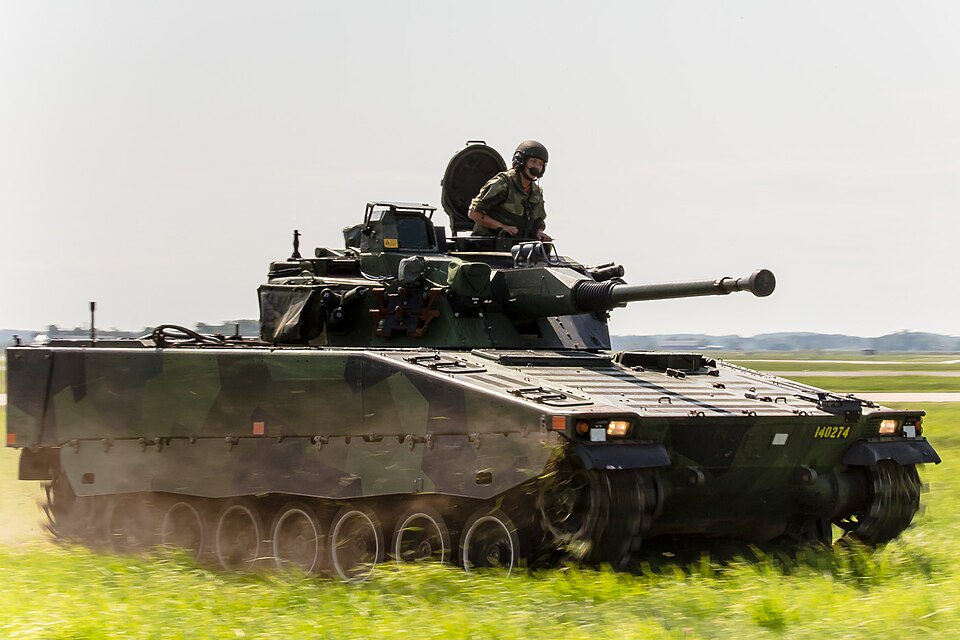
The CV90 Mk 0, the first in 1993, is powered by a Scania DSI14 engine rated for 550 horsepower for an impressive 70 km (43 mi) per hour for a road range of 320 kilometres (200 mi). Now the Mark IV had progressed up to 600 kilometres (370 mi). The engine remained the same, the Scania DSI 14 turbodiesel V8, still associated with the same Gearbox Allison/Perkins X-300-5 Automatic, but output has been constantly upgraded to reach nearly 650 hp on the latest version. The tracks and suspensions had been worked on and engineered to produce quiet movement while providing high speed over good terrain as well as high and adjustable ground clearance to deal with mines and IEDs. Albeit the main hull belly is a semi-flat vee to defelect blasts, the seats are now suspended instead of installed on the floor.
All vehicles whatever the version has the same 8 double solid roadwheel drive train (16 per side, 24 total), with front sprocket, rear idler and five return rollers per side. The upper drivetrain is protected by flexible rubber shields against the usual RPGs. The tracks are double pin, and padded with rubber for better discretion. Internal paddings of the whole drivetrain ensures lower sounds associated with running tracks. The suspension system is double, with torsion bar coupled with hydraulic dampers and for the latest variant, active suspension.
Hybrid Propulsion
BAE Systems also is looking at giving the vehicle a hybrid-electric propulsion system to cut fuel expenses and for environmental issues but also for stealth, allowing final approaches using only electric. The new hybrid-electric drive is announced to save up to 30% and to add a power boost if needed, cmbining a standard diesel with a battery pack. Also from April 2015, BAE Systems fitted proposed an active damping suspension system inspired by Formula One racing cars, calculating the vehicle's speed and the terrain ahead to pressurize on the fly the suspension at independent points and keep the vehicle level at high speed. This syetm is saif to increase mobility and top speed, 30-40% on rough terrain, so far better than battle tanks as well as reducing pitch acceleration and improving maneuverability and stability for on-the-move gunnery as well as crew fatigue.Protection
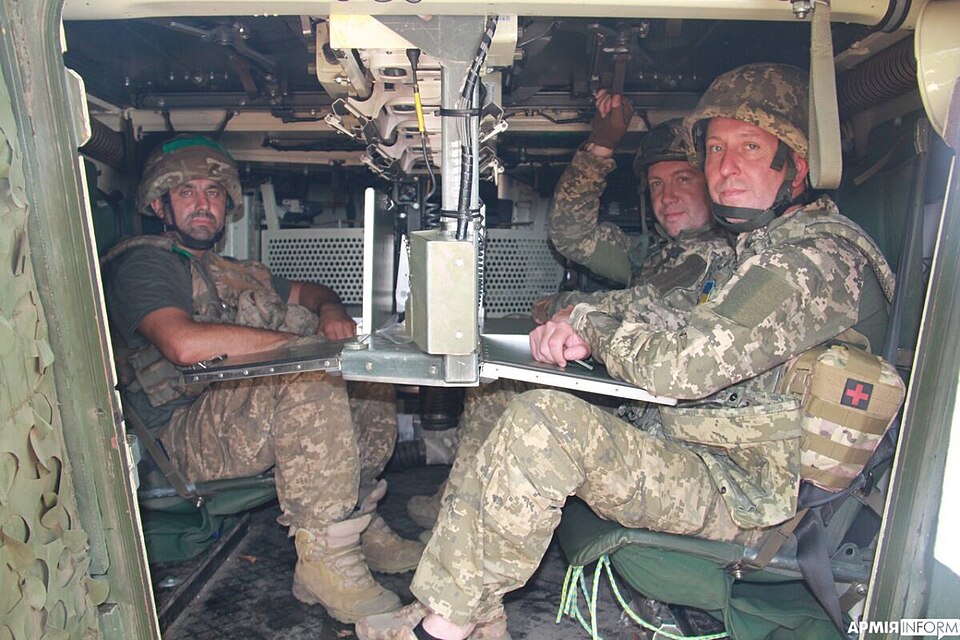
Interior of the Ukrainian CV 90
The CV9040's base armour is for an all-round protection against 14.5 mm AP rounds. Albeit the reistance of the frontal arc is classified, at least it is certain that from the CV9040B onwards the nose is proof against 30 mm APFSDS rounds. As for addon armour, the CV9030N can be fitted with MEXAS, a ceramic appliqué armor that also is proof against 30 mm APFSDS, sold as a kit also protecrting the hull against IEDs and explosively formed penetrators.
As standard there is an internall spall liner in all interior spaces, NBC filtration system with chemical and radiation detectors. Also in option is a cage armour against tandem-charge and shaped charges. Albeit this is more about stealth than protection, the vehicle as said above has heat-absorbing filters to fool thermal imaging or image intensifiers as well as infrared cameras. The hull belly mine protection level is now up to 10 kg TNT for anti-tank mines.
By December 2016, BAE Systems was contracted by the Netherlands to look at installating a hard-kill system, the Israel "Iron Fist", on the CV9035. The latter is a multi-sensor early warning system able to deploy soft or hard-kill countermeasures on both rockets and missiles. Tests were positive for an installation in 2018. In 2011, Hägglunds also showcased an infrared camouflage, "Adaptiv" using thermoelectric plates displaying all sorts of objects to an enemy IR-viewfinder. Hwoever at 1,500 plates at a unitary cost of $100, this is worth c140,000 euros.
Armament
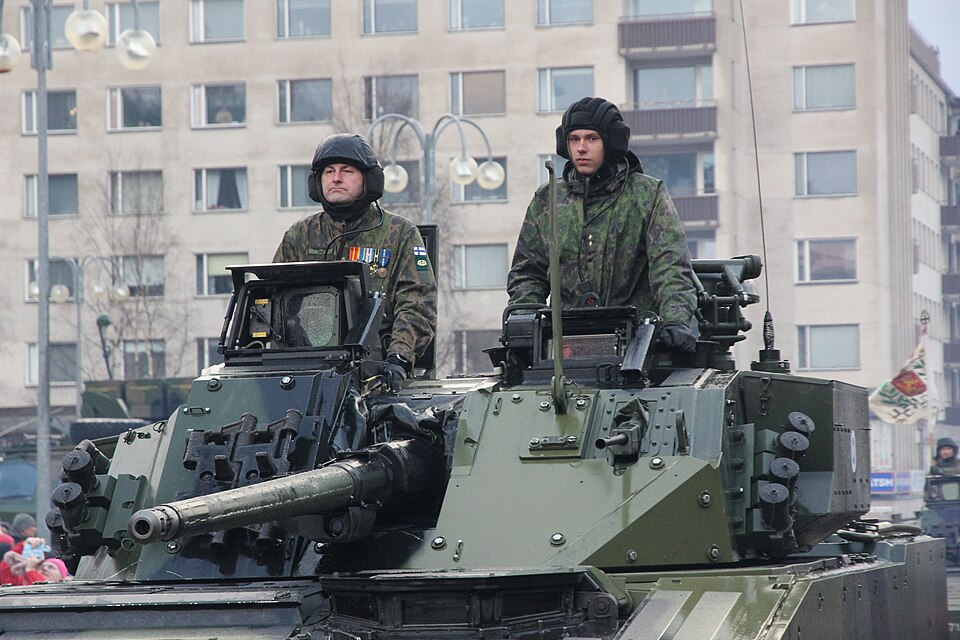
Finnish CV90FN turret
The basic Swedish CV90 or strf 9040 has the basic two-man turret and Bofors 40/70B autocannon plus coaxial 7.62 mm machine gun, six 76 mm grenade launchers in two clusters of three either side of the turret, mostly used for smoke grenades, but capable of launching combat grenades.
The export variants are given the Hägglunds E-series turret. It has a lighter 600 E30 30 mm Bushmaster II or E35 35 mm Bushmaster III. BAE Systems Australia in LAND 400 Phase 3 (CV9035) is equipped with the E35 turret thanks to commonality with the CRV AMV35. This Swedish turret is doubled by the Universal Tank and Anti-Aircraft Sight from Saab, comprising a daytime sight, thermal imaging syste plus image intensification Mark III. All variants in addtion has the Kongsberg Protector remote weapon station using night sights and a hunter-killer capability, which is also true fr the main turret. The commander could take over the gun use if the gunner is impaired.
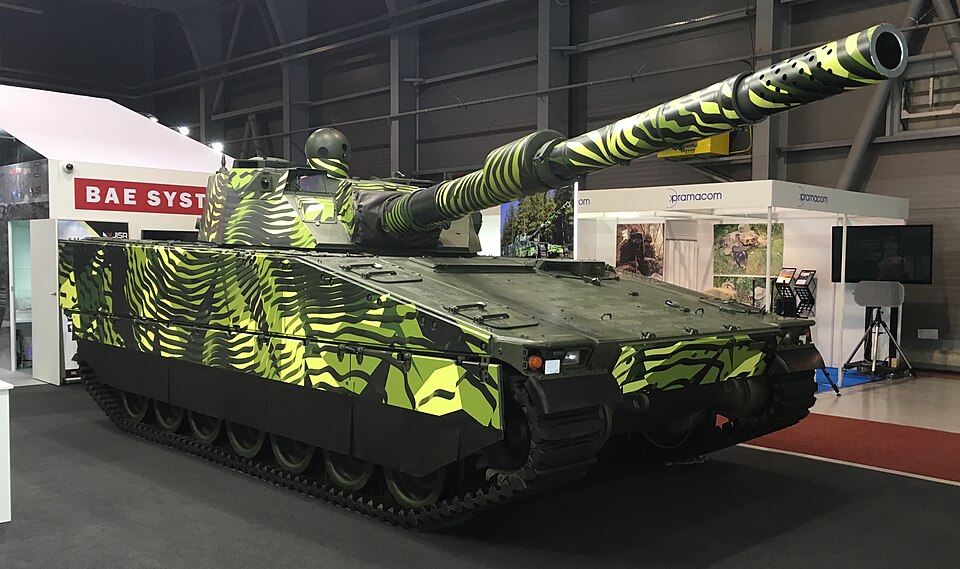
CV90-120 concept
Variants
CV90 Mk 0
The first CV90s, retroactively named mark 0 for Sweden had the Bofors 40/70B cannon in a two-man turret instead of the 25 mm M242 Bushmaster chain gun tested. It has aconventional electrical system and optional appliqué armour. Five variants of it were ordered, all with a complicatedsignature management, very challenging. Given the Swedish context, which like Finland has a very small core of professionals, this is also a conscript army in case of war oso the vehicle was made to be high reliability with minimal maintenance using simple onboard tools as well as easy to operate for consrcripts.CV90 Mk I
This one was engineered for Norway, awarded the contract after a competition for a new IFV against the M2 Bradley, FV510 Warrior, and ASCOD (Pizarro/ULAN). It has its own two-man 30 mm turret and is given a high-hit probability in suppression fire modes, also against air targets. Improvements list is quite long.CV90 Mk II
This one was proposed in two main variants: The CV9030 CH for Switzerland (IFV and COM), and the CV9030 FIN for Finland (IFV only). The Swiss variant is 100 mm higher and has 70 mm over the combat compartment at the rear and has a partial digitization and built-in Health & Unit Monitoring System (HUMS) plus interactive instead of paper manuals and instructions. In both cases it is armed with the 30mm Mk44 Bushmaster II autocannon.CV90 Mk III
This further development now has a 35/50 mm Bushmaster III canno plus its integrated muzzle ammunition programmer and a continuous eye-on-target engagement system for the commander and gunner. It has a new architecture to be completely digitized. Mobility is also improved with an upgraded suspension, better power-to-weight ratio. Protection against mines and top attack (at the time urban combat, now against drones) ws improved as well as horizontal protection with appliqué systems. The early Mk IIIa was delivered to the Netherlands and Denmark, but the later Mk IIIb was delivered to Norway.CV90 Mk IV
This vehicle had a new Scania engine rated for 1,000 horsepower (750 kW), coupled with a X300 heavy-duty transmission as it now weights 37 tonnes, with two tonnes payload. It has a new augmented reality system (iFighting) to "see through" the hull. It fuses data from different systems, filter and prioritize critical information for faster decision-making. It also has a qualified Active Protection System and 4th gen. electronic architecture.CV90 Mk V
This brand new evolution started iits development in 2023 and should be deployed after 2027. It is testing a hybrid electric propulsion system, a new C4ISR system fully digitalized, improved heat, radar and visual signature management, Integrate Beyond Line Of Sight (BLOS) ATGMs (missiles) Akeron MP and even integrates UAVs. Tests with both were already performed in January 2023. The Mark V will replace 1990s vehicles in the Swedish Army beyond 2034.Swedish Variants
Stridsfordon 9040 (Strf 9040):
Original model: 8 soldiers, 40 mm Bofors autocannon. A, B or C following upgrades, CV90 Mk I. The A versions are now retired from service.Strf 9040:
Original prod. No gun stabilization, Lyran mortar. All were upgraded to the strf 9040A standard.Strf 9040A:
Extensive chassis mods. External gun stabilisation on turret fron, more storage, better emergency exits, 7 seats but now suspended. From November 1997, the gun became gyro-stabilized.Strf 9040B:
New fire control software, electric firing pin, fully stabilised gun (internal stabilisation), reserve sight with video feed, improved suspension, new instrumentation, new seat belts.Strf 9040B1:
Modified for international peacekeeping missions with a 3P ammunition programmer, climate control and anti-spall liner.Strf 9040C:
Used for crew training and international operations: Additional all-round armour, laser filtering in all periscopes, tropical grade air conditioning, six soldiers carried.Stridsledningspansarbandvagn 90 (Stripbv 90):
Forward command vehicle variant at battalion and brigade command levek, with extra communication systems, command and control systems (C3R). No gun but a coax. machine gun and 6 smoke grenade launchers.Stripbv 90A:
Base variant of the Stripbv 90 series.Stripbv 90C:
Two were upgraded to C-standard, but have been decommissioned as of 2011.Eldledningspansarbandvagn 90 (Epbv 90)
Forward artillery observation variant, used to direct artillery and mortar fire.Epbv 90A:
34 initially ordered.Epbv 90C:
8 upgraded for international service, includes air conditioning, additional protection, and more advanced IR sensor.Luftvärnskanonvagn 9040 (Lvkv 9040)
Self-propelled anti-aircraft gun vehicle:Lvkv 90A:
fitted with PS-95 radar from Thomson CSF Harfang (now Thales Group) and a high elevation 40 mm autocannon capable of using programmable ammunition. It is connected to the national air defence net LuLIS.Lvkv 90C:
Three have been upgraded to C-standard.Lvkv 90 TD:
There is also a demonstrator, designated Lvkv 90-TD, fitted with infrared video targeting and a fully stabilised gun for firing on the move.Granatkastarpansarbandvagn 90 (Grkpbv 90):
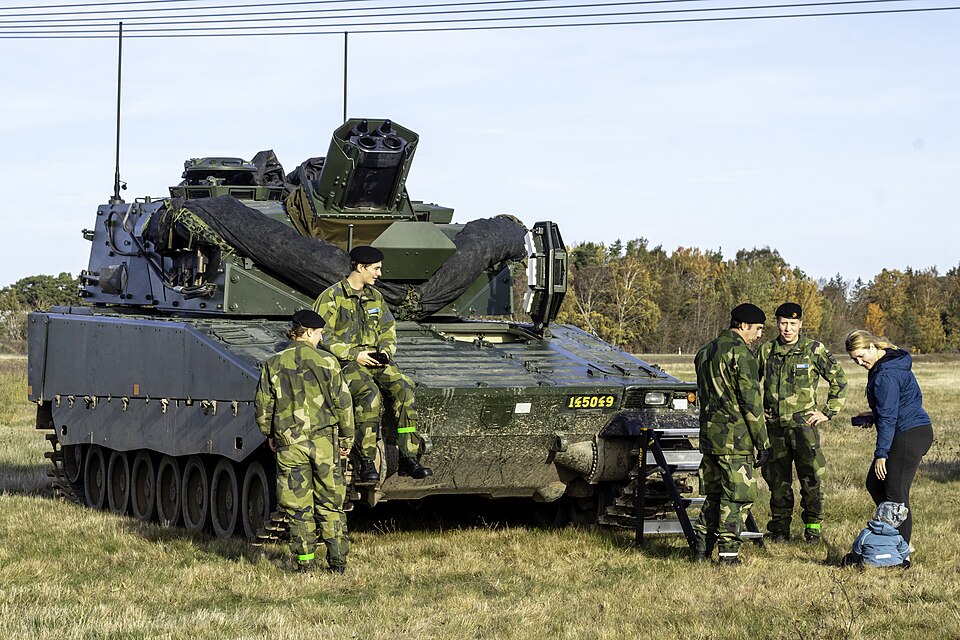
Tracked mortar carrier, known as "Mjölner", a CV90 fitted with two 120 mm mortars. The mortar tubes are supplied by the Slovak defence manufacturer Konstrukta. 40 hulls for this project were purchased by 2003 and initially the Patria Advanced Mortar System was looked after but for economic reasons, Genomförandegruppen recommended not to. The vehicles were put in storage until BAE Systems AB was awarded a contract in December 2016 for the Mjölner 120 mm mortar for mechanized battalions. First orders in January 2019. 40 vehicles delivered by 2020. To be upgraded to the C4I LSS Mark artillery CCS. 2022, 20 more were ordered, last delivered in 2025. Tne by January 2023, 20 more; also delivered before 2025, all with the the new C4I LSS CCS.
Bärgningsbandvagn 90 (Bgbv 90):
Armoured recovery vehicle (ARV) with two 9-tonnes winches, 72 tonnes pulling capacity with 4-way pulleys.Bgbv 90A:
The chassis is based on the Epbv 90A.Bgbv 90C:
Three have been upgraded to C-standard for foreign operations with A/C and more protection. and at least one has been used in Afghanistan.In development:
Stridsfordon 9035 MkIIIC (Strf 9035 MkIIIC):
New IFV ordered on December 2024 in collaboration with Denmark, ordered for Ukraine with the D-Series turret from BAE Systems AB made by Van Halteren Defence and sporting the Bushmaster III (35 × 228 mm), MAG 58C (7.62×51mm NATO) in pod, two RBS 58/Akeron MP ATGMs and 5 smoke grenade dispensers.Driftstödspansarbandvagn 90 (DSpbv 90D):
New armoured repair vehicle for repairs at a battalion level, developed from November 2022 by BAE Systems and Rytek A/S or Norway with more engineering variants developed for the Norwegian Army.Pionjärpansarbandvagn 90 (Pipbv 90D):
Pioneer armoured vehicle for front line engineering works. Based on the 9040A, turret removed, replaced by a fixed superstructure, new interior, larger cargo space. Weapons station and dozer blade, as well as a surface mine plow and mine drill. Rear hydraulic ramp. Also ordered from November 2022 and developed at the Norwegian Rytek A/S with 30 on order. To be continued in an update.Operators
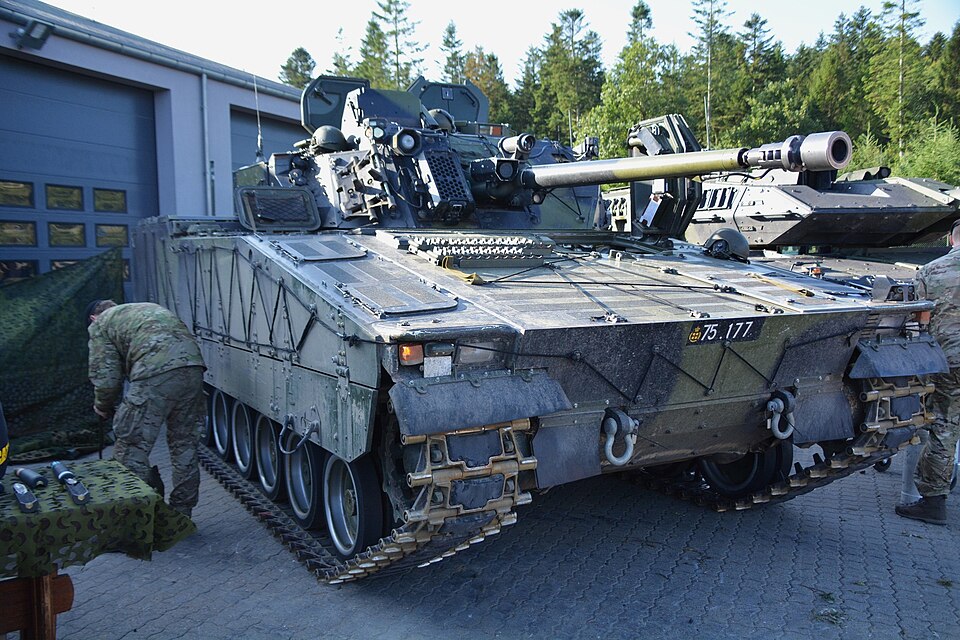
Danish CV90
 Brazil
By the summer of 2023, BAE Systems showcased the CV90 to the Brazilian army which integrated in its VBC Fuz programme and negociates to procure 78 tracked infantry fighting vehicles, but no order yet.
 Czech Republic
On 24 May 2023, BAE Systems Hägglunds and the Czech military signe a contract for $2.2 billion, for 246 CV90 Mk IV in seven variants. Negotiations for the CV90 Mk IV are in final phase with a final production in the Czech Rep.
 Denmark
45 CV9035DKs purchased, 10 upgraded to international operations. By March 2024, contract for a mid-life upgrade signed. By August 2024, 115 additional CV90 identical to Swedish's 2024 CV9035 Mk IIIC were signed for (€1.35 billion/DKK 9.975 billion) and by November 2025, 44 more CV9035 Mk IIIC ordered.
 Estonia
44 CV9035NLs purchased from the Netherlands, December 2014 (CV9035EE), first arrived in 2016. Estonia purchased also 37 surplus Mk I to be rebuilt as support vehicles by 2023 with the Protector RS4 RWS and Javelin TGMs. Deliveries completed April 2019. As part of the Nordic initiative, more CV90 Mk IV IFV was envisioned, but not ordered.
 Finland
102 CV9030FINs (57 first batch, 45 second batch), which are unique in that they are equipped with a coaxial PKMT machine gun.
 Lithuania
In October 2024, a CV90 acquisition process was launched, confirmed in December 2025, 100 CV90 Mk IV to be delivered in 2028.
 Netherlands
128 CV9035NLs (184-193 initial ordered). Deliveries complete 2011. December 2014: 44 CV9035NL sold to Estonia. 2021 Mid Life Upgrade, 128 CV9035NL with the Spike LRII ATGM. 11 June 2024, order for 15 Mjolner CV90 SPMs to be delivered by 2028.
 Norway
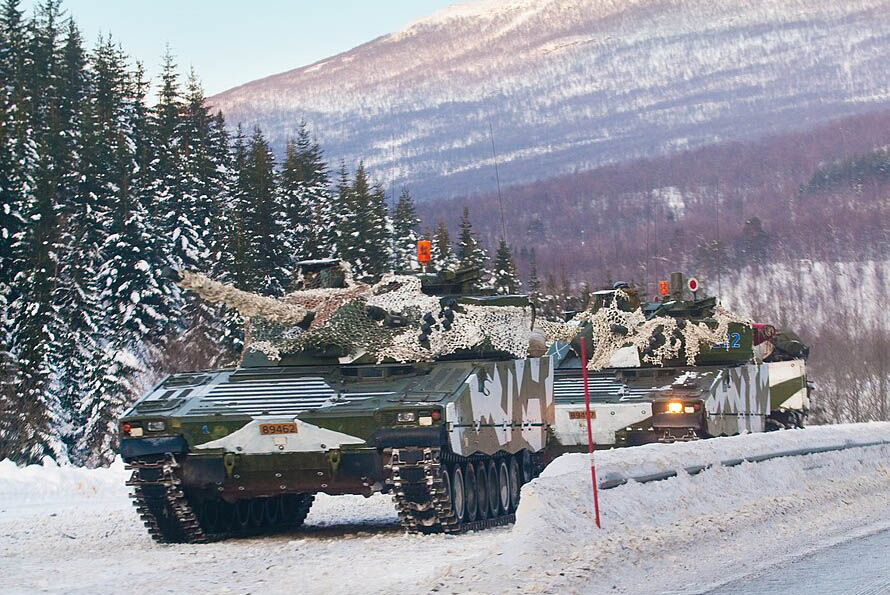
104 CV9030N purchased 1994 on MkI chassis, 17 upgraded for international missions (air conditioning, mine protection, rubber tracks, rear-view cameras) as CV9030NF1. One damaged in Afghanistan. April 2012: Modernization adn expansion decided to 144 CV90: 110 new Mk III hulls in 3 variants (74 IFV, 21 recce, 15 command) as well as 103 turrets mod. to MkIII standard, 7 additional manufactured. 34 MkI hulls modernised into 16 CV90RWS STING CRV, 16 mortar CV90RWS Multi BK, and 2 driver training vehicles. 69 MkI hulls mothballed. By 2014, Estonia purchased 37 of these. 18 February 2021 Norway ordered 12 more CV90RWS STING and 8 CV90RWS Multi BK on existing MkI hulls in reserve.
 Romania
 Slovakia
Contract €1.3 billion for 152 CV90 Mk IV, 12 December 2022. 122 variants with a 35 mm autocannon and SPIKE-LR +Iron Fist system. Others: Command and control, engineering and recovery vehicles, delivered by 2026 (current).
 Sweden
Largest user with 499 in many variants over 549 ordered, -50 donated to Ukraine. In 2016, MLU was decided for 288 CV9040s A/B to be D1/D2. February 2022, January 2023, 20+20 CV90 Mjölner mortar systems ordered. December 2024: 50 CV90s as replacements for donations to Ukraine. April 2025, the newn "Nordic Alliance" announced 300+ CV90s would be ordered.
 Switzerland
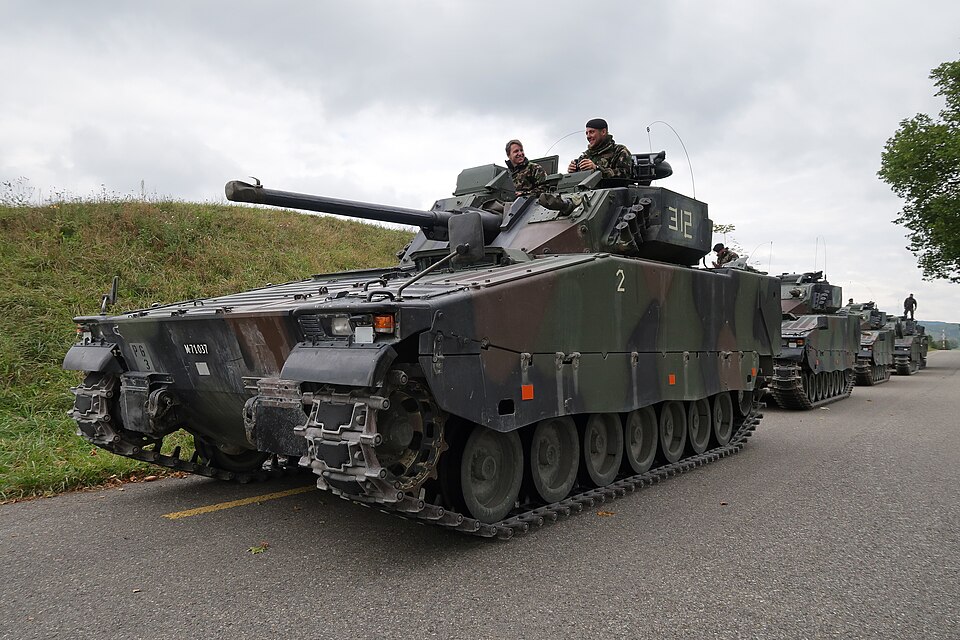
Second largest user. 186 CV9030CH, 154 IFV and 32 command posts orderted with option for 124 more CV9030CH (never confirmed). Deliveries started in 2001. From 2020, life extension was signed for 186 CV90s to retain them to 2040.
 Ukraine
Not a customer, but Sweden donated 50 CV9040C as part of its support after the 2022 invasion, delivered in June 2023. In 2024, Denmark, later joined by the Netherlands decided to go further and made new donations as well as for the latter, partly produce at least 180 of them in Ukraine, with €400 million from the Netherlands by June 2024, DKK 1.8 billion (USD $264 million)from Denmark by December 2023 for 40 CV90s MkIIIC ordered by December 2024.
In fine, Ukraine to buy up to 1,000 CV90 as its main tracked IFV ro replace its ageing Soviet park and its own wheeled IFVs. On 16 June 2023, Ukraine signed a joint declaration with Slovakia and the Czech Republic for acquisition and the operation of the new CV90 Mk IV. From 10 September 2023, Ukraine decided to join production locally with Sweden with 1,000 vehicles as a goal. The manufacturing unit is yet to build.
 Poland
The CV90120T was evaluated in 2007. Poland decided from there to build the PL-01.
 UK
UK
The CV90 competed with the Scout SV for th "Future Rapid Effect System" program.
 USA
USA
The CV90 competed in the Next-Generation Combat Vehicle program to replace the M2/M3 Bradley, later cancelled.
Gallery
Illustrations
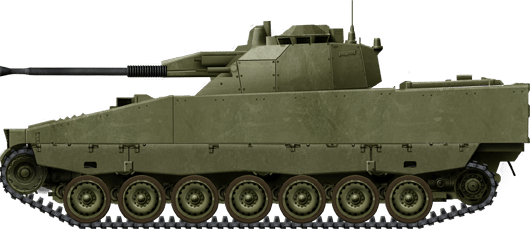
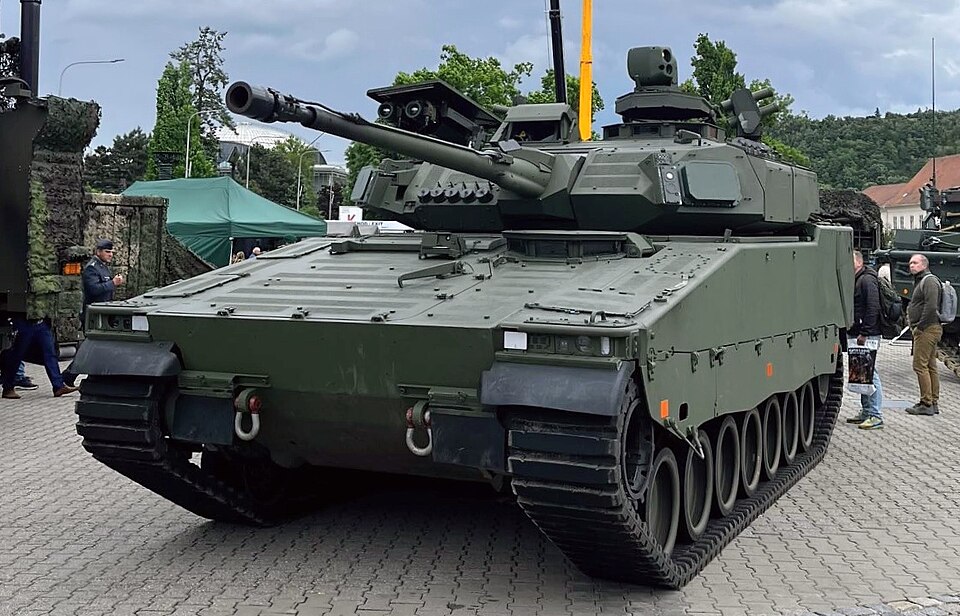
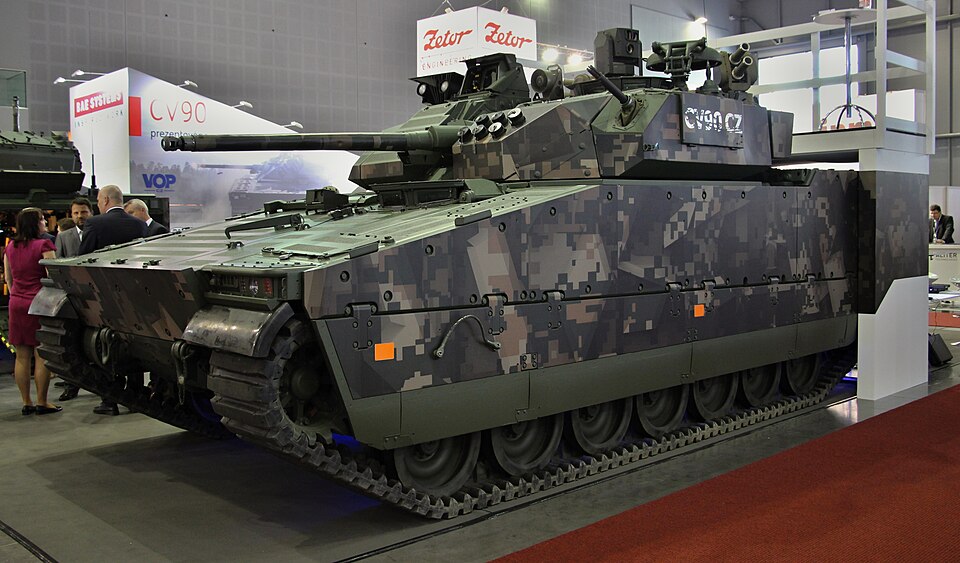
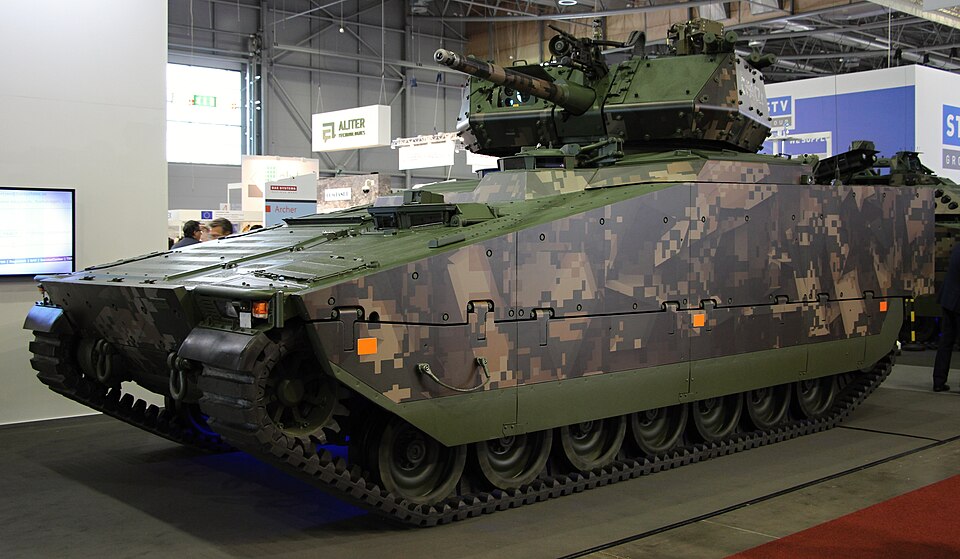
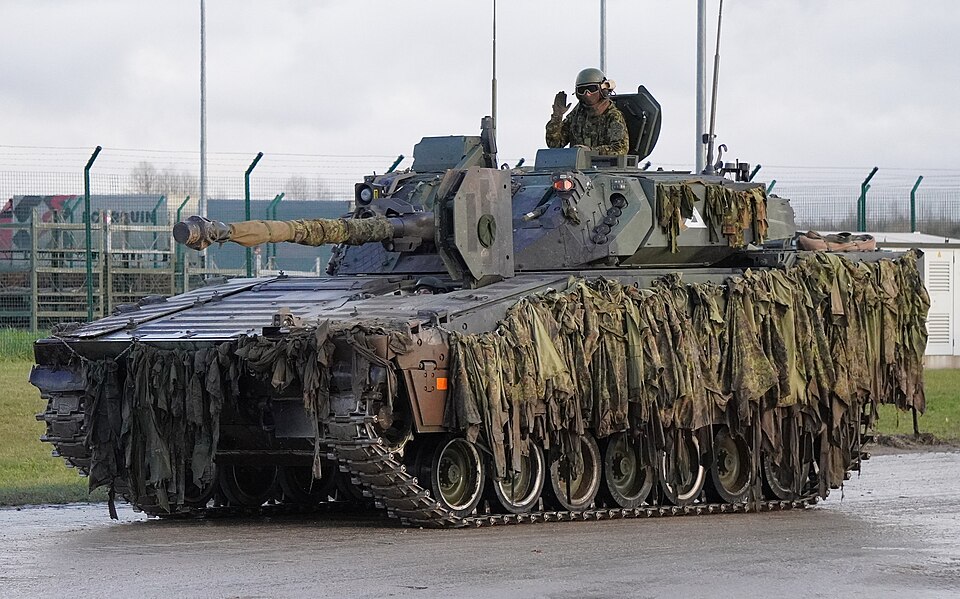
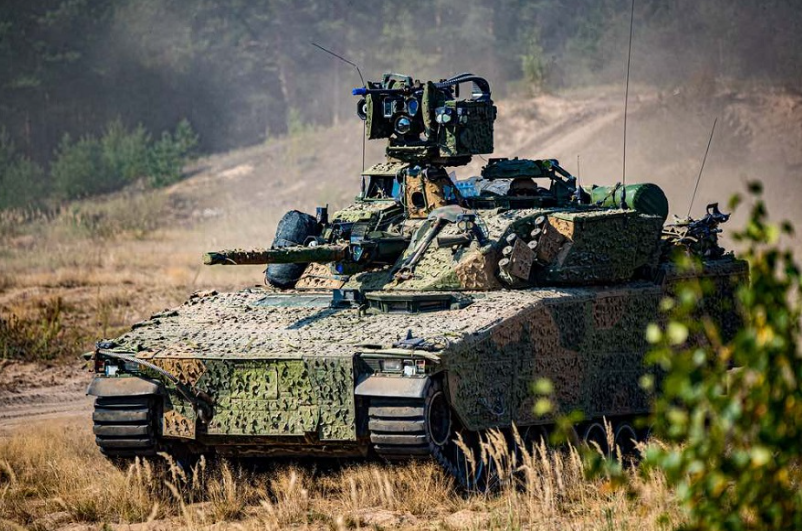
Basic Sedish pre-serie vehicle with the initial turret and Bofors gun
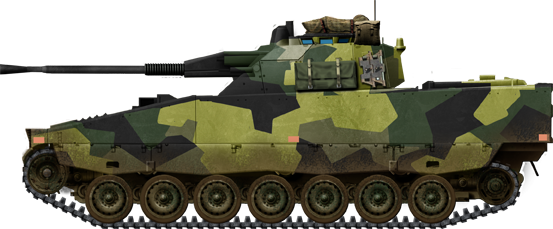
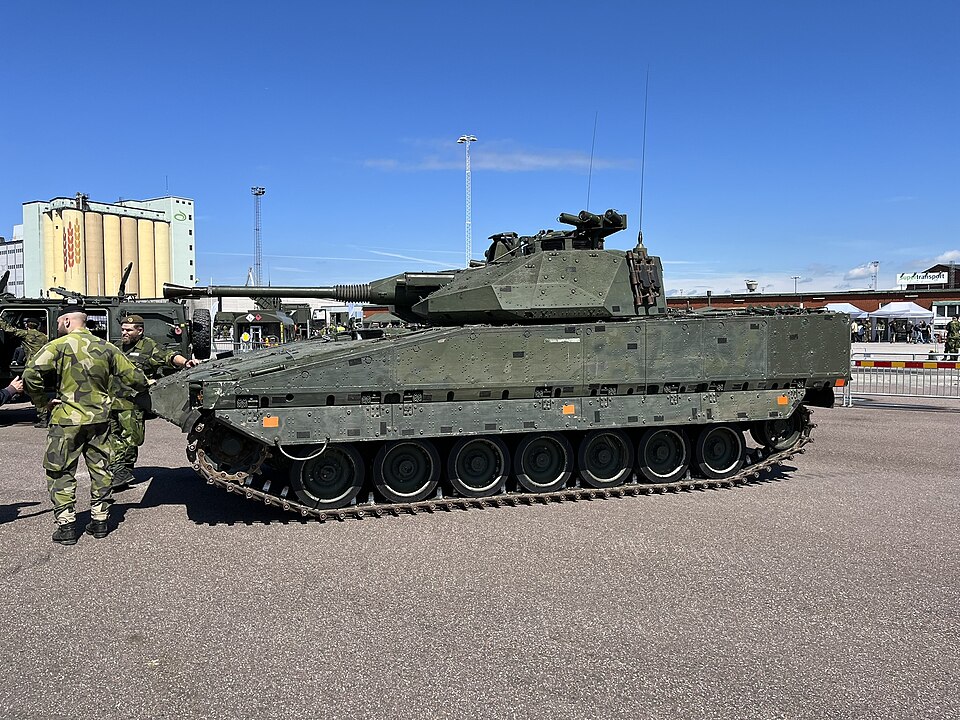
Swedish CV-9040A
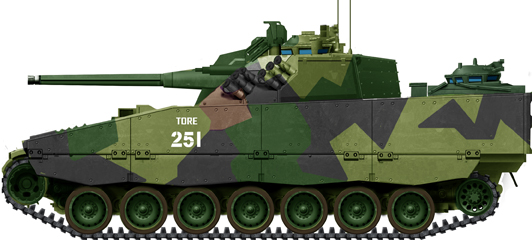
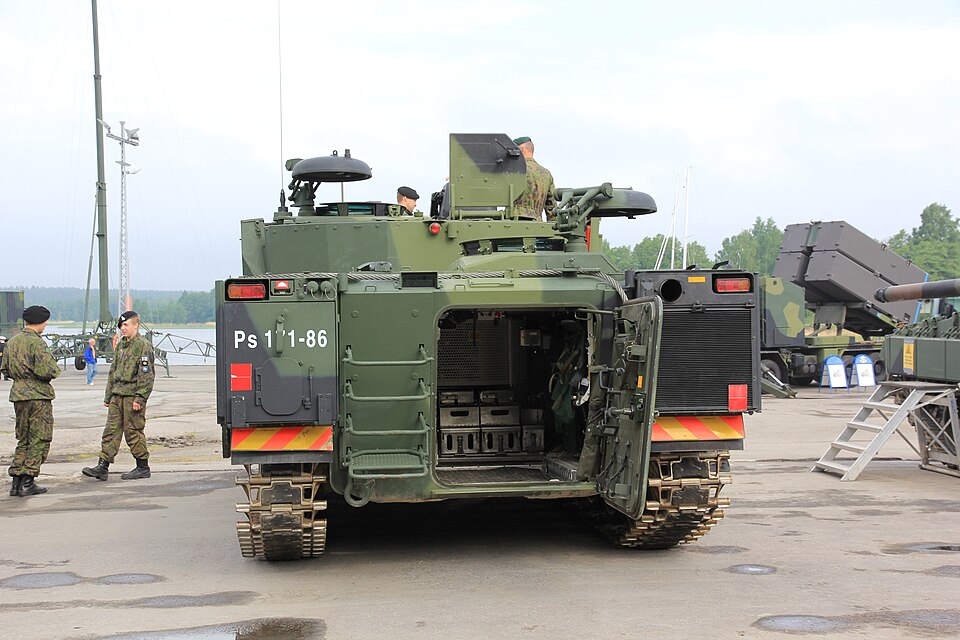
Norwegian CV90NO
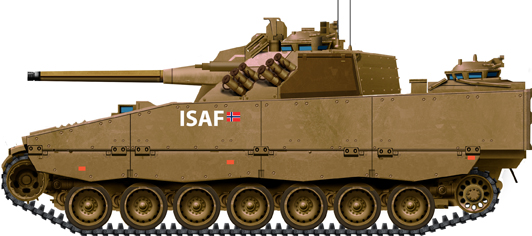
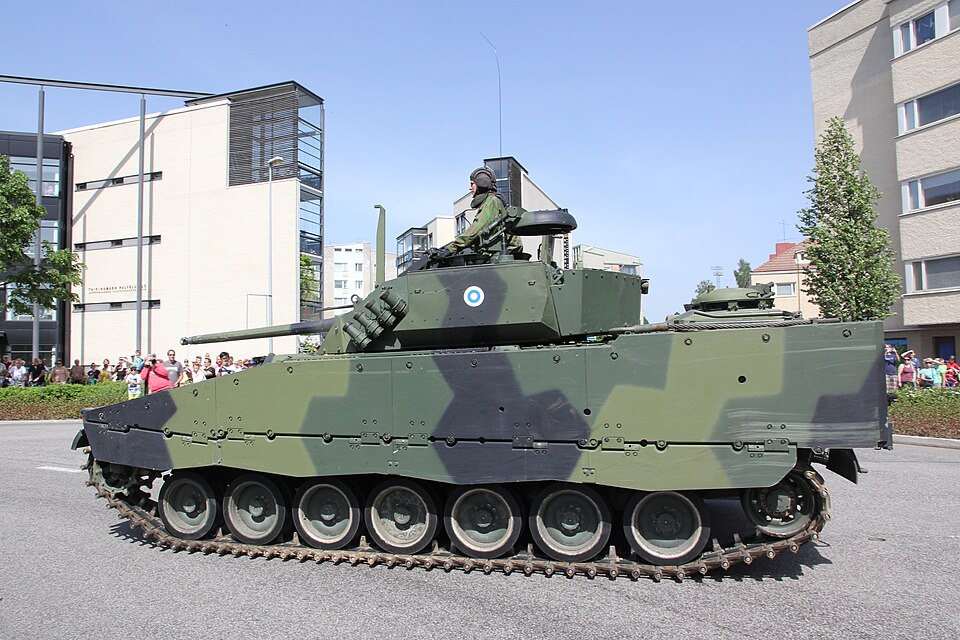
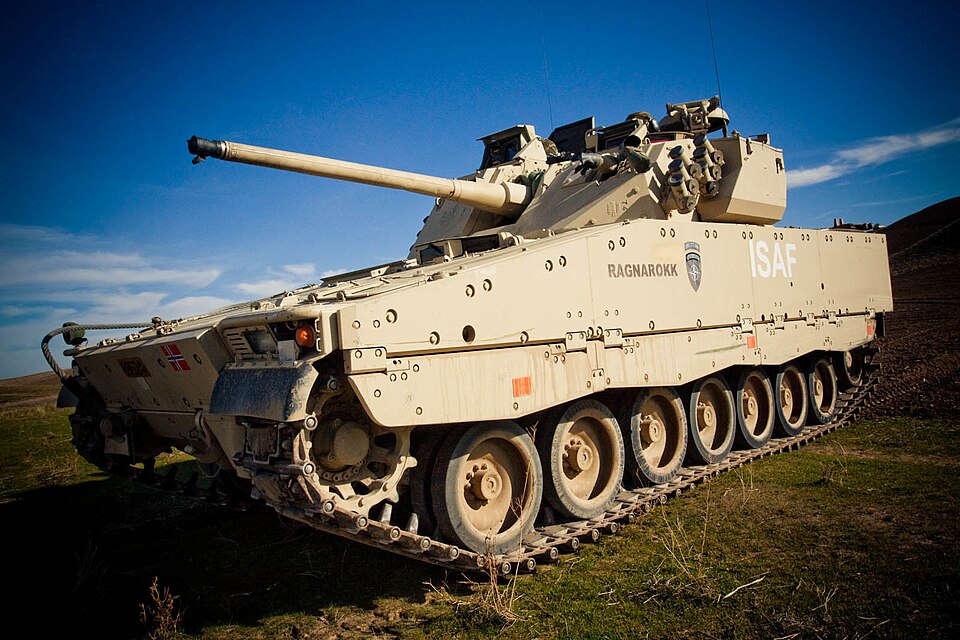
Norwegian CV-90 in ISAF colors.
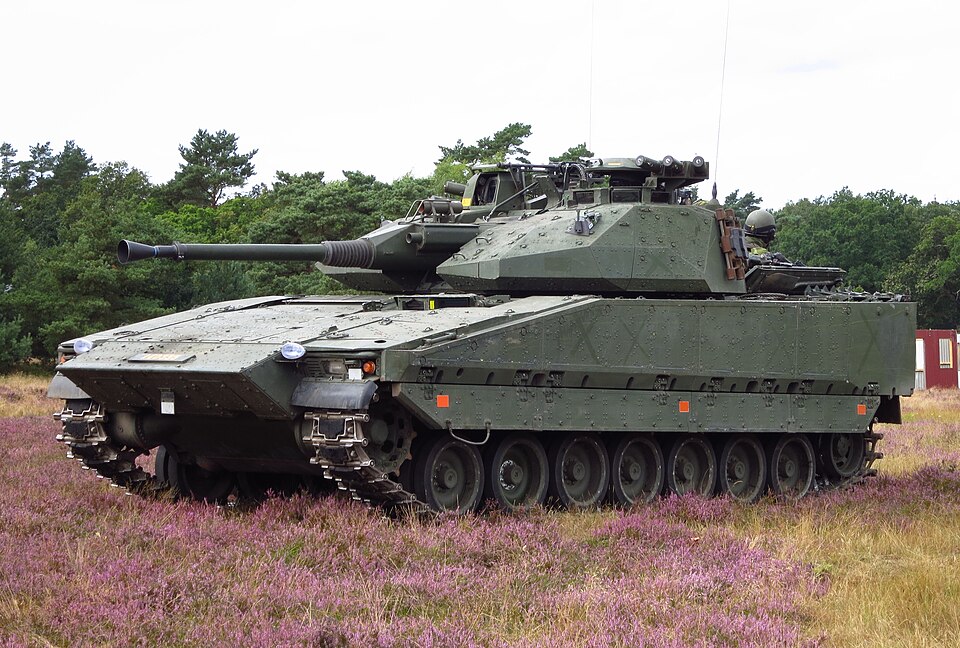
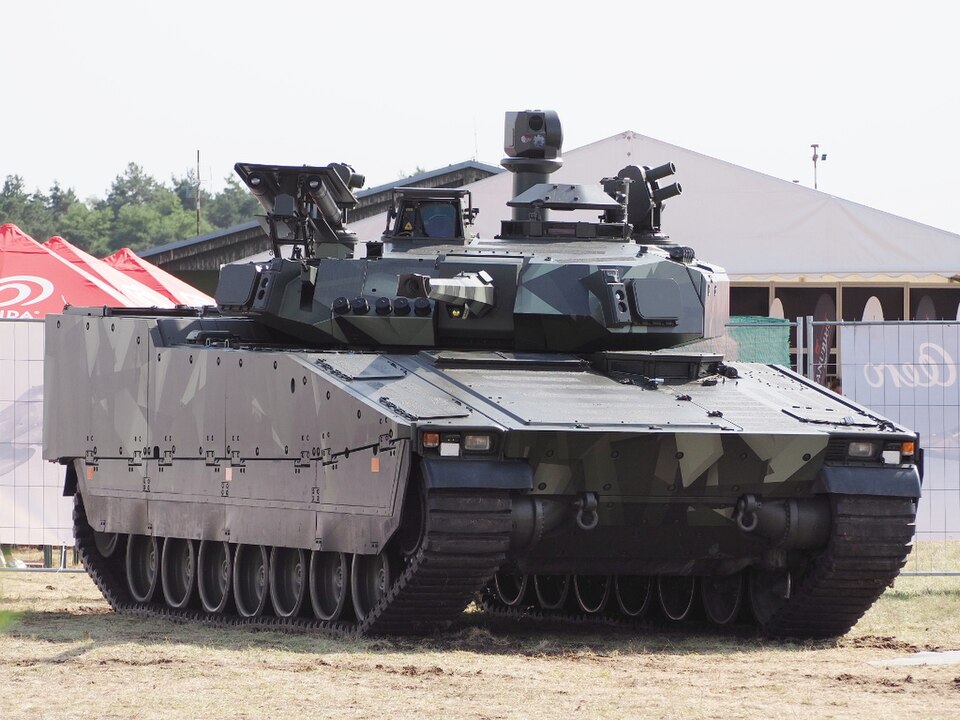
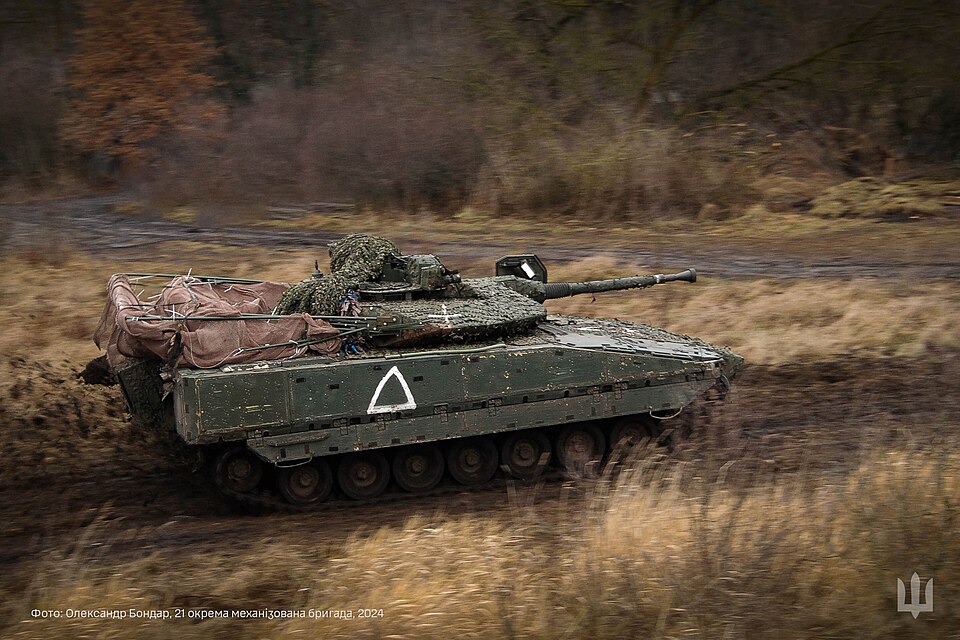
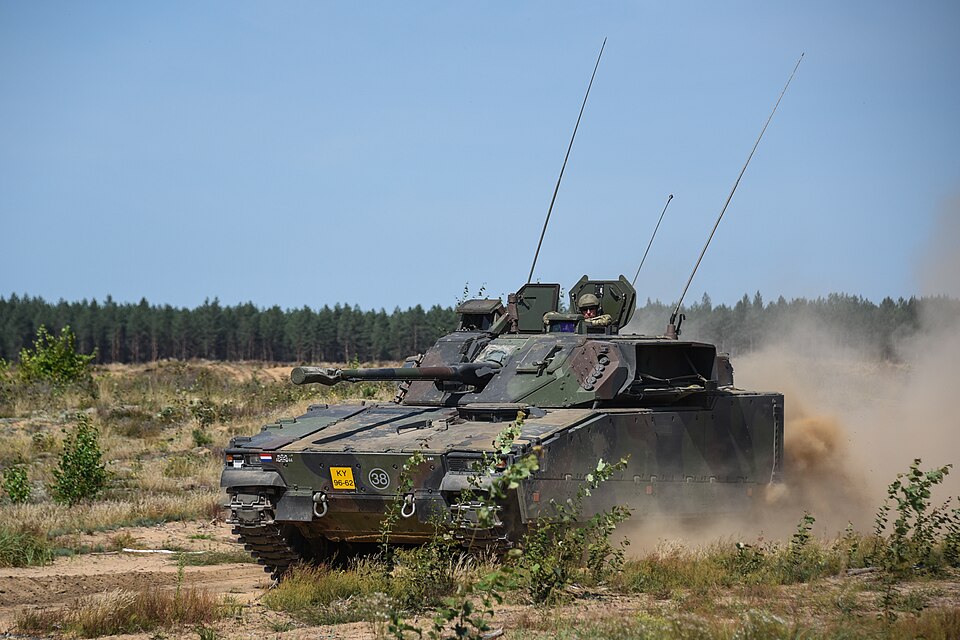
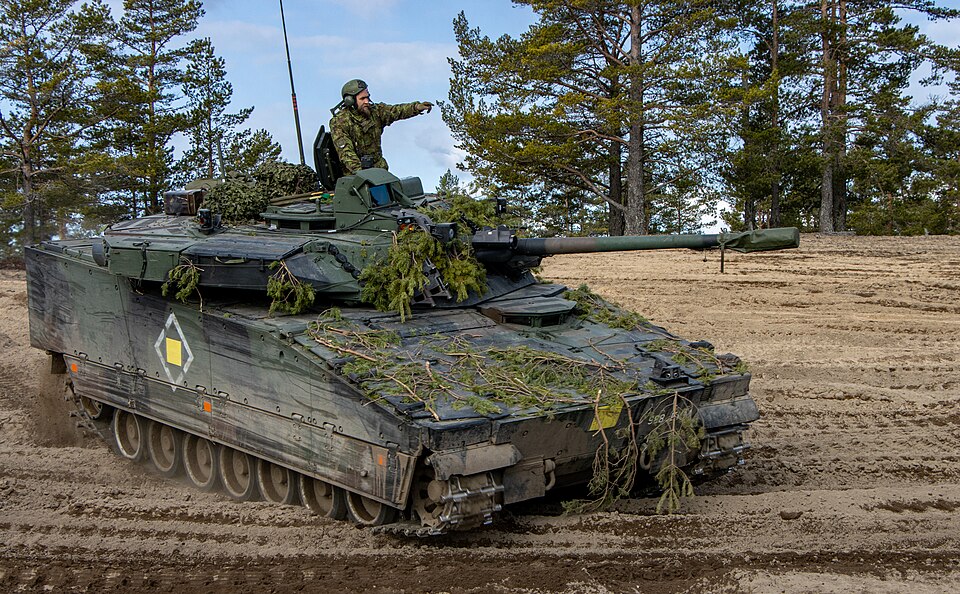
More
Links
danskpanser.dkarmada.ch
soldf.com
baesystems.com
army-technology.com
Combat_Vehicle_90
army-guide.com
army-guide.com
3D
Video
Modern Tanks


Modern MBTs posters
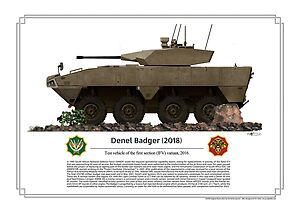
Denel Bagder (2018)
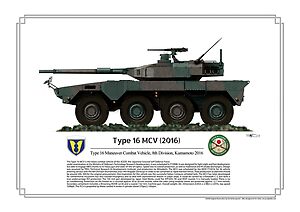
Type 16 MCV (2016)
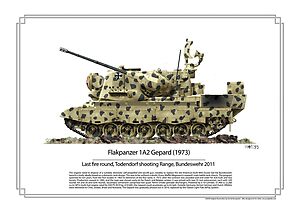
Gepard 1A2 last rounds 2011
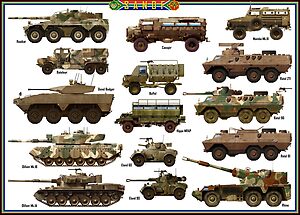
SANDF
Russian AFVs
Main Battle Tanks