Swiss Army (1991-2026)
 Active personnel 147,178. 1% GDP, c800 AFVs 2026
The Modern Swiss Army in Brief

Alongside the modernized Leopard 2A4, the Swiss Army since 1990 feaured the excellent CV-90 as its main heavy IFV.
The modern Swiss Armed Forces since 1991 have undergone major transformation, shifting from a Cold War–focused mass militia to a smaller, more flexible force adapted to contemporary security challenges.
Post–Cold War Turning Point (1991)
The collapse of the Soviet Union and the end of the Cold War removed the primary threat Switzerland had prepared for—large-scale invasion. This led to a fundamental rethink of Swiss defense policy.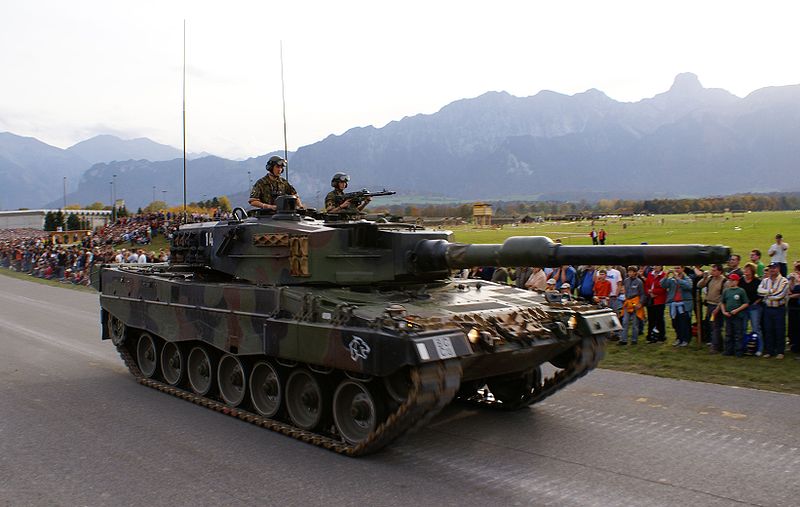
Key Reform Phases
1. Army 95 Reform:Reduced troop numbers significantly (from ~600,000 to ~400,000). Focus shifted from total territorial defense to crisis management. Greater emphasis on mobility and readiness.
2. Army XXI (2003 Reform)
One of the biggest restructurings in Swiss military history. Troop size reduced again (to ~220,000, including reserves). Introduced:
Rapid reaction units, Modular brigade structure, Improved training systems, Strengthened interoperability with international partners (while maintaining neutrality).
Structure of the Modern Swiss Army
Today, the Swiss Armed Forces consist of:Land Forces: Mechanized brigades, infantry, artillery. Air Force: Fighter jets (e.g., F/A-18 Hornet), air defense systems. Cyber Defense & Support Units: Growing importance in recent years. Switzerland maintains its militia system, meaning most soldiers are reservists who undergo periodic training rather than serving full-time.
Mission Evolution

The M109 Kawest WE is today the bedrock of Swiss organic brigade artillery.
Modern Swiss military roles include:
- Territorial defense (still core mission).
- Support to civil authorities (disaster relief, pandemic response)
- Peacekeeping missions abroad, such as with KFOR in Kosovo
- Protection of critical infrastructure
Downsizing & Professionalization

Active personnel reduced dramatically compared to Cold War levels. Increased reliance on technology and specialized units. Some growth in professional soldiers, especially in technical roles.
New Threats, New Focus
Since the 2010s, Switzerland has adapted to Cyber warfare, Terrorism and hybrid threats. A Cyber Command was officially established to address digital security challenges.Recent Developments
Decision to replace aging aircraft with the F-35 Lightning II. Continued modernization of equipment and communications systems. Debate within Switzerland about defense spending and neutrality in a changing Europe.Neutrality Still Central
Despite modernization and some international cooperation, Switzerland remains militarily neutral, a defining feature of its defense policy.Organization

The modern organization of the Swiss Armed Forces (often called the Army XXI structure, with later updates) is built around a militia-based system, combining a small professional core with a large reserve force.
Overall Command Structure
At the top: Federal Council has the ultimate political authorityHead of the Federal Department of Defence brought civilian oversight
The Chief of the Armed Forces is the highest-ranking military officer
Main Organizational Components

Land Forces (Ground Forces)
The backbone of the army.Mechanized Brigades, Equipped with armored vehicles and tanks for High mobility and firepower
Infantry Brigades: Light infantry for territorial defense and support roles
Territorial Divisions: Responsible for regional security.
Supporting civil authorities (disasters, infrastructure protection)
Command Support & Cyber
A rapidly growing part of the military. Tasked of Electronic warfare, Cyber defense (Cyber Command) and Intelligence support.Logistics & Support Troops

Piranha of the Militärpolizei, used for crowd control. The Swiss invented the modern wheeled IFV/APC in the 1970s. Hundreds remained in depots.

6x6 Piranha Ambutank, still in operation.
Essential for sustaining operations: Transport units, Medical services, Supply chains, Infrastructure and engineering
Territorial Organization
 Switzerland is divided into territorial divisions, Focusing on domestic security, coordinate with civilian authorities (police, emergency services), Protect critical infrastructure. The Swiss Armed Forces is a federal force and Soldiers are often recruited locally, by canton, whereas civil authorities (police, emergency services) remain canton-based. The army’s territorial units coordinate closely with cantonal governments.
Territorial Divisions (Modern System)

Switzerland is divided into Territorial Divisions (Terr Div), each responsible for several cantons.
Territorial Division 1 (Terr Div 1)
Western Switzerland, cantons of Vaud, Geneva, Valais, FribourgRole: Border security (France/Italy), Support to civilian authorities, Disaster relief (Alps, floods).
Territorial Division 2 (Terr Div 2)
Northwestern & Central Switzerland, Includes Bern, Basel-Stadt/Basel-Landschaft, Solothurn, Aargau.Role: Protection of key population centers, Infrastructure security
Territorial Division 3 (Terr Div 3)
Eastern Switzerland, Includes Zurich, St. Gallen, Thurgau, SchaffhausenRole: Economic hub protection (Zurich region), Border security (Germany/Austria)
Territorial Division 4 (Terr Div 4)
Central & Southern Switzerland. Includes: Lucerne, Uri, Ticino, Zug, SchwyzRole: Alpine transit routes (Gotthard axis), Southern border (Italy)
What Territorial Units Actually Do:

These divisions are not frontline combat formations. Their tasks are:
Support to cantons, Disaster relief (floods, avalanches), pandemic support, Major event security. Protection missions: Airports, Power plants, Transport hubs. Infrastructure security: Bridges, tunnels, communication nodes Role of Cantons: Control police forces, Managing civil protection (Zivilschutz), handle first response to crises. The army steps in only when cantonal resources are insufficient.
Militia System (Key Feature)
Unlike many countries, most soldiers are citizen-soldiers. They complete initial training (boot camp), return periodically for refresher courses. Only a small percentage are full-time professionals.Readiness Structure
The army is organized into: Active units (high readiness), Reserve units (mobilized when needed). Mobilization is designed to be fast, scalable depending on threat level. International Component: Even with neutrality, Switzerland participates in peacekeeping missions (e.g., KFOR) and Military cooperation and training exercises. As of 2026, still no plans to integrate NATO.Main Swiss Armoured Brigades

Bergepanzer BPz3 Büffel of Pz Sap Bat 11, one of the numerous modernized Swiss M113s stil active.
The armoured (mechanized) brigades of the modern Swiss Armed Forces are the army’s primary high-intensity combat formations. They concentrate Switzerland’s tanks, mechanized infantry, artillery, and heavy support units into mobile, combined-arms forces. Key Equipment comprised modernized Leopard 2A4 (Swiss designation: Panzer 87) as Main battle tanks, and backbone of armored firepower, in the Mech Br 1. Infantry Fighting Vehicles are comprising mainly the CV90, IFV (Transports infantry under armor) with direct fire support. It is completed by artillery, self-propelled systems like the M109 Kawest as heavy component.
Mechanized Brigade 1 (Mech Br 1)

One of the core heavy formations. Combines Tank battalions (with Leopard 2A4 Mod), Mechanized infantry (with CV90), Artillery and engineers. It is tasked of Rapid reaction and Defensive counterattacks, Protection of key terrain in western/central Switzerland. Indeed, fortifications are still maintained since ww2 and had been modernized, manned by the militia, so the primary role, since the cold war, of these Mechanized brigads is to repel any breakthrough, using massive force and with aviation support.
Mechanized Brigade 4 (Mech Br 4)
Similar structure to Mech Brigade 1, Highly mobile and flexible for maneuver warfare (it was equipped with the light Leichter Panzer 51 (AMX-13s) in the cold war and a range of wheeled AFVs of the Piranha class. They are tasked to reinforcing threatened sectors as Mech Br 1 can't be everywhere. This is the national-level reserve for major operations.Typical Brigade Structure
A Swiss armoured (mechanized) brigade is a combined-arms formation, usually including: Tank battalions, Mechanized infantry battalions, Artillery units, Engineer units, Signals/command support, Logistics units. This allows them to operate independently in combat.Models
Panzer 87 WE
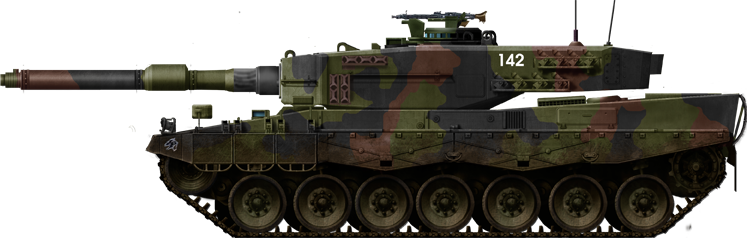
Local name for the Leopard 2A4: Panzer 87 WE (Pz 87 WE). Ordered from West Germany and in service since 1987, 380 total purchased, Main Swiss MBT. 134 as of 2024, modernised to standard Panzer 87 WE through the Armament Programme 2006, converted in 2009–2011, in active service since 2011. 71 unmodified Leopard 2A4 remaining in reserve.
Schützenpanzer 2000

Swiss CV9030 CH (CV90 Mk II) infantry fighting vehicle, 154 acquired from 2002, in service by 2003, 186 total inc. Command variants (see below). Purchased with the Armament Programme 2000, budget CHF 990 million. Modernisation of the CV90 through the Armement Program 2020, budget CHF 438 million. Option for 124 additional CV9030 was never confirmed.
Kommando Schützenpanzer 2000
32 Command Post, Infantry fighting vehicle variant, also in service from 2003.Ausbildungsmittel Spz. 2000
Instruction equipment: 7 turrets, 3 chassis, purchased with the Complementary Armament Programme 2002, budget CHF 37 million, used only to train the troop and the mechanics. M-109 KAWEST WE
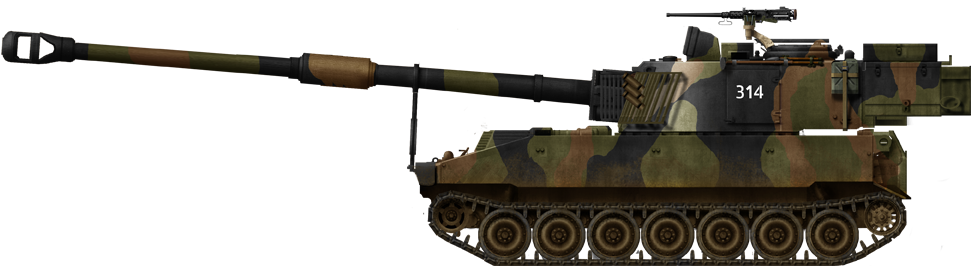
Self-propelled howitzer 155 mm; L/47, 581 acquired. From 2009 133 remaining M109 at standard M-109 KAWEST WE.
Mowag Piranha IB 6×6
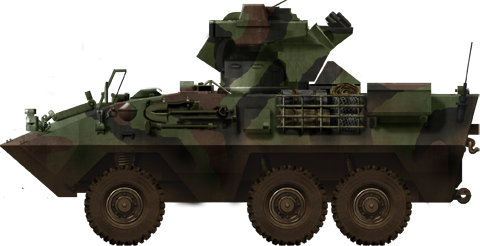
Cold war vehicle, modernized, 310 used as tank hunters since 1990, as Panzerjäger 90 or Pzj TOW 6×6. 106 vehicles still in inventory. Vehicles equipped with a NM142 turret (Norwegian design), armed with 2 BGM-71 TOW 2. Being retired since 2023. 200 modified in other variants, 2 destroyed in accident, 2 sold to police Geneva.
Schützpanzer 63/07 Rpe
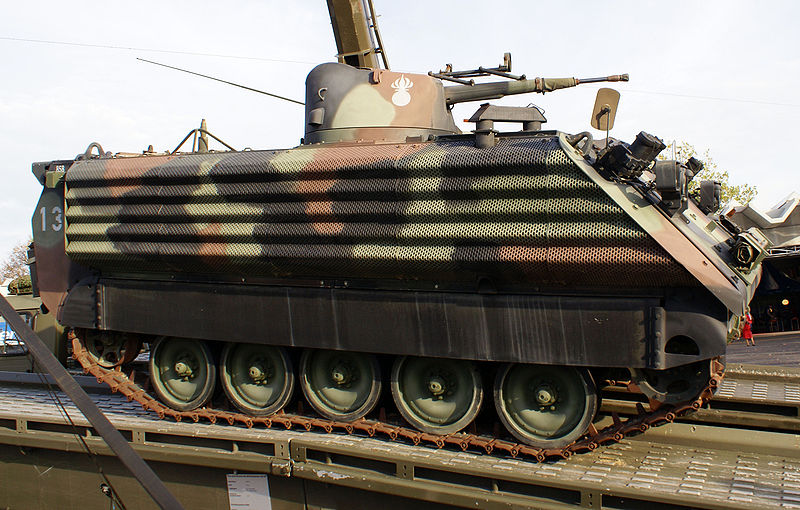
Schützenpanzer 63/89
Switzerland began acquiring the M113 in the 1960s, as part of a broader modernization effort during the Cold War. It offered reliable tracked mobility while being light enough for mountainous terrain, excellent traction in winter (snow), as well as amphibious capability (in early versions). It is also a flexible platform for multiple roles, designated locally the “Spz 63/73” (Schützenpanzer). Outside the regular M113A1 obtained (Schützenpanzer 63), developed locally modified versions such as the Schützenpanzer 63/73 (A2 front float panel) and Swedish Hagglunds Oerlikon 20 mm Kan 48/73 turret, Schützenpanzer 63/89 (ddon passive armor, 76mm smoke grenade launchers, RISE), Kommando Schützenpanzer 63 and 63/89 (Command vehicles), Kranpanzer 63 (M579), Feuerleitpanzer 63 (Artillery fire control center command vehicle) and improved Feuerleitpanzer 63/98 (INTAFF), Geniepanzer 63 CEV/dozer, Minenwerferpanzer 64 and upgraded Minenwerferpanzer 64/91 mortar carriers, Minenräumpanzer 63/00 (Mineclearing vehicle) and Übermittlungspanzer 63 Signals vehicle.
Swiss Modifications & Variants:
Troop Transport SPz 63/07 Rpe Armoured Personnel Carrier: 1,250 acquired, modernized and in service since 2008, now onlt 40 operational. Originally used as an armored personnel carrier but replaced in frontline infantry units by the CV90 since its introduction in the 1990s.Fire Support Variants
Kommando Panzer Artillerie 63/97 (Kdo Pz Art 63/97); Artillery command post (1998) 35 accord. GPS/INTAFF. Equipped with Machine guns to support infantry in defensive operations.Feuerleitpanzer 63/97 (Flt Pz 63/97) Fire direction vehicle (1998): 53 in service.
Kommando Panzer 63/07
Command & Communications: Mobile command posts equipped with advanced radio systems, key for coordinating militia units in the field: 50 SE-235/m2+/m1. To be replaced by Mowag Eagle V 6×6, the order is to be placed in 2 batches (2024 and 2026), ongoing.Sappeur Panzer 63/05
Sap Pz 63/05, Sapper vehicle (2005): 60 in service, replacement planned with Mowag Piranha IV PI PZ 21 (Pionier Panzerfahrzeug 21).Minenräumpanzer 63/00
Mirm Pz 63/00 Mine plough (2003), 12 Ordered with Armament Programme 2000. Replacement planned with Mowag Piranha IV PI PZ 21 (Pionier Panzerfahrzeug 21).
Former variants: Medical Evacuation, Armored ambulances, Mortar Carriers (81mm or 120mm), Engineer Vehicles for obstacle clearing, transport of engineering teams Battlefield construction tasks. Upgrades consisted in improved armor protection, better engines and mobility, upgraded communications systems. Some variants remained in service well into the 21st century. Role in Swiss Doctrine: The M113 was never meant to be a heavy combat vehicle. In Swiss service, it functioned as support backbone of mechanized units Highly versatile platform for Logistics, Command, Fire support. It complemented heavier systems like the Leopard 2 rather than replacing them. Replacement & Current Status: Gradually phased out from frontline roles, replaced in combat units by modern IFVs like the CV90, some versions may still serve in support roles and reserve units.
Mowag Piranha (All Variants)
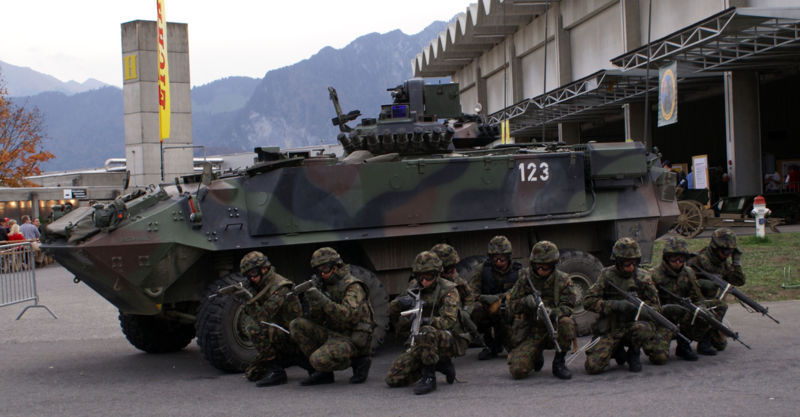
Mowag Piranha IB 6×6 Sanitätspanzer
Armoured ambulance (2006), 40 Converted from Panzerjäger 90 with the Armament Programme 2005, budget CHF 38 million.Mowag Piranha IB 6×6 Panzerjäger Fahrschule
Driver training vehicle, 4.Mowag Piranha IIC 8x8
 Radschützenpanzer 93
Spz 93 APC (Armoured Personnel Carrier), 282 in 1995, 515 in 2024 8×8 (4 more variants CHF 721 million), Armament Programmes: 1993, 205 vehicles, 305 million, 1996, 205 vehicles, 284 million, 1999, 105 vehicles, 132 million equipped with the PAL Pz 93 with RGW 90 and Kdo Pz 93/99 INTAFF with command system.
PAL Pz 93 : 141 APC (1995)
Kommando Panzer 93/99 (Kdo Pz 93/99) 92 Command Vehicles
Kommando Panzer 93/99 INTAFF Part of the 92 states above, Kdo Pz 93/99 INTAFF, Arty CP
Schützpanzer 93 Fahrschule 5 Driver training vehicle
Schützpanzer 93 Militärpolizei
8 Police APC (1998)
Führung Panzer FIS/HE FHR Pz FIS/HE) (FIS=Command Information System) 6 CPVs 2005, Programme 2002.
Führung Panzer FIS/HE INTAFF 6 Artillery command post vehicles 2011, Programme 2007
Mowag Piranha IIIC 8x8
Radio Access Point Pz Mobile radio transmission with wire communication system: 32 (2005) ordered with the Armament program 2002, with a budget of CHF120 million. 13 m high antennas, with 2 R-905 directional antennas, used as the bridge between the wire based communication system IMFS and the radio system SE-235.Mehrzweck-Sender IFASS Multi-purpose transmitter: 8 (2012) Ordered with the Armament Programme 2007 with the IFASS multi-use emitter.
KOMPAK Pz Communication hub vehicle: 12 (2014) ordered with the Armament Programme 2007. SE-239 radio, SE-441 POLYCOM radio, SATCOM, CrossSwitch (assembly of communication systems) Antennas on mast.
Kommunikation Panzer Communication hub vehicle: 8 (2010) Ordered with the Armament Programme 2009.
ABC-Aufklärungsfahrzeug 08 12 CBRN reconnaissance vehicle (2015) Ordered with the Armament Programme 2008, budget CHF 70 million + 25 million (including new tech, Armament Programme 2011. Protected by 3 additional ballistic armour modules STANAG level 4.
Mowag Duro IIIP 6×6
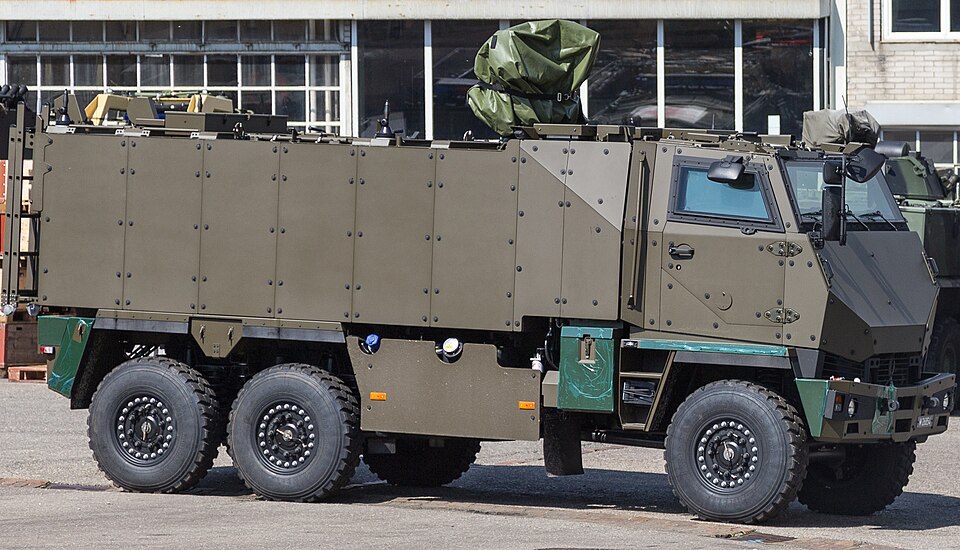
Mowag Duro
In total, 420 Mowag Duro IIIP 6×6 in 3 variants, CHF 740 million. 2008, 220 vehicle (210 GMTF, 6 ambulance, 4 GMTF SWISSINT), 396 million. 2010, 70 vehicles, 122 million, 2013, 130 vehicles, 222 million, 3 GMTF lost over accidents. 72 GMTF equipped with FIS HE command information system. Duro Geschütztes Mannschaft Transportfahrzeug APC (2010): 417
Duro GMTF SWISSINT KFOR 6 APC*
Duro GMTF SWISSINT KFOR Ambulance Ambulance, 4 (2010)
Duro ABC Nachweis Fahrzeug 12 CBRN reconnaissance vehicle (2015) Ordered with the Armament Programme 2008, budget CHF 47 million. Divided in 4 teams with each: 1 A for radiation detection, 1 B for bacteriologic detection, 1 C for chemical detection
Duro EOD/KAMIBES 5 (2008) DURO–3P Explosive Ordinance Disposal.
Mowag Eagle II (1997)
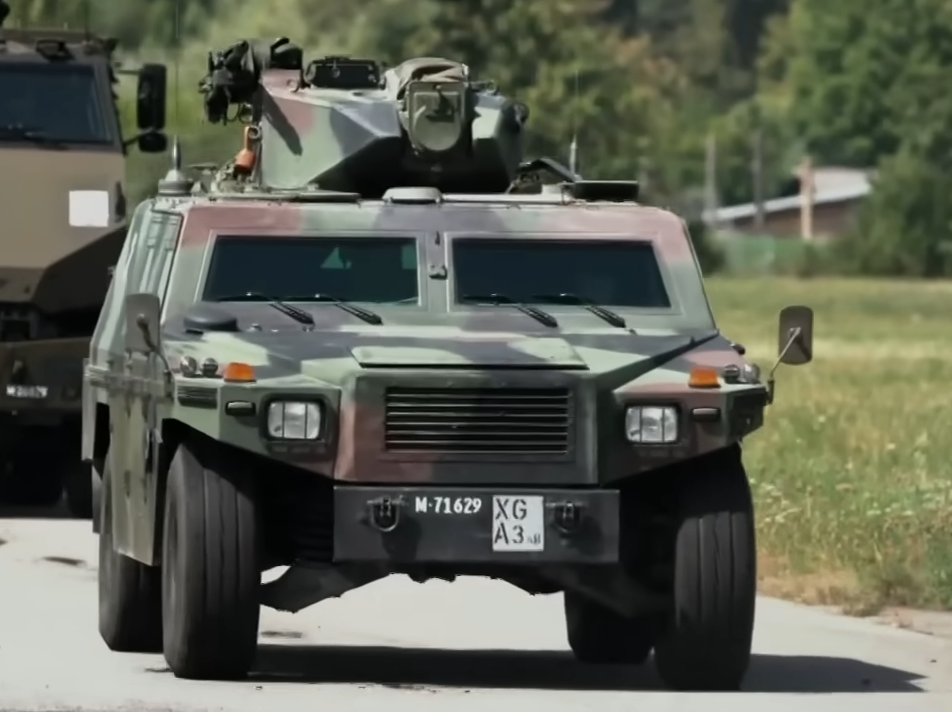
175 Aufklärungsfahrzeug 97/06 (-4 decommissioned after accidentnow) Ordered with the Armament Programme 1997, budget CHF 99 million. Modernised in 2006. The "Swiss Hummer". Note: In reserve, 156 Eagle I ARVs (1993) Aufklärungsfahrzeug 93, retired in 2019.
Mowag Eagle III
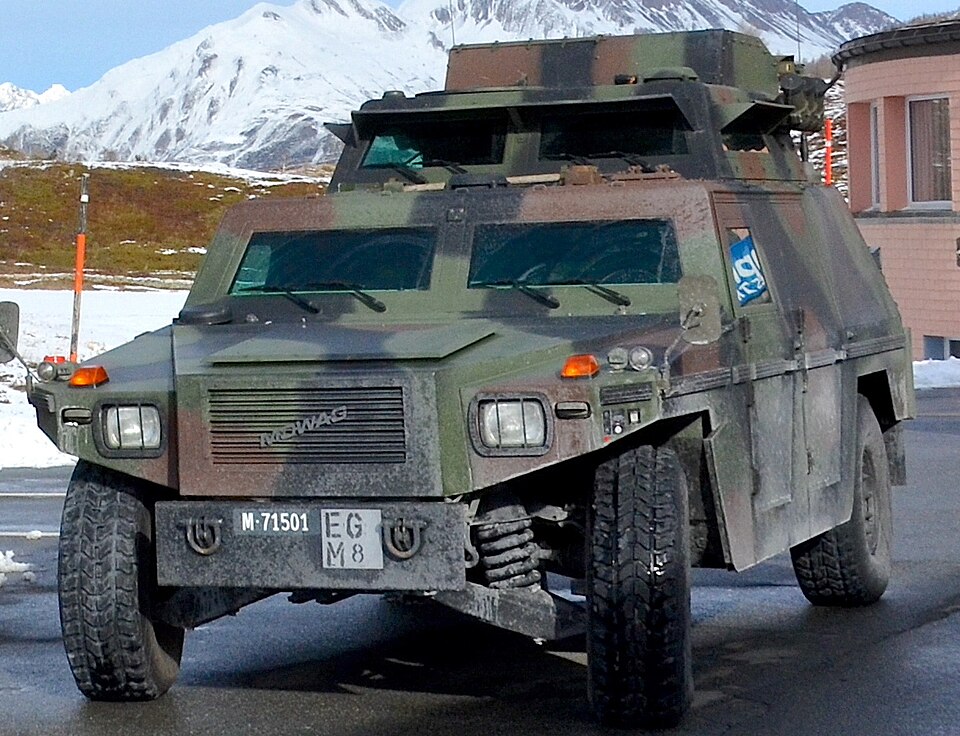
Schiesskommandanten Fahrzeug INTAFF (SKdt Fz INTAFF) or Artillery observer vehicle and artillery command post: 120 (2003) Ordered with the Armament Programme 2000, budget CHF 166 million.
Mowag Eagle IV
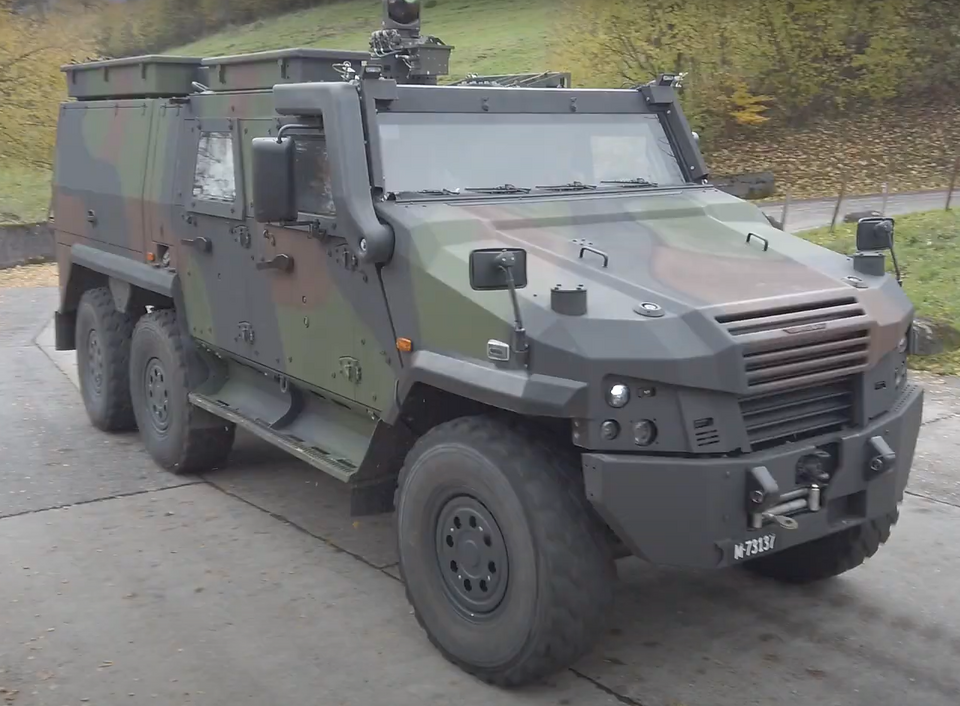
Aufklärungssystem TASYS
100 Armoured reconnaissance vehicles (2025), 5 delivered 2024. Ordered with the Armament Programme 2019, budget CHF 380 million. 11 for instruction, 89 for service use.with scout troops. C2 system supplied by Elbit Systems, L3 Harris WESCAM MX™ - RSTA on mast 8 m high with an HD color camera, a SWIR camera, a MWIR camera, one illumination laser and a distance measure laser plus INTAFF 15 for data transmission. EOD Explosive ordinance disposal: 5 (2015) Equipped with PackBot.
ACS Enok 5.4 Swissint
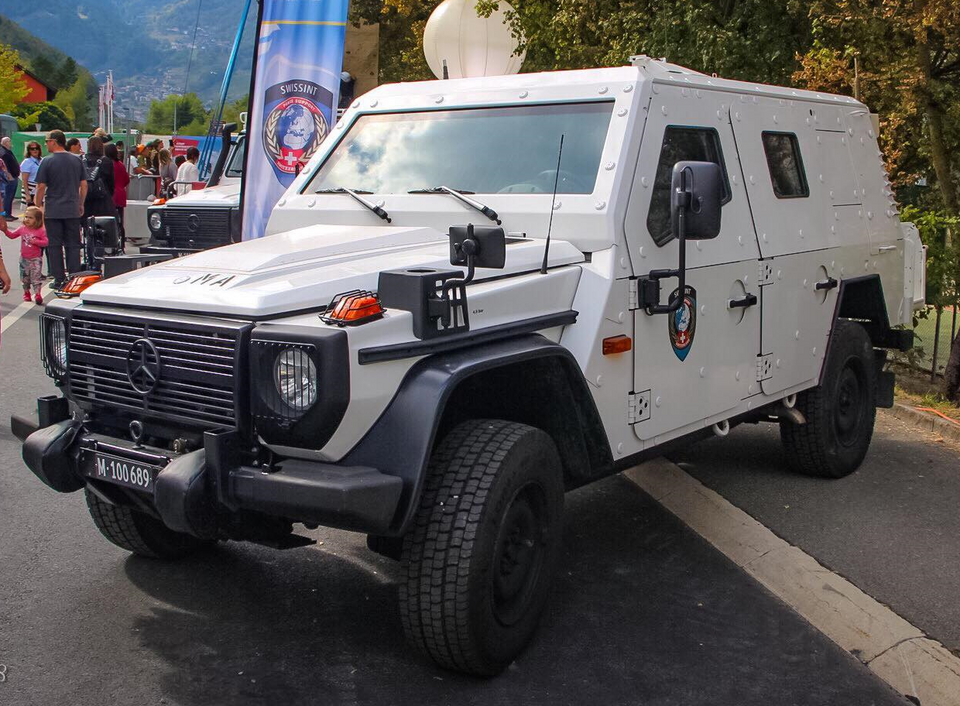
Panzer Wagen
Mercedes-Benz G300 CDI 4×4 Armoured patrol vehicle purchased from Germany for peace keeping missions for Swissint. Known to be used with the Swisscoy mission. Radiometrie Wagen L22
Mercedes-Benz G280 CDI 4×4: Radiology reconnaissance vehicle, 4 Equips the ABC Defense Battalion 10.
BPz3 Büffel
Leguan
12 pairs of 14 m bridges (24 bridges)
6 IVECO semi trucks 6×6 supplying reserve 14 m bridges
12 bridges of 26 m
6 IVECO semi trucks 8×8 supplying reserve 26 m bridges
1 pair of 14 m bridges and a bridge of 26 m, civilian section
AEV 3 Kodiak
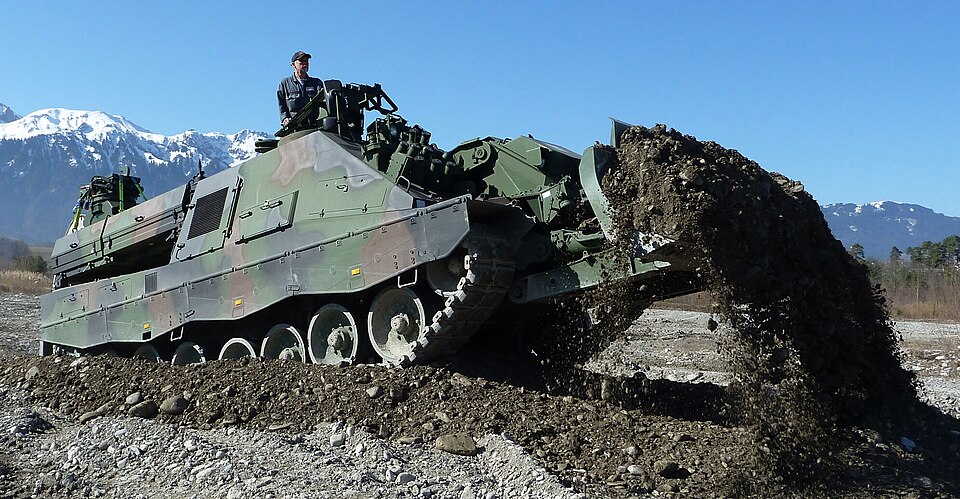
Geniepanzer Kodiak AEV (Armoured engineering vehicle) (2008): 12 Converted from Panzer 87 with the Armament Programme 2006, budget CHF 139 million. Modules available, 12x engineering, 6 demining, 4 mine protection.
CAT 938G
Ahlmann AS 200 PRG
RPE Transport Wagen 68/05
Soft Skin Vehicles
Next UpdateAntitank Assets
Next UpdateFortifications
Next UpdateRead More/Src

Rüstungsprogramm 2025
Arrêté fédéral relatif au programme d’armement 2016
armeemuseum.ch
nato.int
armee.ch/de
vtg.admin.ch/de
en.wikipedia.org equiments
Swiss_Armed_Forces
Modern Tanks


Modern MBTs posters
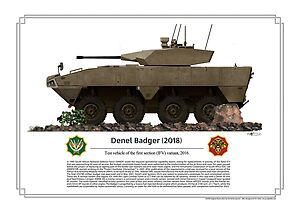
Denel Bagder (2018)
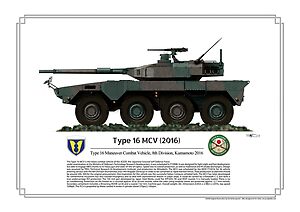
Type 16 MCV (2016)
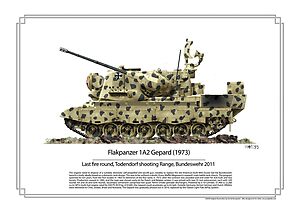
Gepard 1A2 last rounds 2011
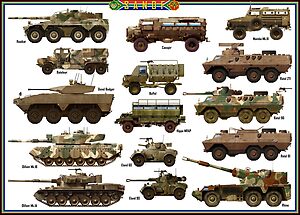
SANDF
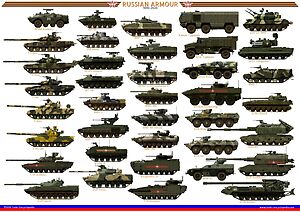
Russian AFVs
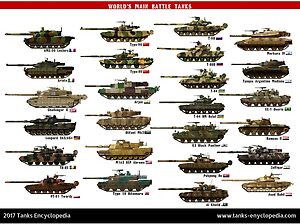
Main Battle Tanks