M113 Exactor (2007)
 United Kingdom (2007): 12 converted
Development of the M113 Exactor

Although the Israeli Spike NLOS was designed by the late 1980s already the derived EXACTOR was recent and somewhat secretive. Its requirement was defined as an Urgent Operational Requirement (UOR) to be used in Iraq by 2007 to counter strongpoints and in indirect fire role. Indeed there was no adequate response to insurgent mortar teams harassing British troops in build-up areas. The British Army had no system appropriate for this task, accurate enough to avoid unnecessary collateral damage within densely populated areas, but the Israeli did, with the Spike-NLOS (Tamuz). The Israeli government allowed the UK to lease ot purchase some fourteen of these systems, from IDF war stocks, some 600 missiles in all. Now the question was how to fire them, albeit the canisters already existed. In emergency, surplus stock M113s were refusbished and prepared to be fitted with a quad canister on the roof, taking the example of the IDF own Tamuz M113 tank hunter also called Magach 5 Tamuz.
The chronology was the following:
In April 2007 the Defense Ministry decided to buy twelve M-113 Spike-NLOS conversions with their 6-missile launching system at Rafael, under the British name "Exactor MK.1". To expedite things further and for training the crews, an additional two were ordered directly from IDF stocks, and called "Hafiz". They were the first delivered locally use to train the crews needed for all 12 vehicles in ordee to be operational when received. For all personal, special measures were taken to insure great secrecy in order to avoid any leaks that could make aware the insurgents the British had this new weapon system and adapt their own strategy.
After the first two "Hafiz" were received, gradually some 700 crated 7Spike-NLOS Mk2 and Mk4 missiles from IDF stocks were received. However the Mark 2 were those made compatible with the launchers installed on the M113. By August 2007, they were all already received, and completed training, started deployments with the 1st Royal Horse Artillery in Basra. They were assigned 200 Mk2 Spike missiles all equipped with a daylight camera. 200 Mk4 with thermal imaging for night operations remained in stock. In 2009, they were deployed by C-130s to Afghanistan (see below).
Design of the M113 Exactor
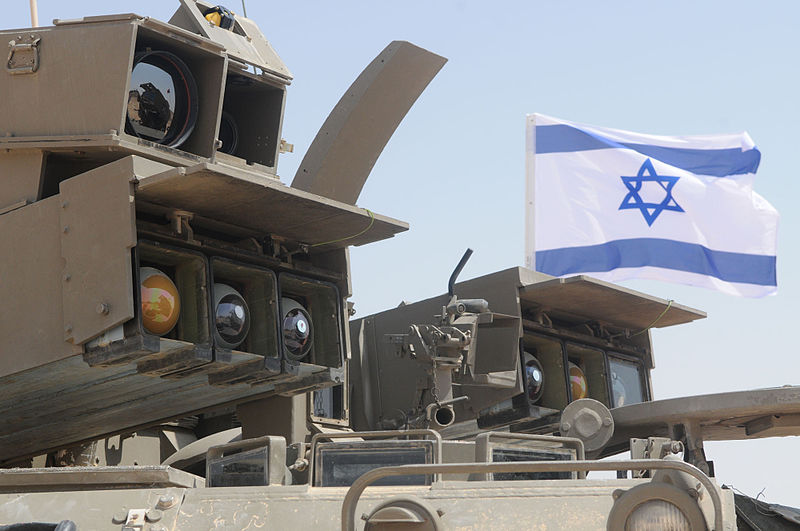
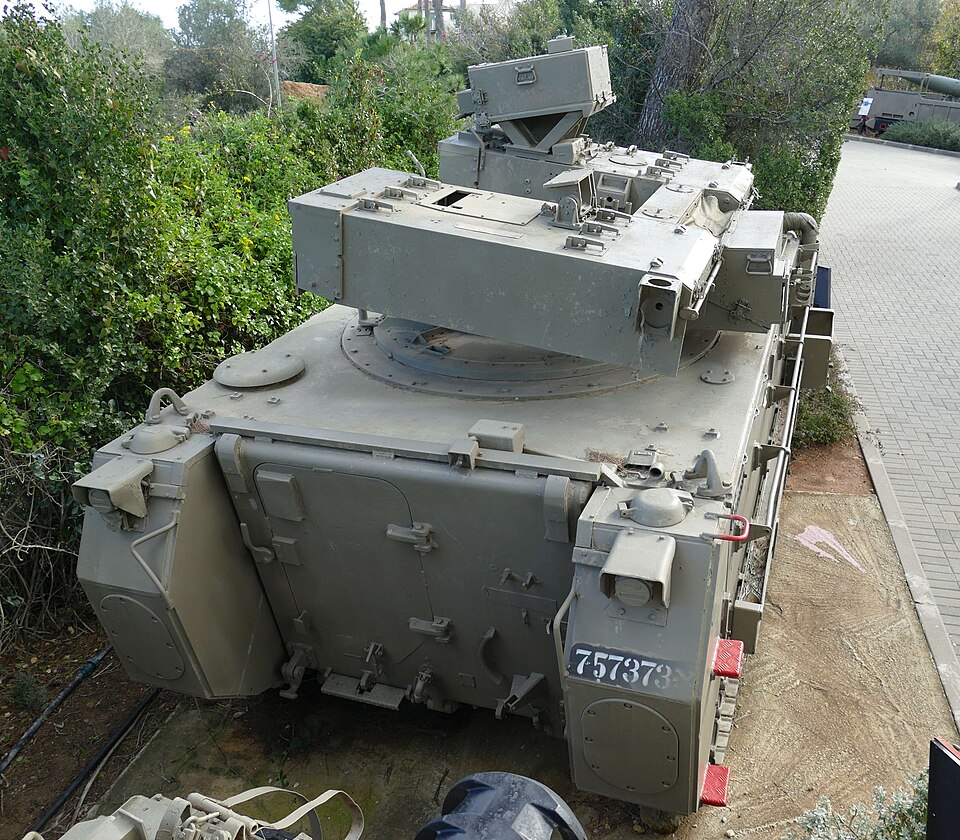
Close view of the Tamuz Launcher
Not a great deal of information about these IDF M113s apart the fact they shared little parts with the British ones, creating logistic and maintenance issues. These were literally identical to the Hafiz, a M113 to the latest Israeli specs, and completed with middle eastern threater, specific IDF options. The M113 has been well covered already, and needs no introduction.
General Layout
The Exactor Mark I measures 5.3 meters overall, with a beam of 2.7m and an height of c3m, vabiable with the radar and launchers. Total weight was around 13 tonnes. The crew of sat in the same way as in the original vehicle, which kept its Driver in the same location front-right, with the transmission to the left and large access panel.The driver has three persicopes and a rear-folding hatch, central IR sight. To his immediate left was a louvres access hatch to the engine compartment below. The vehicles kept their trim vane as add-on armour, and the IDF variant had additional straps. The Commander and the two missile operators sat in the fighting compartment behind.
Protection
The armour was the same as the original, alluminium alloy for a protection against heavy AP HMG rounds all around. The sides are protected by extra holders for spare sand ramps and other items acting as extra armour against RPGs, but the roadwheels not protected by rubber skirts.Mobility
The M113 Exactor is powered by the modified Israeli 275hp Detroit Diesel 6V53T Diesel Engine, coupled with an Allison TX-100-1 Automatic Transmission for 4+1 speedds, and the chassis comprises front drive sprockets, rear idlers and five doubled, rubber-cladded roadwheels per side, with center pin tracks, suspended under torsion Bar and hydraulic dampers fore and aft. All for a top Speed on flat of 66km/h.Firepower
The fighting compartment is topped by a large rotating plate supporting the fire system. There is an access hatch for the commander behind the two arms, each supporitng a trio of missiles in a single canister, a main sight in between with an Electro-optical thermal imager. On the left canister two systems are installed, a laser Rangefinder and an Electro-optical thermal imager for the gunner. On the right canister, a radar is fitted. racks in the rear of the vehicle, around the rear door, contains extra missiles. The launcher could be reloaded from inside, provided it is place back in line, the canisters turned 90°. Inside there is an elevator loader for both arms as the missiles are heavy.Spike NLOS Mark 2 & 4
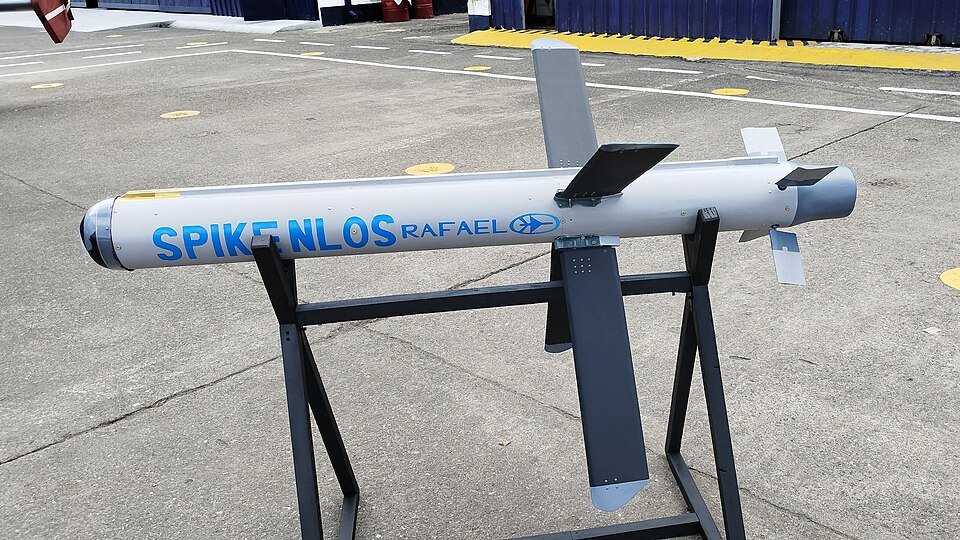 The 1981 Spike-NLOS (Non-Line Of Sight) was designed to deal with modern armored vehicles, inc. with dynamic protection, as well as fixed positions and fortifications or all targets outside the line of sight, all weather, day or night and up to 25 km. Rafael develope a whole family, some infantry portable, capable of 1500 to 4000m and the latest Spike ER capable of 4 km. It is a cymlinder like missile with folding X-shaped wings that are deployed autumatically when launched and help controlling the course, in a largely autonomous way.
It uses an uncooled dual-channel IIR thermal/television homing head plus an inertial system, as well as a satellite positioning system and a two-way radio data transmission for human to robot guidance mode. It could also accept external guidance. Being lightweight it could be fitted in a large variety of vehicles, Humvees and MRAPs for example. The latest variant presented in 2018 was the self-propelled launcher Pereh, based on the M48A5 Magach.
Its limitations are:
-Low speed of about 190 m/sec (easy to intercept or shoot down)
-Insufficient reliability of target acquisition in fog, poor visibility or aerosol interference
-Low payload. For antii-tank use the tandem cumulative warhead was acceptable for 1981, not now.
specs. M113 Exactor (Yehastog Mk.1) | |
| Dimensions | 5.3m x 2.7m x c3.2m |
| Total weight | 13 tonnes |
| Crew | 4: Driver, Cdr, Gunner, Loader |
| Propulsion | 275hp Detroit Diesel 6V53T Diesel Engine |
| Suspension | Torsion Bars |
| Speed | 66 kph |
| Range | c600 km |
| Armament | 2x3 NLOS Launcher Mark 2 |
| Armor | As original M113, best 13mm aluminium alloy |
| Total production | 14 (2007) |
Combat Deployment and Fate
Despite having measurable success, early operational use highlighted several deficiencies in the summer of 2007 and until the next summer 2008. The Mk2 missile was difficult to control, the M113 vehicles were extremely unreliable due to the lack of commonamity with the British park deployed there, and not well suited to the heat, with a poor air conditioning system to British standards. The display resolution was much lower than contemporary equipment.So by September 2009, all systems were transferred by military transport C-130 from Basra to the British contingent in Afghanistan, joining the battery MLRS MLRS (GMLRS) of the 39th Regiment of Royal Artillery, at Forward Base "Edinburgh", Helmand province. However soon, the Mark 4 used on the trailer was preferred. It was usable remotelly and towed on locaton by a simple truck, plus the Spike Mark 4 is generally regarded better to control, more versatile, accurate and long range. It seems than back then, the M113 remained in reserve, seeing little action.
The final chapter was whhen the new Rafael Spike ER or Mark 5 appeared. In 2011, the British Army ordered them, at just 100,000 $ apiece, all made for the new and specially orderd Rafael towed launcher Ehastog Mk2 or in English Exactor Mark 2. Presented in March 2013, it was formally adopted in August 2013, and deliveries started in 2014. This is a four-container trailer mounted on a single-axle trailer with a Rafael Toplite electronic fire detection and control system, radioline guidance equipment. The operator's station could be 500m from the launcher. But today, the Exactor Mark II is used in conjunction with Israeli-made Elbit Hermes 450 surveillance drones. The unit was disbanded in 2015 after a white paper.s
Gallery on the M113 Exactor
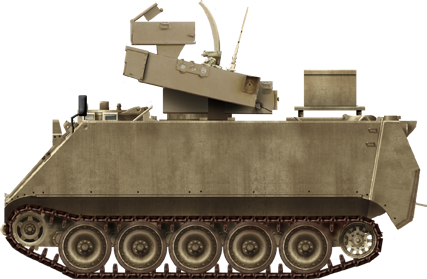
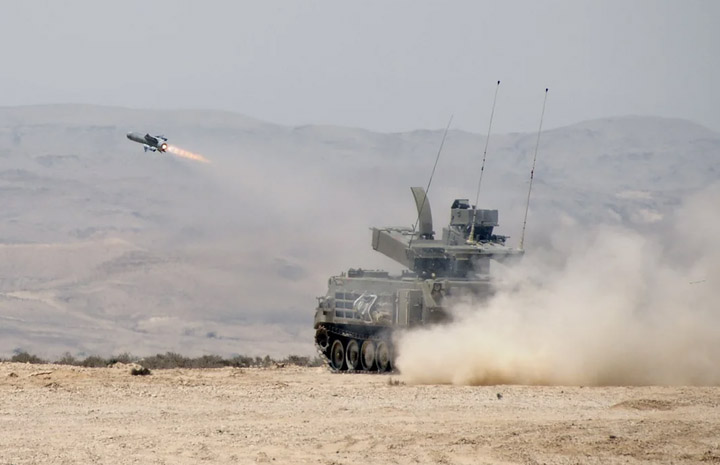
Exactor Mrk I, Barsa summer 2007
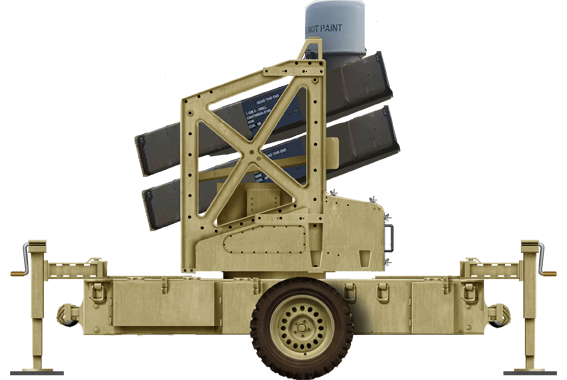
Exactor Mark II with the Spike 5 (2013) (not to scale)
Sources
war-is-boringthinkdefence.co.uk
forum.warthunder.com
hmvf.co.uk
hafiz-missile-carrier
beyondthesprues.com
israeli-hafiz-british-exactor
key.aero/f
thejc.com/
hafiz-missile-carrier
Modern Tanks
Modern MBTs posters
Denel Bagder (2018)
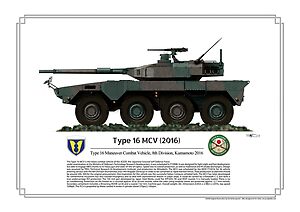
Type 16 MCV (2016)
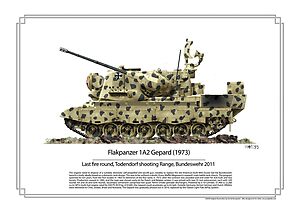
Gepard 1A2 last rounds 2011
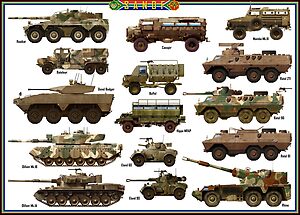
SANDF
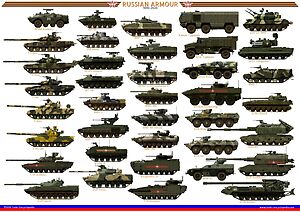
Russian AFVs
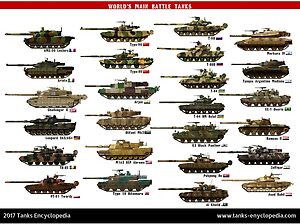
Main Battle Tanks