Marmon-Herrington MTLS (1941)
 Medium Tank, 125 built
Development of the Marmon MTLS
From 1936, the KNIL (The Dutch East Indies Forces), vbasically ruling today's Indonesia, wanted to step-up its rearmament. Twenty years had passed and the army was in a sorry state. It obtained funs to purchase four Vickers tanks, including two amphibious ones for testing. O,ce successful, the KNIL ordered 73 light tanks, MG-armed and 45 Mediums, gun-armed and supposed to be used as command tanks. However as many late 1930s program, it was stopped in its tracks as by September 1939 the war broke up and the British Army needed every bit of kit that Vickers could deliver. Only 20 light tanks had been delivered before exports were banned. The KNIL thus turned to the still United States and the company Marmon-Herrington which both proposed tanks for the USMC and the US Army. This was the biggest order yet for the company when 628 Marmon-Herrington tanks were ordered for the KNIL of several types.
The previous CTMS-1TB1 for export shot at Aberdeen (pinterest)
200 of these were of the medium, gun-armed or MTLS-1GI4 model. The light ones were called CTLS. The complete order of CTMS, CTLS, plus 100 MTLS tanks were exected for delivery no less than 1st July 1942. But the company never had the tools and space for so many tanks and heir supply chain was nowhere near sufficient. Soon, delays piles up, and production delays amounted to a point that only a token force of CTLS made it to the East Indies before the Japanese invaded Java. In the US the news cancelled all further transports and the whole order was taken over by the US Army; but this order was itself cancelled after 125 built for standardization reasons. The new tanks promised by Chrysler and Cadillac were going to be built en masse.
Design
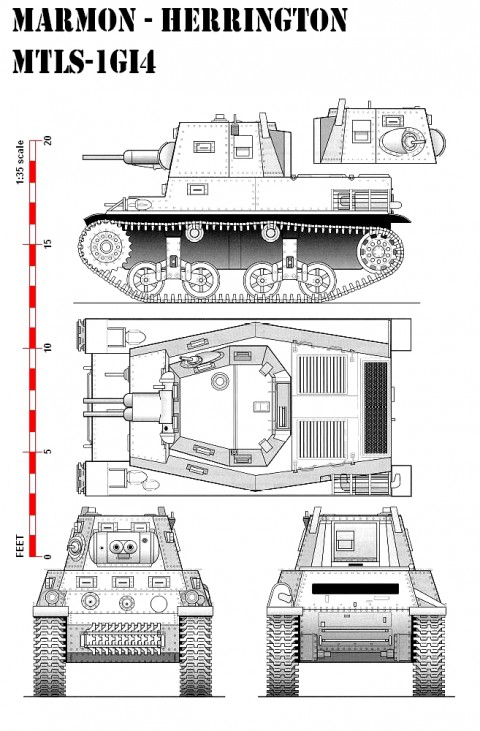
The MTLS was an enlarged CTMS, based on the CTLS or "Combat Tank Light series" from Marmon-Herrington, developed from 1936. It had reinforced vertical volute spring suspension but even this was not enough for an overall weight of 22 US tons. The armor thickness was still relatively light, at 1.5 inches (38mm) for the nose, and half inch of 13mm on top and side. It had also larger tracks compared to other models at 18 inches (46cm) wide and was powered by a more serious Hercules gas. engine rated for 240 horsepower for a modest 25 miles per hour (40 km/h). The way the engine was placed and the transmission arm made the whole tank quite tall as well, quite conspicuous.
The turret was larger than other models to contain a rare sight: A twin mounted semi-automatic 37mm L.44 guns, designed by the US Armament Corporation. Each was loaded with clip of five shells for fast firing before reload. The first issue was that this reload system was unrealiable and tests at Aberdeen were disastrous. The second was accuracy with muzzle interference. At least there was a.30 cal machine-gun mounted coaxially, and a ball-mounted in the right hull and front of the turret plus two optonal at the back of the turret on pintles to be used for aircraft. Two more could be also mounted, but fixed in the hull, optional. There was even a seventh in a ball-mount. This amount was typical of US tank production of the time like the M1 Medium, M2 and M3 light tanjs.
The MTLS had been rushed designed and produced. It was basically an enlarged 10 ton tank, and suffered many issues for its suspension and overall structure. It ended quite unreliable overall, most MG emplacement were just unpractical and non-accessible, and the crew of four was "shoehorn" inside and badly though of. They were notably forced to access and exit from a single turret roof hatch. Tested at the Aberdeen Proving Grounds from April to November 1942, the verdict was merciless. It was deemed the most unreliable, mechanically and structurally unsound and underpowered tank ever tested there. In 1946 the prototype MTLS and CTMS were still there to be tested, and were likely scrapped afterwards.
specifications | |
| Dimensions (L-w-H) | 4.9 x 2.64 x 2.81 m |
| Weight | 20.000kg (22 US tons) |
| Crew | 4: Commander, Driver, Gunner, Loader |
| Propulsion | Hercules water-cooled engine, 240hp |
| Top speed | 40 km/h (25mph) |
| Suspensions | Leaf Springs |
| Range | c400 km |
| Armament | Twin 37mm L.44 AAC guns, 5-7 .30 cal Colt/Browning |
| Armor | 13-38mm (½”-1½” inch) |
The Marmon MTLS "in action"
The Netherlands was occupied by the Germans in May 1940, but the Dutch Indies were free at least for a time. In early 1942 the island was cnquered and occupied by the Japanese. The Netherlands still had its Latin and Central Americas, "West Indies" colonies, some important for the US for their oil and bauxite needed for aluminum. American troops from Puerto Rico were stationed there, but a Dutch Tank Battalion (Bataljon Vechtwagens) was formed by May 1942 in Suriname, boasting 28 CTLS and 26 CTMS, 19 MTLS.In addition was a marines detachment (80) and a Prinses Irene Brigade (225). There were never enough resources for a full battalion and a semi-batallion was formed in the summer of 1943. with the US marines detachment retuning home by September 1943 for training. Those of the Prinses Irene Brigade were sent to UK by 1943 to train for D-Day. More volunteers left to Australia. This this battalion had most tanks stored and unmanned. It was believed these MTLS could be sent back to the Dutch east Indies but nbothing came out of it.
The entire unit was disbanded in 1946 and all vehicles, including the MTLS, ended in storage. By 1947 it was again thought of reactivating them to quell the insurrection in the East Indies, but the lack of maintenance for many years had taken their toll, and the CTMS, like the rest, were in a sorry state. It's possible that a few MTLS tanks were operational but by 1954, only ten were noted on the unit's list, inc. two MTLS. In 1956-1957 this was over, but they were scrapped after 1957.
Gallery
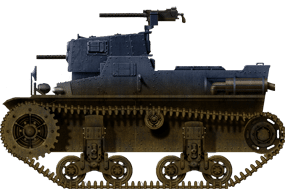
Author's illustration of the CTLS for comparison
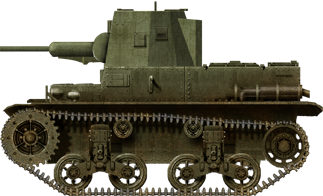
Author's illustration of the CTMS
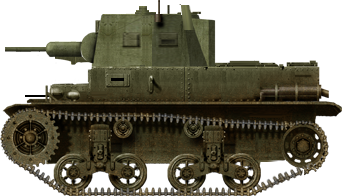
Author's illustration of the MTLS, for comparison


All: Pinrerest
Read More/Src
Books/Links
Stuart (History of the American Light Tank, Vol. 1)American Fighting Vehicles Volume 2 Ray Merriam.
Jane’s World War II Tanks and Fighting Vehicles. Complete Guide Hardcover 4 Nov. 2002 L.S. Ness
mapleleafup.nl
Videos
Model Kits
SS72839 Marmon-Herrington MTLS-1GI4 SSMODEL 1:72
WW2 Tanks


WW2 tanks posters
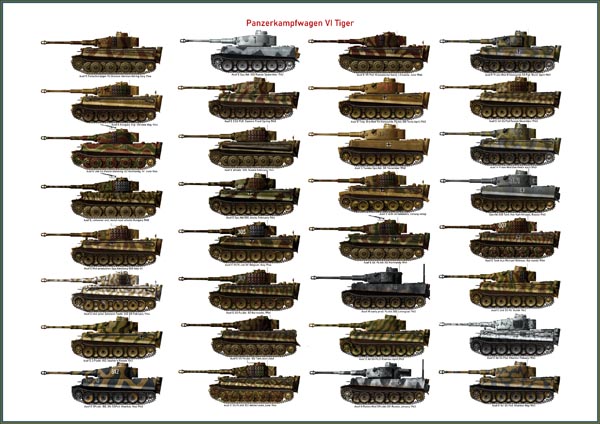
All Tiger tanks liveries.
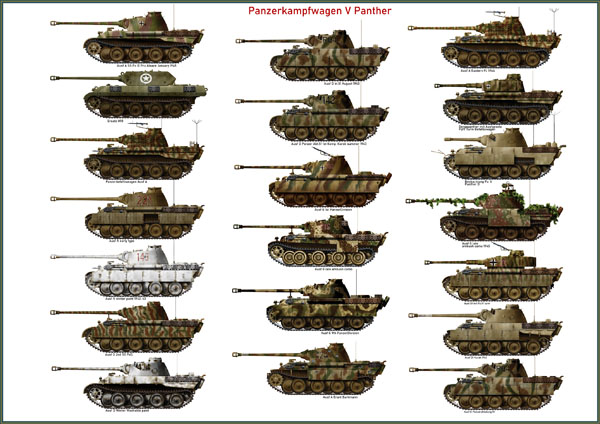
Panther liveries and variants
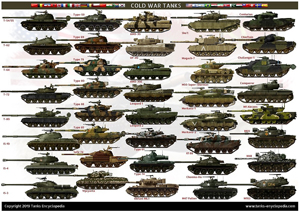
WW2 Armour - All tanks
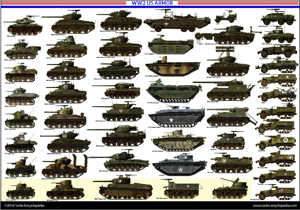
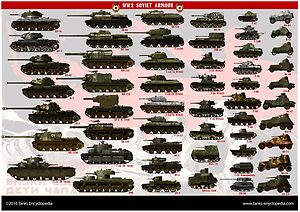
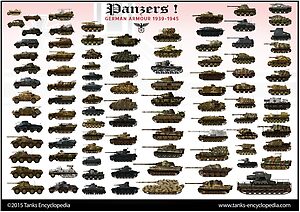

Tanks aces and single tanks series
Find more there
Museums, Movies, Books & Games
The Tanks and Armor in pop culture
Tanks and armored vehicles in general are only really grasped when seen first person: The mass, the scale, it's all there. Explore also the way tanks were covered in the movie industry, in books and in video games.Movies:
Best tanks movie on warhistoryonline.com
On imdb.com
On bestsimilar.com/
miltours.com
liveabout.com/
watchmojo.com
Video Games:
pcgamesn.com
historyhit.com
levvvel.com
vg247.com/best-tank-games
mmobomb.com/
alienwarearena.com