Schützenpanzerwagen auf Fahrgestell U304(f)
 Germany (1944)
c150 built
Origin and Development
The vehicle was an armoured variant of the artillery tractor of the Wehrmacht, itself derived from the Unip P107 of 1935. The French half-track was previous developed for the Army by Citroën, based on the Kégresse patent and by 1934, initially to succeed to the ageing 1929 Citroën-Kégresse P17 and the larger P19. Citroën however went bankrupt, so Michelin, the new owner, decided to focus on civilian markets. Unic therefore took over the license and started to produce the P107 under its name. It entered service with the French army from 1937, in variants such as the P 107 B, P 107 BU or P 107 U1, based on an order in 1935. The army in May 1940 fielded the 75mm light prime mover, also able to two the short 105 mm Bourges and Schneider, and another for engineer units, then one for transmission units for a grand total of 1,274 until 1939 and 1,896 more until June 1940 for a total of 3,276 vehicles.In the storm of 1940, the Unic P107 was fielded to active units of engineers, communication and artillery, but in the mayhem of the operations, many were destroyed, ran out of gasoline and were abandoned, or some were delivered but parked, wating assignation to frontline units, and captured intact after the French surrendered. The Wehrmacht had a department, part of the waffenamt, tasked of collecting and evaluating captured vehicles, which were pressed into service after some workshop conversion from the Militärverwaltung in Frankreich (from French to German, with documentation and spare part network constitution). The Unic P107, like the Somua MCG half track, was recent and present in large quantities, so it could be assigned to resident divisions in France, close to the spare parts supply.
This was part of a larger corps of 100,000 occupation troops for the entire German-zone in France by December 1941, albeit many were rotated from the eastern front to France to rest and refit. Resident units were the 2nd SS Panzer Division Das Reich, 4th SS Police Regiment, 157th Mountain (Reserve) Division, Panzer Lehr, XIXth Army, 716th Static Infantry Division, and 12th SS Panzer Division Hitlerjugend. So in 1941 already, several hundreds of vehicles were available. They would be transformed ionce again at Baukommando Becker from late 1943 to 1944, especially to reconstitute the 21. Panzer-Division. The armoured version of the Zugkraftwagen U 304 (f) was thus designed in that era.
Becker's Unic Armoured Family
As many other French Captured Vehicles, they underwent various levels of concversion to be reused and standardized, but generaly remained closed to their original role. It's only when armouring them was necessary due to shortages from germany, that one specially crafty officer emerged as a clear reference. Alfred Becker (20 August 1899 – 26 December 1981) was an army engineer and artillery officer which served in both World Wars. In June 1940 the Wehmacht captured hundreds of British and French vehicles, refurbished and standardized in general (see below) to be kept in their original role, but rebuilt sometimes at various degree, and supplying later armoured fighting vehicles. With his engineering and organizational skills, Becker soon was involved by more radical conversions as the war in the east became nasty and losses amounted.He worked at first at the Hotchkiss plant on the outskirts of Paris an created a conversion and fabrication center to motorize German guns, rocket launchers and mortars, sending in some case prepared chassis to Altmärkische Kettenwerk Gmbh (Alkett) for the completed conversions to be covered in steel armour, and retured for completing the fitting out. This was done for over 1,800 recovered vehicles, all types confounded. In the winter of 1943-44 Becker was tasked of giving the reconstituted 21st Panzer Division, gutted in North Africa (The famous Afrika Korps) its motorized and proetcted park. It started with tracked carriages of French light tanks for anti-tank gun or artiley suppport with the cm leFH 18 howitzer, that went into the Sturmgeschütz Abteilung 200, where he served himself as commander in the summer of 1944 across Normandy. He nearrowly escaped encirclement at Falaise and Becker himself was captured in Alsace by December.
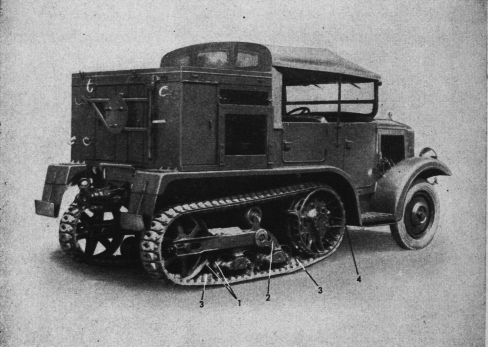
Unic P107 in German service, part of the instruction manual
Baukommando Becker, once created, at its high point managed three factories in France, Matford Factory, Talbot Factory and Hotchkiss near Paris, taking hold of a large quantity of damaged Allied military vehicles, most supplied to either local occupation forces, training units or anti-partisan forces. But apart tank, Becker also had access to a large number of soft-skinned half-tracked vehicles, chief of which were the SOMUA MCG and Unic P107, either captured in park intact, or in various states of disrepair, throughout the whole country after th free zone invasion in November 1942. Matford in Poissy, northwest of Paris, was tasked of collecting and put into shape vehicles until then wrecked and only used for spares. The enormous task ahead was led by an engineering staff and often the wrecks were disassembled, cleaned, while design changes were worked out, sent to other factories for fitting out at Hotchkiss, working as a final assembly line.
Becker also looked a wide reserve of spare parts and made its factories produce 10% supply of extra parts. The chassis led generally to a battle-value assessment of the vehicles, and determined the most effective use for each type, in relation to battlefield needs and conditions. The lighter chassis half track Unic P107 and Somua MCG led sometimes to fearsime conversions like the Vielfachwerfers, mounted either on an armoured SOMUA MCL or the P107. Both the SOMUA MCG and Unic P107 were armoured, making them more survivable. Of the two he preferred however the more robust and powerful SOMUA MCG, declined into a Nebelwerfer, Vielfachwerfer, and Reihenwerfer, latter a battery of twenty 81 mm mortars. The smaller, more anemic Unic P107 wa scalled a "light halftrack" and used mainly as troop carrier, an "Ersatz Sd.Kfz. 251", substitute for the famous general purpose half track (12K built) made by Hanomag and others. In late 1943, his reputation was growing and a number of high ranking German officers apart Speet, visited Baukommando Becker, including Erich Marcks, Gerd von Rundstedt, and Heinz Guderian. By the summer of 1944 they were amazed by Becker's spawning of armoured vehicles, especially for the 21st PZD, notably the Schutzenpanzerwagen U304(f).
About the Leichtes Zugkraftwagen U 304 (f)

Unic P107 in German service, artillery variant
The basic Wehrmacht tractor was essentially the same vehicle with german markings, and for some version, fitted with German ammunution stowage bins were used as tractor. It used mechanically the same old Adolphe Kégresse flexible track patent. The P107 inherited a lot of Citröen components based on existing stock as the company, albeit bankrupt, had been purchased and funded by Michelin. The final vehicle by Unic was far more advanced than the Citroën-Kégresse P17 it replaced, and many elements provided under license were replicated at Unic, including the engine.
The original P107 built for use by the French Army existing mainly in open top version, with tarpaulins above the cab or flatbed, but some had a "long cabin", others a "short cabin" and a sub-variant of the latter existed with a fully enclosed, hard roof all-metal cabin. The vehicle was used as tractor intially for the long 75 mm and short 105 mm artillery pieces and were reused in German service as the Leichtes Zugkraftwagen U 304 (f) without much modifications but the towing eye and adapted to German standard, for towing notably the Pak-37 antitank gun for the artillery variant, and up to the bulkier 7.5 cm Pak 40 anti-tank gun. The transport version with flatbed could also be used as an ammunition supply vehicle, but they all remained unprotected. One sub-variant called the Zugkraftwagen U304 (f) Leichter Schutzenpanzerwagen (Funk) was used as radio command vehicle. The German P107 was still primarily used as an infantry transport and artillery tractor, for towing either 37mm and 50 mm caliber anti-tank guns. The vehicles were also modernized with Notek lights for night driving.
Schutzenpanzerwagen U304(f)

Standard Troop Transport
The Leichter Zugkraftwagen 305 (f) or "Light Tractor 305 (f)" was essentially an armoured variant of the Zugkraftwagen U304 (f) artillery tractor. It kept the same waffenamt denomination of U(for Unic)305 (the administrative identifier) and F for "Frankreich". It was converted by the Baukommano Becker from already converted and standardized Zugkraftwagen tractors, but other denominations existed such as the abbreviated l. Zgkw. U 304 (f) or "Light Tractor 305 (f)" but for the personnel it was known as the "Unic-Kegresse", Kegresse being the identification to the tracked system applied to other vehicles from Citroën, Somua and others. The term Schutzenpanzerwagen indicated a proper combat vehicle, with protection and self-defensive armament.
As said above, the Unic P107 was found underpowered and light compared to the more capable Somua MCG and when it was considered for conversion as troop transport and subsitutes for the Sd Kfz 251 by Major Becker, this was in early 1944. Two base versions were developed, the (leichter) Zugkraftwagen P107/304(f) artillery tractor, supply carrier with its rear open compartment like the Sd.Kfz.251 and the leichte SPW U304(f) personnel carrier.
Zugkraftwagen P107/304(f)
leichter Schützenpanzerwagen U304(f)
The infantry transport (60 vehicles converted for Spielberger) version known as the leSPW U304 (f) was itself divided into three versions which had structure change:-1.Ausf featured vertical walls. Possibly prototype only, unknown numbers.
-2.Ausf had the final received the final sloped side armor, open top (largest production).
-The Geschlossene had a fully armored rear compartment (close top). It could carry 8 men, two in the cab, six in the rear compartment.
Other variants: Command, Ambulance, Mortar...
-Radio command vehicle (Schützenpanzerwagen-Funkkraftwagen auf U304(f)) for liaison units, which compartment was stripped of its bench and instead had a table and seat for the radio operator, existing both in a top-open and fully enclosed versions.-Sanitätspanzerwagen auf leSPW U304(f): Armoured ambulance variant, similar in appearance, red cross symbol and no armament, two stretchers one above the other in the compartment and a bunk for medical personel or seated wounded men.
-Mittlerer Munitionskraftwagen - ammunition vehicle (no data)
-Bergefahrzeug: parts supply vehicle for salvage/repair units
-Nachrichtenkraftwagen: Liaison vehicle
-Three other variants were made, one FLAK 38 carrier, one 3.7 cm PAK anti-tank variant and a mortar carrier (see below, armament).
Design
The Schützpanzerwagen auf Fahrgestell U304(f) abbreviated as "SPW-U304(f)" was based on the Unic P107 chassis, keeping the whole powertrain, front engine, front directing axle, transmission, gearbox, and the trademark Kégresse system comprising a set of two teeth-less tension wheels fore and aft, two bogies on a central axle, with two sub-assemblies for eight smaller roawheels on either side. The return roller was on top of the main bogie axle. This was a proven system pioneered in the 1920s for a rubber track with single pin. The advantages of a rubber track were numerous, but this made for example the vehicle less noisy. The vehicle was short and stocky, which gave the impression it was tall, whereas it was not higher than an Sd.Kfz. 250-251. The original chassis was 3.5 tonnes, 5 tonnes max with payload, but in that case the armoured body replaced it, so fully loaded it might be as heavy as 6-7 tonnes or more depending on the configuration.The engine was the Unic 4-cyl. liquid cooled P39, 4-stroke OHV, 3,45 Litre capacity, for an output of 60-62 hp at at 2800 rpm, with another source stating a Delahaye 70 hp. This was enough for 45 kph for the base vehicle, but the armoured version fully loaded was probably around 30-40 kph, not the fastest kid in town. The gearbox comprised a 2-speed auxiliary gearing and 2,9 or 3,2 :1 axle gear ratio. The Clutch was of the dry plate type. There were hydraulic brakes on sprocket wheels, also used for steering in sharp turns and a rigid front axle with semi-elliptic leaf-spring suspension. The electric system used a 6 or 12 Volt battery. The front axle had tyres of the 30x5 size. Original range is estimated around 250 km, so probably down to 200 km or 124 miles with the armoured version based on a 160 liters fuel capacity, and consumption way above the baseline 50 liters for 100 km.
Protection and Armament
On this classic chassis was mounted an armoured body by Alkett, made of sloped angular shapes wrapping the front and rear cabs into a single space. The forwared bonner was entirely covered, with louvres protecting the radiator, an access panel to the engine either side, but a fixed top, which could be still bolted out and supported two shovels. This bonnet extended forward to cover the unditching roller typical of French vehicles as well. Oil or fuel tanks were installed on the steps to access the cab, however normal access was from the rear two-doors. The body shape recalled that of other armoured haf-tracks, with a 45° angle split between a lower and upper part.This was a single space from the driver and co-driver in the cab foward to the rear access. Vision was limited to the front cab to two top hinged shutters with vision slits, and two narrow side shutters, same. The rear compartment was open by default, but could be covered by a tarpaulin thanks to series of small handles to strap it all around the rear compartment whereas the forward cab was fully protected. In some sources the front plates, on the bonnet and cab reaches as far as 10 mm, making for resistance against heavy machine gun rounds.
The base vehicle, used as infantry transport was armed like the Sd.Kfz.251, with a fixed forward shield for a forward-firing MG.34 or 42 depending on the supply, located on top of the roof, at the forward end of the troop compartment for a gunner standing. This was completed by a second arm on the right side, for an AA mount, flexible, also MG.34 or MG.42 standard machine guns and extra amunition boxes stored in the internal "corners" along the compartment. The artillery variant lacked the rear flexible AA mount and often the front one was omitted. Instead the rear compartment received stowage bins for ammunition rounds. In the fully-armored (troop compartment closed) version, the machine gun was mounted on a pivot below a two-part hatch in the roof. It could be articulated up and out for a brief moment for a full traverse. This fully enclosed troop transport at least protected Panzergrenadiere from shrapnel and sniper fire especially in urban combat.
Some vehicle according to photos and records received more radical transformations, such as an antitank and FLAK versions:
3,7 cm PaK 36 auf leSPW U304(f)
As the name suggest, a self-propelled 37 mm antitank gun version, made by Baukommando Becker (unknown numbers), on which the 3.7 cm PAK 37 is mounted forward of the armoured troop cab. Details are pretty scarce and it is possible only a prototype was made.2 cm FlaK 38 Selbstfahrlafette auf leSPW U304(f)
AA defence version, in which the 2cm FLAK 38 is placed in the middle of the compartment. It existed either with unarmoured cab (Teilpanzert) of fully armoured (Gepanzert), with a source giving a production number of 72 conversions, for the 21. PZD deployed in Normandy by the spring of 1944.8 cm Reihenwerfer auf le.SPW Unic 304(f)
The vehicle never was declined as a rocket launching variant like the Somua-based 8 cm Raketen Vielfachwerfer auf Fahrgestell Zgkw S303(f) as the chassis was considered too weak for this, however at least a dozen of the 8 cm Reihenwerfer auf le.SPW Unic 304(f) was made, by mounting a single 81,4 mm mortar Brandt model 27/31 in the open troop compartment. They were deployed wit the 21.st PZD.Leichter Zugkraftwagen 305 (f) specs. | |
| Dimensions | c4.90 x 2.10 x 2.50 m |
| Weight | c5-6 tonnes |
| Crew | 2 (driver, co-driver +6 infantry). |
| Propulsion | Unic 4-cyl. P39 4-stroke OHV, 3,45L: 62 hp |
| Suspension | Fwd: Leaf springs, Rear articulated bogie wt. rocking arm |
| Maximum speed | 30-40 kph |
| Range | c200 km |
| Armament | 2x 7.62 LMG MG.34/42 |
| Armor | 4-6 mm max |
| Total production | Unknown, c300 |
Combat Deployment
Both variants of the Schützenpanzerwagen auf Fahrgestell U304(f) were deployed with the 21. Panzer Division in their designated units, with the panzergrenadiers (Schütze) working with the tanks, and with the light motorized artillery units. A few were used as command vehicles and others were converted as tank-hunters or for AA defence. There are no records about their numbers, which was low anyway, not their losses, but it's likely most were lost during the Normandy Campaign and they were too slow to escape the Falaise pocket of any of these was still operational in August 1944. The few photos known of these vehicles, destoryed of disabled, many by just breaking down due to their weak engine for this armour, shows various types of camouflage based on the standard dunkelgelb with improvized stripes of khaki green and red ocre. They also almost always shows an unditching steel cable strapped around the forward roller. Since this was in summer, almost none shows their tarpaulin mounted.Gallery
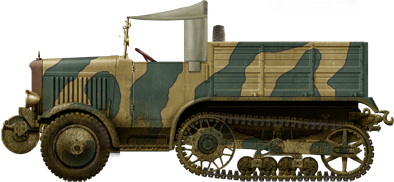
Original French Unic P107, engineers version (saumur collection)

Leichter Zugkraftwagen P107/304(f) artillery tractor

Zgkw. U 304 (f)) Tailpanzert, partial armour.
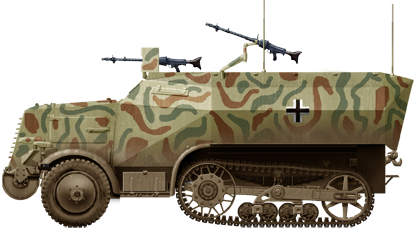
Schützpanzerwagen auf Fahrgestell U304(f) troop carrier


Leichter Zugkraftwagen P107/304(f) artillery tractor

FLAK 38 variant at La Wantzenau Tank Museum in France - 2018 (FB)

Troop transport variant

3.7 cm antitank variant

Troop Transport, 1.Ausf (early variant) Destroyed in Normandy summer 1944.
Video
Rare WW2 Unic P107 Leichter Schutzenpanzer Flak 38 - leSPW U304(f) footage.
— Panzerpicture (@Panzerpicture) April 29, 2024
New video on YouTube: https://t.co/NpOmdfz2gM pic.twitter.com/eU9TL3Kotd
Rare WW2 Unic P107 Leichter Schutzenpanzer Flak 38 - leSPW U304(f) footage.
Links
Walter J. Spielberger - Beute-Kraftfahrzeuge und -Panzer der deutschen Wehrmacht, Motorbuch Verlag Stuttgartarmedconflicts.com FLAK variant
kfzderwehrmacht.de
lexikon-der-wehrmacht.de
valka.cz
wardrawings.be
cgtrader.com 3D Model
armedconflicts.com mortar variant
armedconflicts.com ambulance version
armedconflicts.com troop transport
militaryfactory.com
WW2 Tanks


WW2 tanks posters
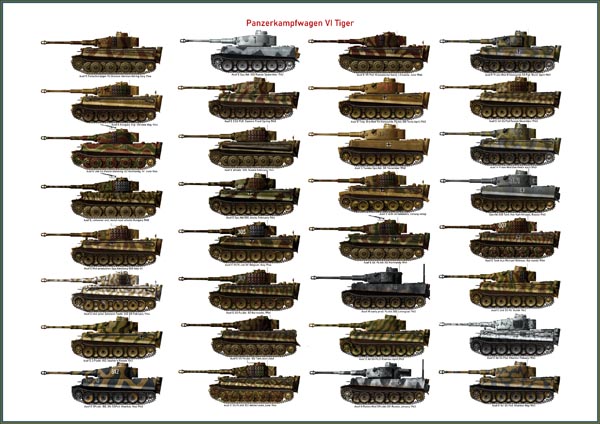
All Tiger tanks liveries.
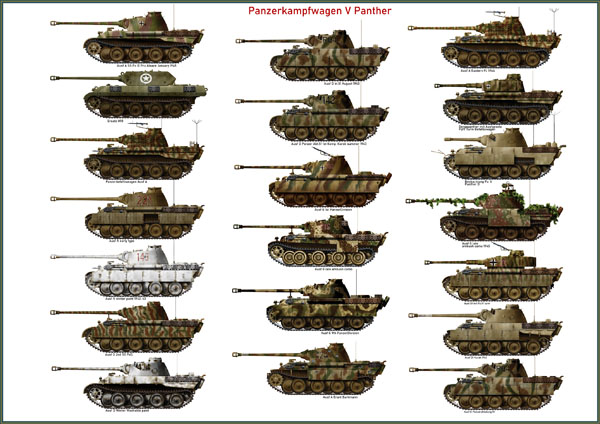
Panther liveries and variants
WW2 Armour - All tanks
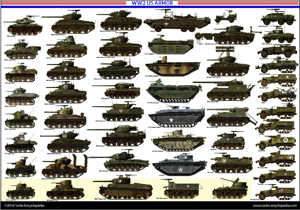
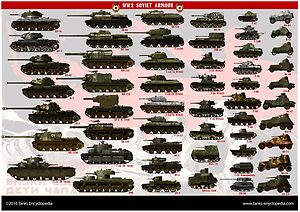
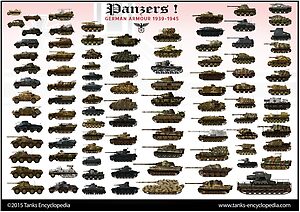
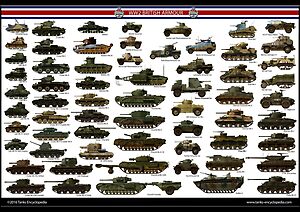
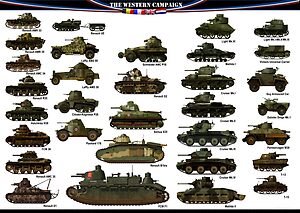
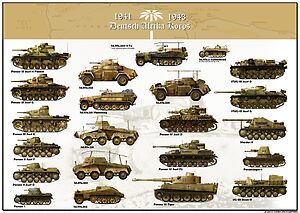

Tanks aces and single tanks series
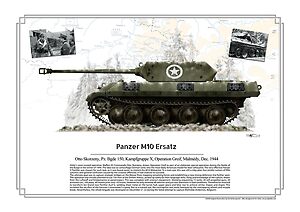
Find more there
Museums, Movies, Books & Games
The Tanks and Armor in pop culture
Tanks and armored vehicles in general are only really grasped when seen first person: The mass, the scale, it's all there. Explore also the way tanks were covered in the movie industry, in books and in video games.Movies:
Best tanks movie on warhistoryonline.com
On imdb.com
On bestsimilar.com/
miltours.com
liveabout.com/
watchmojo.com
Video Games:
pcgamesn.com
historyhit.com
levvvel.com
vg247.com/best-tank-games
mmobomb.com/
alienwarearena.com