FIAT 665NM Protetto (1942)
 Armoured Personal Carrier, c110 made 1942-45
Development
The lack of armoured personel carriers, discovered during the war, was not a concern only for Italy. France also started without any. The US fielded the M3 Scout Car and later the M2-M3 Half Track Cars once entering the war in 1941. The Germans had the Sd.Kfz 251 and 250 only for the Panzergrenadiers. Only the British developed the Universal Carrier for mass production in 1939, but it concerned its motorized infantry only, and the Soviet Union had nothing. The Regio Esercito discovered in 1941-42 these APCs were a new category desperately needed. In North Africa already, truck-carrier troops had to dismount long before reaching the battlefields as too vulnerable. This was also apparent in Yugoslavia and East Africa, leading to some improvizations.
Factory vehicle, rear view
This started with the Italian occupation force in Yugoslavia which made many improvised armored trucks on civilian or military trucks, with trench shields or scrap armored plates on the Renault ADR (captured in France and sent to Italy by Germany), creating the Renault ADR Blindato already for use in the Balkans. In East Africa 96 out of 5,300 trucks, were fully or partially armored. In North Africa however, priority in workships was for the "Autocannoni", self propelled artillery, but already some tests were made, with flatbeds reinforced with extra plating on FIAT 626 trucks. But eventually there was request for a proper armored personnel, to be made on the FIAT-SPA TL37 by January 1941 and 150 made, but kept for anti-partisan operations in the Balkans.
The development of the Autocarro Scudato ('Shielded Truck'), then "Autocarro da Trasporto a 4 Ruote Motrici" started by mid-1942 at the Arsenale Regio Esercito di Torino (ARET) with FIAT Veicoli Industriali, providing the trucks and aking suggestions for their conversions, through the Centro Studi della Motorizzazione. ARET until then made artillery and armored plates and created the FIAT 665NM Protetto quickly, which entered service without testing, having already an engineer from the Centro Studi della Motorizzazione in the team, albeit some tests were performed in October-November 1942.

On the 24th, 300 FIAT 665NM were ordeded, but 4 days later, ARET was bombed by the allies. A day later still, the FIAT Mirafiori plant in Turin was asked take over the production and deliver 44 vehicles, wich parts were already produced, stored in depot. It wa bombed in turn on the 20th November and 8th December. Even important documents related to the model burned out. This put almost an end to the production. It resumed still, but at the time of the Armistice, FIAT Mirafiori Plant Services Office certified that 110 vehicle had been delivered. We will probably never know.
In service the Fiat 665NM Protetto was not a success, because the armor turned out to be too light, vulnerable to even small arms fire. In the light of combat experience in early 1943, the improved FIAT 665NM Blindato con Riparo Ruote was developed and production was approved in April 1943, but nothing came out of it.
Design and Layout

Factory vehicle, front view
The bais was the FIAT 665NM developed after March 1941 as 4×4 variant of 666NM ("Nafta Militare"/Diesel Military) at the Turin Factory. This means the original chassis was used as well ad the same powerplant, roadweels, ect. It was related to the shorter 626 NM, sharong most components but the 665 had a much longer wheelbase and a heavier payload. As decided in the 1937 resolution about truck strandardization for the army, or "Autocarri Unificati" the 665 was part of the heavy trucks, with a maximum weight not above 12 tonnes, including at least 6 tonnes payload and top road speed of no less than 45 kph.
The Fiat 666N was developed first fr the civ. market in 1938, prototype ready late 1938, approved for manufacturng at the new FIAT Mirafiori plant in Turin. Next, the 666NM was presented to the Centro Studi della Motorizzazione for evaluation on 19th September 1940, approved, with 1,000 FIAT 666NM trucks ordered in January 1941 and more for a production above 8,000 vehicles by 1943. The air force obtained itself some 800 and others were distributed to the Regia Marina. Then it was chosen in 1942 as a base for an APC.
Engine and equipments

The Fiat 665 Protetto was thus powered by a FIAT Tipo 366 6-cyl. diesel in line with overhead valves, 9,36 Liters displacement, and FIAT Ricardo injectors for an outout of 110 hp at 2,000 rpm. In service the injectors however proved troubleome. Road speed was 57 km/h, but once armoured it likely felll to below 50 kph on road, and liekely 35-40 kph off-road or less. Same for the range based on a 255 liter tank originally of 750 km on-road it likely fell due to extra consumption to c650 kph (equivalent to a full load) and likeley 300-350 kph off-road.
The transmission was at the rear, with doubled roadwheels, singles ones on the directional axles forward. The gearbox was 8+2, with a single dry plate clutch connected to the gearbox via a cardan shaft. There were leaf-spring suspension on the two axles, and hydraulic drum brakes. This was completed by a 12-volt electrical circuit for the headlights and dashboard, 24-volt start, fed by two 12V Magneti Marelli batteries.
Layout and features
The original truck had a 4.75 meters long, 2.20 meters wide, 650 mm high flatbed, which was the base for the troop compartment inside once armour was installed on the frame. The Fiat 665NM was a COE meaning the cab was over the engine, so this simplified armouring greatly. No long bonnet to protect.The driver was on the right, commander on the left and the doors opened backwards. The plates from Arsenale Regio Esercito di Torino were 7.5 mm thick no the nose, protecting the cab and rear compartment with a gap of 3cm between the original structure and the plates. The plating decreased to 5 mm on the sides, the roof was unarmoured, and wit the back plate removed, the infantry entered or exited via a latter to access the flatbed by the open top and sat on benches either sides, with pistol ports on slanted upper sides, above the original side walls of the flatbed.
This armoured scheme was ideal and evolved over time as the first vehicles were completed without armour on the cab, or only partial. There ere eight pistol ports, one for each man on the sides, two more on the slanted back plate. The cabin had forward hindged shutters with sight slits and fixed ones on the sides. They were unarmed, only the infantry's own small arms (18 infantry and the officer commander, so a platoon). However there was a hatch above the cab for an LMG.
For the operational use, see the original TE article.
Gallery
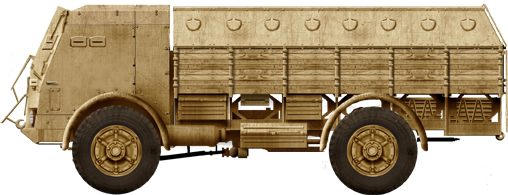
Fiat Protetto 665NM fresh from the factory in basic "sabbia" (sand) livery.

Improvized armoured truck, Autotransporte Blindato Renault ADR, 1941

Fiat Autotrasporto Blindato 666NM showing a rear armoured body.

Fiat 626 Scudato Mazza di Ferro

Various Fiat 626NM scudato camo patterns
WW2 Tanks


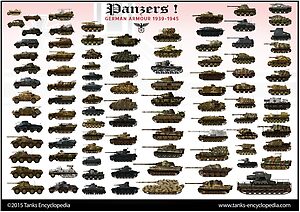
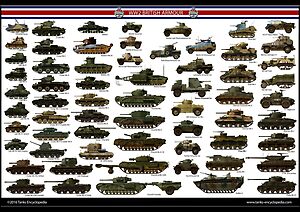
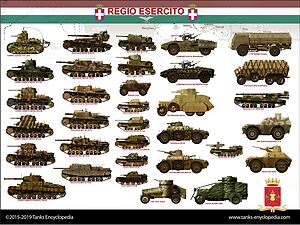
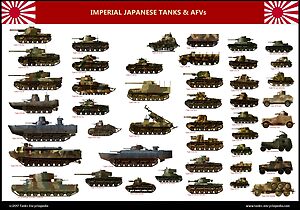
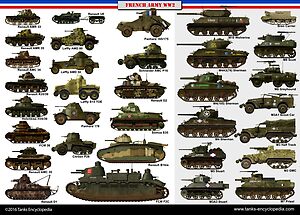
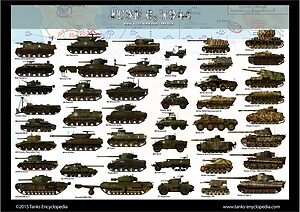
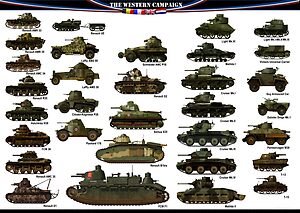
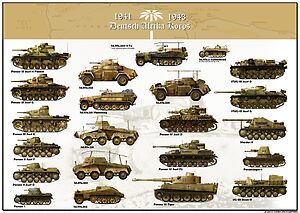
WW2 tanks posters
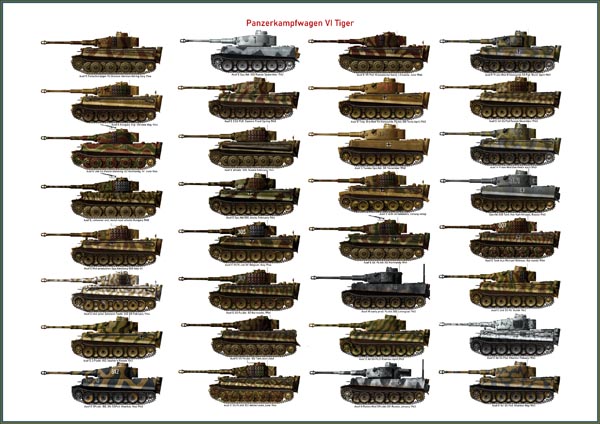
All Tiger tanks liveries.
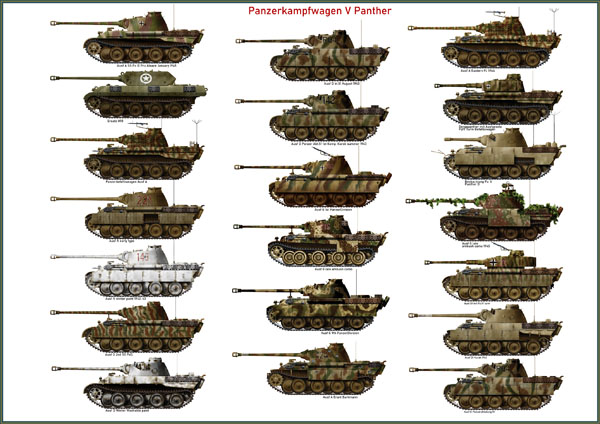
Panther liveries and variants
WW2 Armour - All tanks

Tanks aces and single tanks series
Find more there
Museums, Movies, Books & Games
The Tanks and Armor in pop culture
Tanks and armored vehicles in general are only really grasped when seen first person: The mass, the scale, it's all there. Explore also the way tanks were covered in the movie industry, in books and in video games.Movies:
Best tanks movie on warhistoryonline.com
On imdb.com
On bestsimilar.com/
miltours.com
liveabout.com/
watchmojo.com
Video Games:
pcgamesn.com
historyhit.com
levvvel.com
vg247.com/best-tank-games
mmobomb.com/
alienwarearena.com