Mowag Eagle (1992)
 Light Armoured Vehicle, 485 Eagle I, II, III.
Development
After the success that was the Piranha Family in the 1970s, Mowag (Motorwagenfabrik AG), founded in 1950 and known for its trucks, became THE big name in Switzerland for armoured Vehicles after the Panzer-58 to 68 lineage of Eidgenoessische Konstruktionswerkstaette, the last of these were built in 1979, after which the state-own company only existed to maintain the park, until the government choosed the Leopard 2 as its next main battle tank. But for lighter, wheeled armoured car, Mowag was providing a whole range from 4x4 to 8x8 vehicles, with the 6x6 mostly popular with the Canadians and the 8x8 with pretty much everybody else. It was a huge export success.However in 1999, Mowag was acquired by General Motors of Canada. Since January 2004, it entered the General Dynamics European Land Systems group because of its parent company. From 2012, it employed 900 highly skilled personnel at the facility, but announced to cut down 270 jobs. After the Russian invasion of Ukraine, Germany started to look at placing orders by May 2022, and by the summer of 2023 it started a massive recruitement, going up to 750 highly skilled personnel at Kreuzlingen by 2026, and is very much still a Swiss company despite the ownership, since 2010, traduced into its name, General Dynamics European Land Systems – Mowag GmbH.
Eagle and Duro
If the Piranha legacy went on until the present day with the Piranha V sice 2015, the Swiss back in 1989, already looked at a new, light 4x4 armoured vehicle mostly for reconnaissance. Of course MOWAG was the company expected to be in charge. However, if Mowag already designed in the past 4x4 vehicles using basically the same hull as the Piranha, it's a completely different vehicle that the Swiss Army looked at the end of the cold war. Until then, unprotected laison vehicles like the Mercedes G-class were used for reconnaissance and it was clear that a better protection was required in the future. Their idea was simply to copy the American Humvee to gain time.The Swiss army ordered 230 with soft top G4 as primary general purpose carrier from 1985 gradually replacing a fleet of Willys Jeeps, Steyr-Puch Haflinger and Pinzgauer in the liaison and transport role. They were unarmed and unprotected, and lost a competition against the Saurer F006 from local manufacturer Monteverdi, or its 230M variant. From 2014, the Steyr Daimler Puch 230 GE is currently replaced by the Mercedes-Benz G 300 CDI 4x4 hardtop, 3,200 vehicles on order. But these were still unprotected, neither against NBC threats and light arms fire.
So it was decided to gain time to adopt directly the HMMWV (High-Mobility-Multipurpose-Wheeled-Vehicle) chassis, with Mowag developing the hull, making it an NBC-tight, air-conditioned, armor-protected vehicle. Soon it was made available in several configurations and with varying levels of armor protection plus a wide assortment of armaments for export. The first step in this design was the Eagle, retrospectively called the Eagle I. The Eagle II in 1997 and Eagle III in 1999 were essentially the same. The next Eagle IV and V however were based on the much larger Swiss-German Duro, and were MRAPs.
Main variants
Eagle I (1992)
The original Eagle, based on the chassis and running gear of the Humvee. Also purchase by the Danish Army also purchased the Eagle I, used notably in the 2003 war in Iraq, and the ISAF mission in Afghanistan. The lightweight EAGLE 4x4 was desifned for reconnaissance, surveillance, liaison, escort, border patrol and police, and is the composite of a modified Hummer "heavy" chassis (developed for armoured versions) HMMWV whereas the armoured superstructure was designed and manufactured by MOWAG as was the armoured observation cupola MBK2, also developed and manufactured by MOWAG. This its combat weight is 4,8 ton for a one ton payload, while meeting STANAG 4569 level I protection, STANAG 4569 Level I mine protection. Production from 1992 was 154 vehicles for Switzerland and 36 for Denmark.Eagle II (1997)
The 4.1 ton Eagle II was developed to integrate the changes wanted by the Swiss Army for a second batch and this it uses a different chassis and running gear that of the Humvee ECV, but all the rest remained the same as for the Swiss Eagle I. Its combat weight, initially 4.1 tons, reaches 5,500 kg in combat, including 1,4 ton of payload. Bu it is protected the same, meeting STANAG 4569 level I protection against small arms and mines. 175 produced for the Swiss Army only. Not exported.Eagle III (2000)
This vehicle was developed as an Artillery Forward Observation Vehicle (AFOV) on the Humvee ECV chassis for observation, reconnaissance and patrols, but also target survey and acquisition, day and night under ballistic and NBC protection. The vehicle has a completely new rear compartment for two operators and a highly sophisticated optronics suite, in combination with a land navigation system. Target data is provided to rear echelon Artillery Fire Command by online data transmission. Working stations were given comfy seats, with better air ventilation system, a raised roof and panoramic windows, and for electronics, in addition to the INTAFF commanding system and observation mast with CCD-TV, IR, and a laser range finder its combat weight reaches 8,400 kg degrading performances (same power plant as for the Eagle II). 120 were ordered in 2003. Deliveries Complete.Eagle IV (2003)
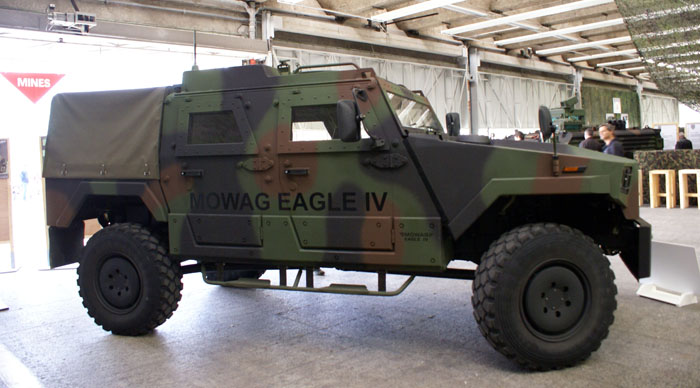
The Eagle IV only shares is name to the lineage. It's a completely new animal, based on the chassis of the Mowag Duro IIIP and introduced by November 2003. It receieved its IOC (initial operational capability) in 2004 with the first operator, the Danish Army. But its is mostly known to have been purchased in large quantities by the Bundeswehr (the German Army) as main armoured mobility vehicle. Indeed, as of today, there are 495 vehicles in service total, 453 called command and operation vehicles (GFF2), delivered in batches of 173, 60 and 195. There are also 42 ambulances eversions ordered in 2009 with a first batch of 20 delivered, then another in 2011 of 22 vehicles. Its MRAP features includes mine protection seated, and it has an automatic fire suppression system and NBC protection. It has been superesded by the much larger Eagle V. There is an optional STANAG level 3, with optional add-on armour.
The Eagle IV is larger than the Eagle III at 5.39m versus 4.9m, but narrower at 2.10 versus 2.47m, and has an armoured cabin with a protection STANAG 4569 level III and an anti-mine protection reachung the STANAG 4569 Level IIa standard (6 kg TNT under each wheel), so MRAPlevel. Tactically, they are transportable by the C-130 Hercules, with a combat weight reaching 7,600 kg, including 2,400 of payload . Two combat ready Eagle IVs (6.7t to 7.4t) could be transported in a C-130 without special preparations. With a Cummins ISB 250 5.9 E3 inline-6 TBD rated for 247 hp (184 kW) coupled with an Allison 2500 SP 5 5-speed auto, 1 reverse manual gearbox. Their power to weight ratio is lower than the Eagle III at 26.0 hp/t versus 32.8 hp/t GVW. Torque however is far more solid at 750 vs 515 nm. The Eagle IV has permanent 4x4 independent suspension with hydraulic arms and de Dion stabilizer, Torsen self-locking differential, run-flat tires with a central inflation system, and Low-high Mowag 2S 22 transfer case.
The Eagle IV chassis led to three variants:
-GTV JLTV Eagle (General Tactical Vehicle JLTV) prototype to replace the Humvee in the US Army, TD phase released in February 2008. Preselected October 2008 but Oshkosh won by August 2015.
-Eagle IV SOF: Danish Forsvaret special forces doors-less variant of 2008, open roof for the HMG, additional equipment, rolled IR camouflage nets, replacing the Humvee Jülkat.
-Penman Raptor II, Scottish variant of a licensed Eagle IV, proposed to the international market. Read more.
Eagle V (2005)
4x4 and 6x6 versions mostly used by the Bundeswehr. To come next.Design
General Layout

The Eagle was given a mobility and performances aligned on the original Hummer vehicle with a squarosh hull that recalls the Hummer in proportions but is still significantly different, NBC-tight (collective protection against radiation, gas and bacteriologic agents) and the roomy interior is for "only" four individual upholstered seats, more comfy than in the regular Hummer. Dimensions remained close to the original Hummer except for the width, increased by approx. 100 mm.
Windows are slighty smaller, made of bullet-proof glass, and the front windows is also smaller and well protected. Instead of the original Humvee's bay for rapid ingress of troops and payload, the back is fully enclosed and comprised two small benches for four more troops and their equipments, while the central flatbed could received one ton of payload as seen above. The hatch is lifting up for access and exit, like in any saloon car, the other memebers of the crew using the four doors.
The middle of compartment is also the place where a machinègunner could stand and man the on-board armament. The vehicle thus has built-in stowage compartments for individual equipment and its Observation cupola, 360° rotating, had a thermal imaging unit for all-round observation in an NBC secure vehicle by day/night, and under all weather conditions.
Protection
The ballistic protection counts on composite armour plates mounted to the inner face of the aluminium plates. Thus like the original Humvee, the Mowag Eagle is also a composite of aluminiuù and alliages. As seen above, the Eagle I had STANAG 4569 Level I for standard small arms fire and mine blasts. Same for the Eagle II and III, but it was gradually improved on the next ones, Eagle IV and V.Powertrain and Performances

The Eagle uses the basic US powertrain, and thus, combines the same baseline GM/Detroit V8 6.5l N/A (L57) turbo-diesel engine coupled with a Hydramatic 4L80E Transmission, with an engine power output of 160 hp of 119 KW. The tranmission has 4 forward gears and one reverse. Performances for the Eagle I are a power/mass ratio of 32.1 hp/t (23.9 kW/t) at GVW, a torqu 393 N/m (290 lb/ft) on a permanent 4x4 drive, a transfer case using the Low-high New Venture Gear Type 242, a Torsen (self-locking) differencial, on independent hydraulic dampers for suspensions, for a top speed of 80 km/h (50 mph) legal and 125 km/h (78 mph) max on road, and for a range of 450 km (280 mi) for a capacity of 94.6 L (25.0 US gal)) at economy ride.
It is amphibious, able to cross 76 cm of water without preparation, climb a 50% gradient, 30% side slope, a 50 cm step. The transmission also could be transmitted to the forward winch, with a towing capacity of 400 kgs. The Eagle II is more powerful, with a L65 Destroit 6.5 L engine, now pushed to 190 hp (140 KW), for a 34.5 hp/t (25.7 kW/t) ratio, 515 N/m (380 lb/ft) torque for for 120 kph on road. And it is capable of climbing a 60% gradient. Both vehicles has the same ground clearance of 400mm. As for tactical mobility the Eagle is air-transportable by C-130 aircraft or helicopter. This was essentiallmy the same for the heavier Eagle III.
Armament
It depends of the version chosen. The baseline vehicle's cupola could mount either a MG.3, a GMPG, or Minimi, all 7.62 mm NATO, or a US M2HB Browning heavy machine gun. The cupola also usually mounts a set of three smoke projectors either sides.Users
154 Eagle I, now phased out, 175 Eagle II, 120 SKdt Fz INTAFF (Eagle III). 36 Eagle I. Used with modifications by ISAF in Afghanistan. 90 Eagle IV 2006-2007 as MRAP for ISAF. Gunshot detection system Pilar MK-IIwm, and a BAE Bofors Lemur RCWS t.
 495 Eagle IV, including 453 GFF2 APCs (12 versions), 42 ambulance variants
 1 prototype of Eagle IV based GTV JLTV Eagle for the Humvee replacement competition
 Former Danish ones sold 2013 to FWW Fahrzeugwerke for export. 1 Downgraded Mowag Eagle II destroyed.
 : 150 Geschützte Mehrzweckfahrzeuge to GDELS Steyr based on the Eagle IV, cancelled.
 : 2006 selection Eagle IV but Competition failed against the Iveco LMV.
Gallery

Danish Eagle I

Danish Eagle I in Afghanistan

Swiss Eagle II
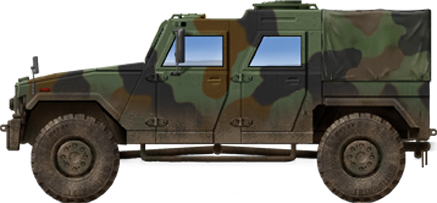
German Bundeswehr Eagle IV
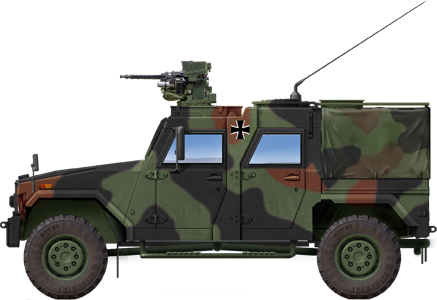
German Eagle IV GFF2
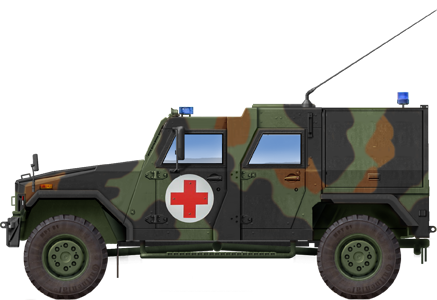
German Eagle IV Ambulance
More to come.
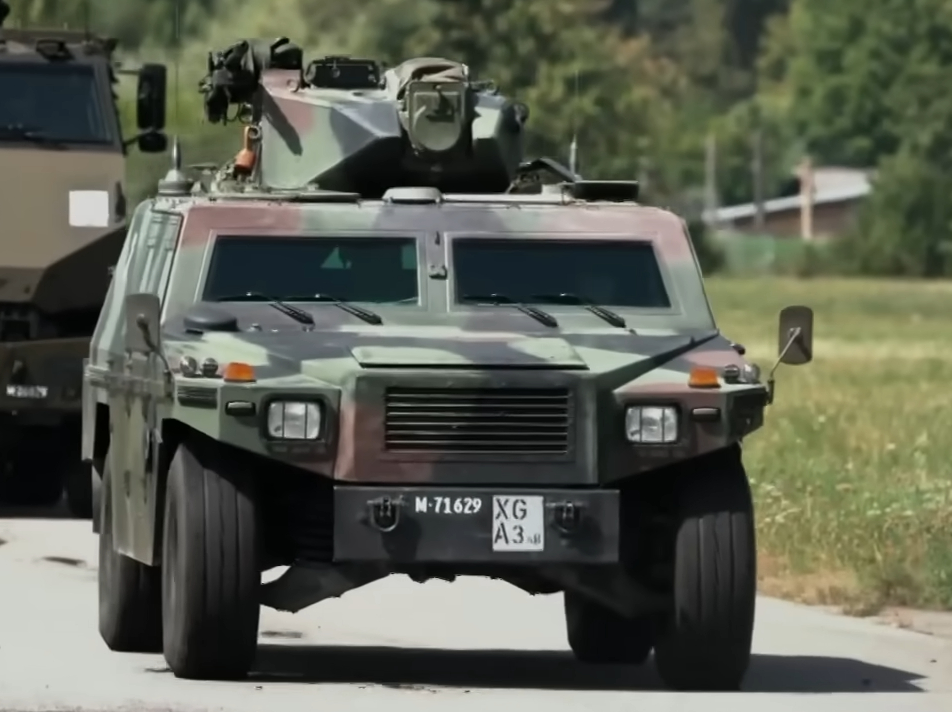
Mowag Eagle-II Aufklarungsfahrzeug 97/06

MOWAG Eagle II Meiringen

Aufklfz 93. Eagle II in parade

Mowag Eagle II

MOWAG TOW turret
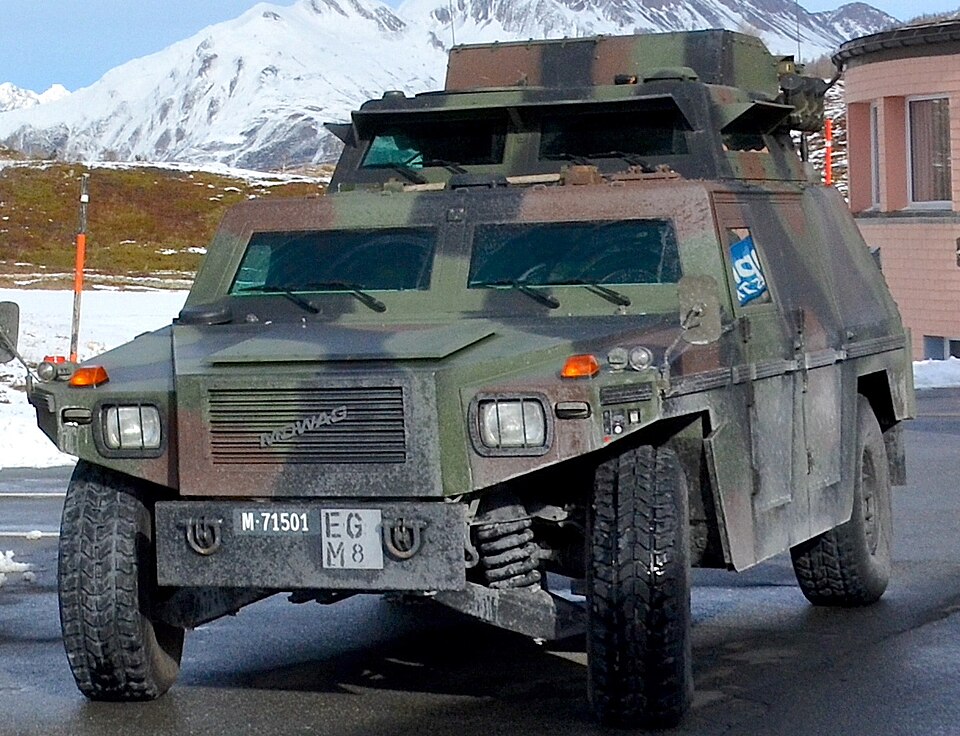
Eagle III at Simplon Pass

Eagle III observation vehicle at LSMD
Read More/Src
issuu.comen.wikipedia.org
commons.wikimedia.org
Official Page on gdls
army-guide.com Mowag
army-guide.com Eagle I
army-guide.com Eagle II
army-guide.com Eagle III
army-guide.com Eagle IV
On deagel.com/
warwheels.net Eagle IV
oryxspioenkop.com
Eagle IV model
Eagle IV on Tankograd
Video
Modern Tanks


Modern MBTs posters
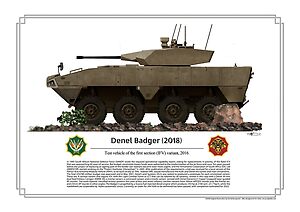
Denel Bagder (2018)
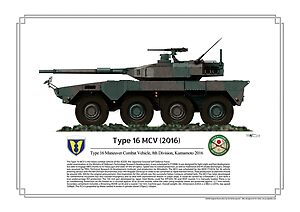
Type 16 MCV (2016)
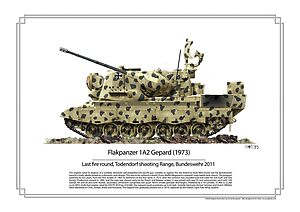
Gepard 1A2 last rounds 2011
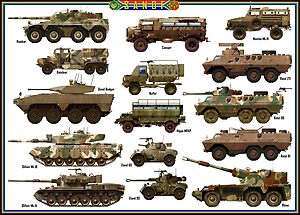
SANDF
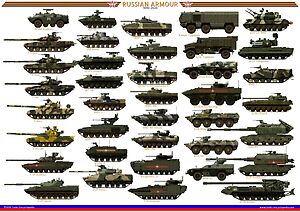
Russian AFVs
Main Battle Tanks