M998 FAASV (1982)
 Field Artillery Ammunition Supply Vehicle: 1982-90: c800 vehicles
Development
The M992 is one important derivative of the M109 self propelled howitzer chassis, active today but elaborated in the late 1970s, and destined to play the same role of the ageing M548 supply vehicle (1959) (CAT). The latter was based indeed on the M113, but completely unprotected. Designed and accepted in 1959, over thousands were manufactured over decades, and like its base chassis, it came from the Food and Machinery Corporation (FMC). It became widespread in Vietnam, where it had its baptism of fire, but quickly its unprotected nature, unlike the M113, meant it had to avoid the "frontline", in a country were ambushes from any direction and a "fluid" battleline were the norm. If attempts were made to up-armour the vehicle in the field, the M548 and its evolutions like the M548A3, which followed all the M113 improvements, was still around in the Gulf War (1990). But its lack of protection meant that the supply vehicle, when approaching modern, fully protected self-propelled artillery vehicle like the M109 on the battlefield (The M109 genesis also went back to Vietnam) was dangerously exposed to suddent under the horizon Soviet helicopter attacks in a NATO context. There was a requirement for it in 1978, and BMY Combat Systems (later integrated by BAE systems) designed a fully protected, turretless vehicle of great capacity based on the M109 chassis. The result vehicle was designed and tested between 1979 and 1981, then field tested and accepted in 1982 as the M992.
From there, production went on, with a series of modifications reflecting the advancement made on the base M109, through the M992A1, A2, A3 and eventually after the cold war ended, the ultimate M1050. The concept was also copied by the South Koreans which created their own K10 ammunition resupply vehicle, adding a crane to the mix, the K56 ARV, K66 (cancelled), and K77 FDCV (fire direction center vehicle). Production seemingly stopped in 1990 and vecisting vehicles were ported to the A2, then A3 and M1050 standards over the years. Many were also exported. Today the US Army Park is of 231 vehicles. If the source could be trusted, Egypt would be the second largest operator with 275 vehicles, which brings a grand total of at least 800 vehicles by compilting all exports. It remains much lower than the M548, but cost and protection bring something much more appreciable. In comparison the M548 remains a "truck on tracks".
Design
General Layout
The M993 is basically a M109 with the entire central combat compartment gutted, the turret and its pannier replaced by a larger aperture, replaced by a taller and fixed superstructure to store 90-95 rounds depending on the model and corresponding number of powders and primers. Both the M992 and M992A1 carried 90 conventional rounds, 45 each in two racks plus three M712 Copperhead rounds. The remaining internal crew space was taken up by a hydraulically-powered conveyor system for quick uploading of rounds and transfer. There was also the additional X-Y Conveyor, lift rounds into the honeycomb-like storage racks forward. A ceiling plate above the two racks could also be inbolted and opened for the entire racks to be winched in an out, making for quicker reload. The bulk of the hydraulic conveyor system meant in practice it was removed by the crews, as it was found slower than hand reload. The army replaced it by two vertical doors opening from for better protection during transfers.The M992 in all versions was fitted with a Halon fire suppression system. On top was a weapons mount similar to that on the M109 turret, alternating between a Mk 19 grenade launcher for local defense or M2 HMG to deal with infantry and light armored vehicles. On later A2/A3 there was also a mounting point installed for two secure radios. Protection is ensured overall for the 4 man crew (one driver three loaders seated in the rear compartment and one doubling as gunner/commander) by the same standard levels as for the M109, meaning NBC collective protection, and a structure in 5083 aluminium alloy all around, sufficient against 14.5 heavy rounds forward and small arms fire and shrapnel on the sides, top and rear. There are strapping points all around for additional spare track links, gear, tooling, cables, tarpaulins, haversacks and jerrycans as well. The vehicle is sometimes equipped with smoke projectors, but it's not standard at least in US service.
Powerplant & Performances
The drivetrain if the M992 is the same as the M109 essentially, a Detroit Diesel 8V-71T LHR, 2-stroke, 9.3 litre, 8 cylinder, turbocharged diesel placed in the front, rated for 440 hp (330 kW) at 2,350 rpm. It has a halon automatic extingusher installed. The whole engine would be extracted and replaced in the field. For 28.8 short tons (26.1 t) in battle order, 21 ft 8 in (6.6 m) long overall, 10 ft 4 in (3.15 m) in width and 10 ft 9 in (3.28 m) tall, the vehicle is still conspicious, but capable of better performances than the M109, with an Allison Transmission XTG-411-4 crossdrive gearbox with 4 forward, 2 reverse for 40 mph (64 km/h) on flat. It is suspended by the same Torsion bars and hydraulic dampers, seven roadwheels, no return rollers, rear idlers and front sprockets. It had a fuel capacity of 135 US gallons (511 L) for an operational range of 220 mi (354 km). The engine could also power all non-automotive energy requirements on the Field Artillery Ammunition Supply Vehicle and howitzer using a slave cable for connection, reducing fuel consumption when deployed.M992 specifications | |
| Dimensions | 21 ft 8 in x 10 ft 4 in x 10 ft 9 in (6.6 x 3.15 x 3.28 m) |
| Weight | 28.8 short tons (26.1 t) |
| Crew | 4, see notes |
| Propulsion | Detroit Diesel 8V-71T LHR 9.3 l, 8 cyl.TBC 440 hp (330 kW). |
| Suspension | Torsion Bars |
| Speed | 40 mph (64 km/h) |
| Range | 135 US gal (511 L) for 220 mi (354 km) |
| Armament | 1x 0.5 BMG, M2 HB or M48 GL |
| Armor | 5083 Aluminium Alloy, see notes |
| Total production | Unknown, c800 |
Upgrades and Variants
M992 (1982)
Basic vehicle, as described above, using the original conveyor belt system. 404hp engine and Allison XTG-411-2A GBx. No armament (H 3.24m). Featured an internal hydraulic conveyor system and an X-Y lift mechanism to slot 155mm projectiles into two front honeycomb racks.M992A1
Same as baseline but Detroit Diesel 8V-71T from 405 to 440hp Low-Heat Rejection (LHR) and Allison XTG-411-4 Gbx. Ring mount for armament, H 3.28m, 3.63m with HMG. Improved T-154 track assemblies, and revised propellant storage and rear conveyor geometry to improve transfer speed.M992A2
Same as A3 but carrying 95–96 conventional + 3–4 Copperhead (155mm). It also had a redesigned radiator, reinforced side-door sponsons, quick-disconnect final drives for faster maintenance, an upgraded Auxiliary Power Unit (APU), and relocated hydraulic oil reservoirs and personnel heaters. In later service, the problematic hydraulic conveyor was removed altogether in favour of manual handling and vertical centre-opening rear doors.M992A3
The M992A3 Upgrades were the most consistent. To match the upgraded M109A7 Paladin, BAE Systems received multi-hundred-million-dollar contracts (including a $493 million award in August 2024 with production running into 2026) to convert older hulls to the M992A3 Carrier Ammunition Tracked (CAT) standard, incorporating Bradley Fighting Vehicle drivetrain and suspension components for improved battlefield mobility.M992A3 CAT
The M992A3 Carrier, Ammunition, Tracked (CAT) is the modernized resupply companion to the M109A7 Paladin self-propelled howitzer. Developed under the Paladin Integrated Management (PIM) program by BAE Systems, it replaces the ageing M109-based automotive chassis of the M992A2 with modern drivetrain, suspension, and electrical components shared with the M2 Bradley Fighting Vehicle. It was tailored to serve with the new M109A7 Paladin, but using the Bradley Fighting Vehicle as common chassis, so a completely different beast, powered by a Cummins V903 8-cylinder diesel (675 hp), coupled with an L3Harris HMPT-800 hydromechanical Gbx, and still carrying 93–95 projectiles + propellant charges & fuzes. Moreover it swaps the M992 legacy 28V system and Auxiliary Power Unit by High-voltage digital backbone & onboard power gen.M1050
The M1050 is a version used to carry 48 projectiles + charges (203mm) for the M110A2 SPH. Same powerplant but using the Allison XTG-411-2A GBx. However because the U.S. Army retired the M110 system following the 1991 Gulf War, the M1050 never entered full-scale production or procurement.K66
South Korean domestic variant, quite significantly different from the M992 while sharing most components with the M109A2/K55 made under licence. Developed by Samsung Aerospace Industries on the K55 chassis, it is fitted with a crane, carries 110 projectiles (155mm) with a semi-manual loading.K56 ARV
Developed in the 2000s to replace the K66, base don the K55A1 chassis, developed by Hanwha Defence, it is capable of loading 96–104 projectiles + charges with a Fully automated robotic conveyor bridge and crew reduced to 3.M991/K77 FDCV
The uS M991 was a command variant (experimental) of the M992, for artillery units, and the M991 housed map boards, tactical computers, communications gear, and a diesel Auxiliary Power Unit (APU) to run electronics while stationary. While the ammunition carrier was mass-produced as the M992 FAASV, the U.S. Army cancelled the M991. Indeed, command posts sit further back from the direct firing line than ammunition carriers, so the Army decided it was more cost-effective to continue using the lighter, M113-derived M577 and M1068 command post carriers. South Korea however picked up the M991 and modified it by the late 1980s. It was produced from 1989 by Samsung Aerospace (now Hanwha) as the K77, sharing a lot with the K55. It is used closer to the artillery units, automatically calculating firing data using meteorological and target acquisition inputs. The 19.8 tonnes vehicle has a 405 hp Detroit Diesel 8V-71T engine and crew of 6-8 with the fire control, operations, and communications specialists. It also features a gas-turbine APU, VHF/tactical data radios, and full CBRN overpressure protection. Few were made however. It was replaced by the K11 FDCV derived from the new K9 Thunder.Users and Combat Deployments
Users
 Brazil: 40, former U.S. Army, likely A2s.
 Chile: 48 former Swiss vehicles upgraded by RUAG and locally by FAMAE.
 Egypt: 275, A1, A2, A3 versions
 Greece
 Indonesia: 4 M992A2 from the former Belgian Army
 Lebanon
 Morocco: 85 in 2016
 Spain
 Switzerland
 Taiwan
 Thailand
 United States still 231 M992A3 in park
 Ukraine: Vehicles donated notably to the 47th Separate Mechanized Brigade, none lost so far (Oryx).
Combat Use
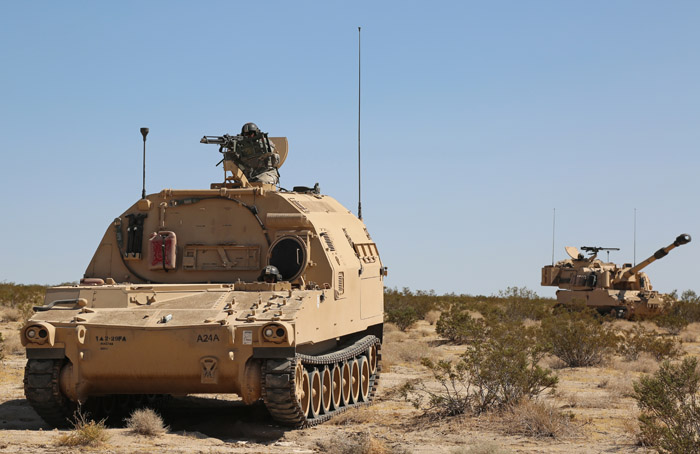
Being introduced in 1982, the vehicle missed Vietnam and was not deployed in the invasion of Granada (1983) or Panama (1989) as they followed heavy artillery units, which were never deployed there. It seems a few saw action in Lebanon.
However the M992 had its baptism of fire in the Gulf war. though prior to that. During Desert Storm, the US Army bridages deployd both the M109 and M992 as part of the 42nd Field Artillery Brigade (VII Corps), 3rd Battalion, 20th Field Artillery Regiment and 2nd Battalion, 29th Field Artillery Regiment. Also the 75th Field Artillery Brigade (VII Corps) deployed the 1st Battalion, 17th Field Artillery Regiment to support the 1st Infantry and 1st Armored Divisions. Same for the 210th Field Artillery Brigade (VII Corps), 3rd Battalion, 17th Field Artillery Regiment and 6th Battalion, 41st Field Artillery Regiment for the 2nd Armored Cavalry Regiment and 1st Infantry Division. And there was the 212th Field Artillery Brigade (XVIII Airborne Corps). Deployed the 2nd Battalion, 17th Field Artillery Regiment (supporting the 24th Infantry Division) and detached the 3rd Battalion, 18th Field Artillery Regiment to support the 3rd Armored Cavalry Regiment. There were also, part of the 1st Armored (41st Field Artillery), 3rd armoured (82nd), 1st Cav (82nd), 1st ID (5th), 2nd Armored (3rd), 24th ID (41st) and armored cav regt., 2nd and 3rd each also had an organic M109 battery. They also served with the 5th Battalion, 10th Marines. The British Army deployed the M109A2/A3 but it seems they still used the M548 for these. Egypt also took part and deployed its own M109s and M992s but not Saudi Arabia, only having M109s.
Since the M109 was never deployed in Afghanistan, neither was the M992. However it was deployed in the 2003 invasion of Iraq: To Keep pace with the Spearhead like the 3rd Infantry Division moving across open desert and highways at high speeds. The M992 kept up with M1 Abrams tanks and M2 Bradley without slowing down the offensive. The M109A6 Paladin could stop, fire within seconds using onboard digital fire control, and relocate immediately to avoid Iraqi counter-battery fire. The M992 shadowed each howitzer directly behind the line, maintaining an uninterrupted supply of 155mm shells during fast-moving engagements. Unlike earlier wars with defined front lines, the 2003 push featured irregular Iraqi Fedayeen paramilitary ambushes along supply routes. The M992's welded aluminum armor protected its crew and volatile cargo of nearly 100 artillery shells from small arms fire, shrapnel, and roadside ambushes.
However the M992 had issues: Fine desert sand and dust frequently jammed the M992's built-in hydraulic ammunition conveyor during the march north. Many artillery crews bypassed the mechanical system entirely and passed shells hand-to-hand through the rear doors to keep resupply times fast. When armored columns entered Baghdad in April 2003, Paladins and M992s operated in tight urban corridors rather than open desert. Crews relied heavily on the M992's roof-mounted .50-caliber machine gun and personal weapons to defend against close-range RPG and rifle fire. Following the fall of Baghdad in May 2003, the M992 and Paladin transitioned from mobile warfare to static fire support at Forward Operating Bases (FOBs) across Iraq. There, the M992 often served as a hardened, climate-controlled ammunition bunker right next to firing pits.
More recently, the M992 was deployed in the Anti-ISIS Campaigns (M992A2s) during Operation Inherent Resolve in Iraq and Syria with the 1st Cavalry Division in 2017 to sustain M109A6 during the Iraqi offensive to retake West Mosul. Saudi Arabia, also is noted in some sources as an operator of the M992, and used them in the prolonged border conflicts with Houthi forces in Yemen. About 30 were donated to Ukraine after 2022 as well.
Illustrations
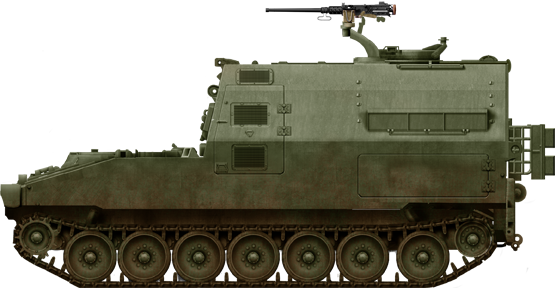
Basic M992A1
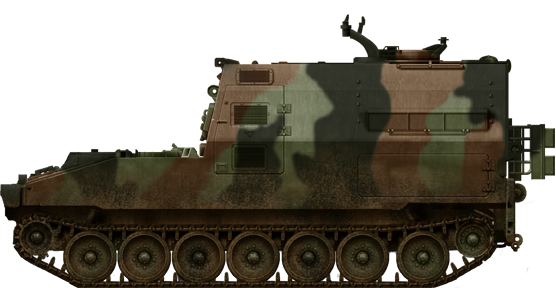
M992A2 in Ukraine 2020s
Photos

Brazilian M992

M992A2 FAASV
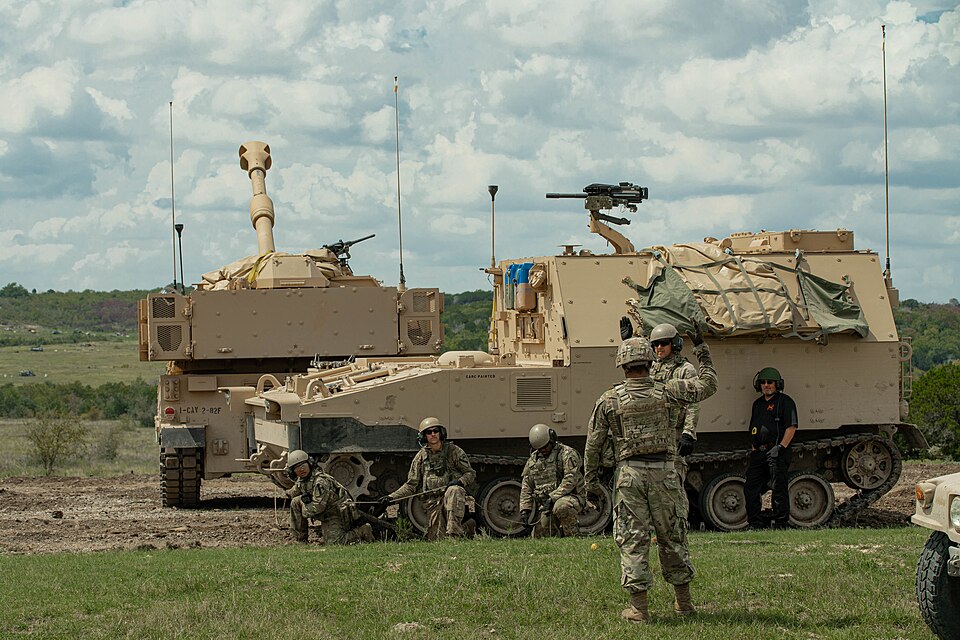
M109A7 Paladin and M992A3
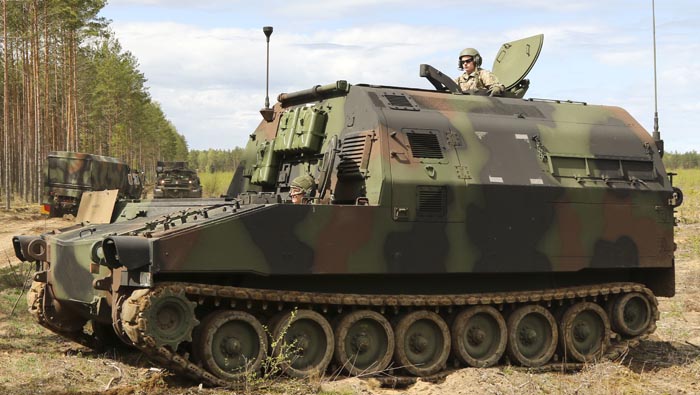
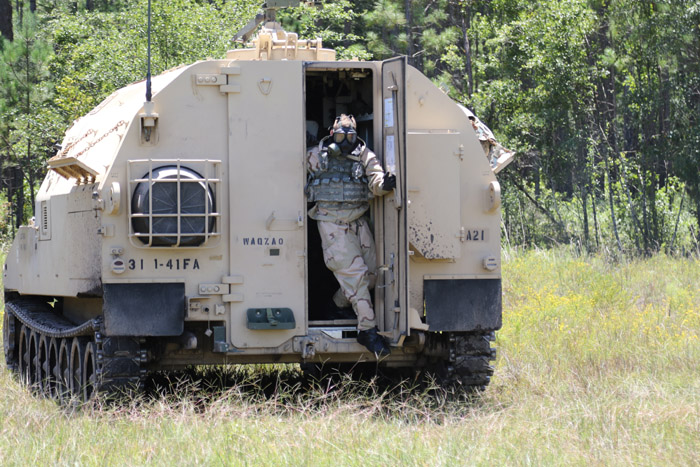
An M992 Field Artillery Ammunition Supply Vehicle from Charlie Battery, 1st Battalion, 41st Field Artillery Regiment, 1st Armored Brigade Combat Team, 3rd Infantry Division conducted Chemical, Biological, Radiological, Nuclear and Enhanced Conventional training here at Fort Stewart, Ga on Aug. 1, 2017. The CBRNE training was part of the battery’s Table XII certification. (U.S. Army photo/Released by Sgt. Joseph Truckley)
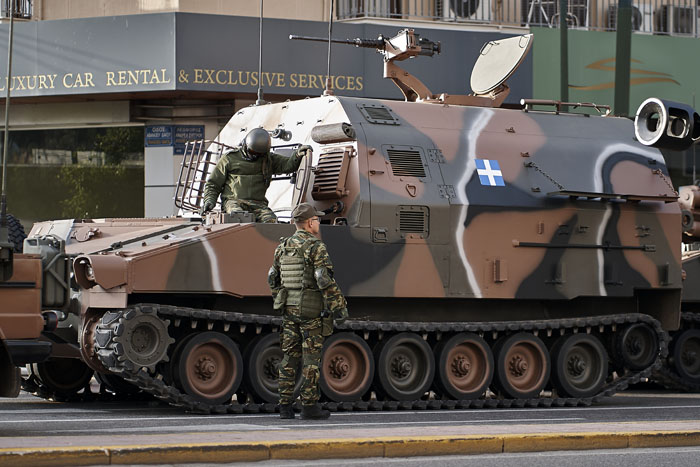
Greek M992
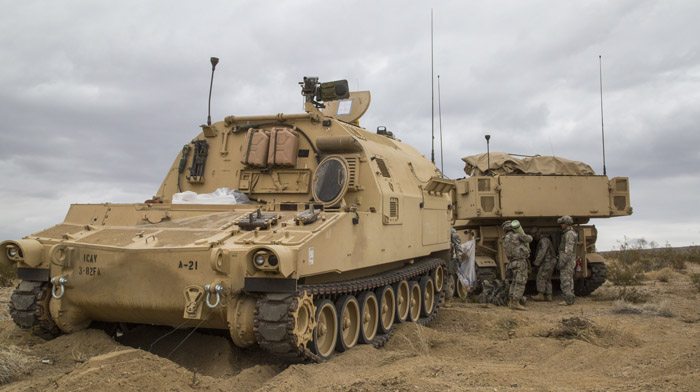
U.S. Soldiers from Alpha Company, 3rd Battalion, 82nd Field Artillery Regiment, 2nd Brigade Combat Team, 1st Cavalry Division load 155mm cannon rounds into an M109A6 Paladin during Decisive Action Rotation 15-05 at the National Training Center Fort Irwin, Calif., Feb. 22, 2015. The Decisive Action Training environment was developed to create a common training scenario for use throughout the Army. (U.S. Army photo by Sgt. Richard W. Jones Jr./Released) 2015.
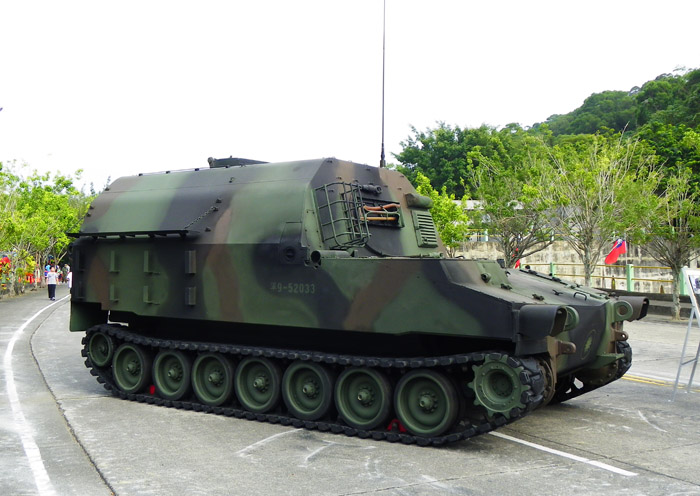
South Korean M992
_off-loaded_MSC_USNS_Bellatrix.jpg)
Mina Ash-Shu'aibah, Kuwait (Feb. 28, 2004) - A U.S. Marine Corps M992A1 Field Artillery Ammunition Supply Vehicle (FAASV) is off-loaded from the Military Sealift Command (MSC) fast sealift ship USNS Bellatrix (T-AKR 288) in support of the recent troop rotations in Iraq. The FAASV is an ammunition vehicle that is paired-up with the M109 self-propelled howitzer. It is capable of re-supplying all units that use the 175mm, 203mm, 120mm and 105mm self-propelled weapons. MSC Military Sealift Command is the transportation provider for the Department of Defense with the responsibility of providing strategic sealift and ocean transportation for all military forces overseas. U.S. Navy photo by Journalist 3rd Class Eric L. Beauregard. (RELEASED). 28 February 2004
More
Links
man.fas.orgmilitaryperiscope.com/
afvdatabase.com
en.wikipedia.org
armyrecognition.com
oryxspioenkop.com
Video
Model Kit:
On scalemates
Cold War Tanks


Cold war tanks posters
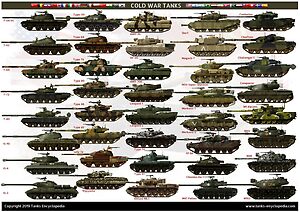
Cold War Main Battle Tanks
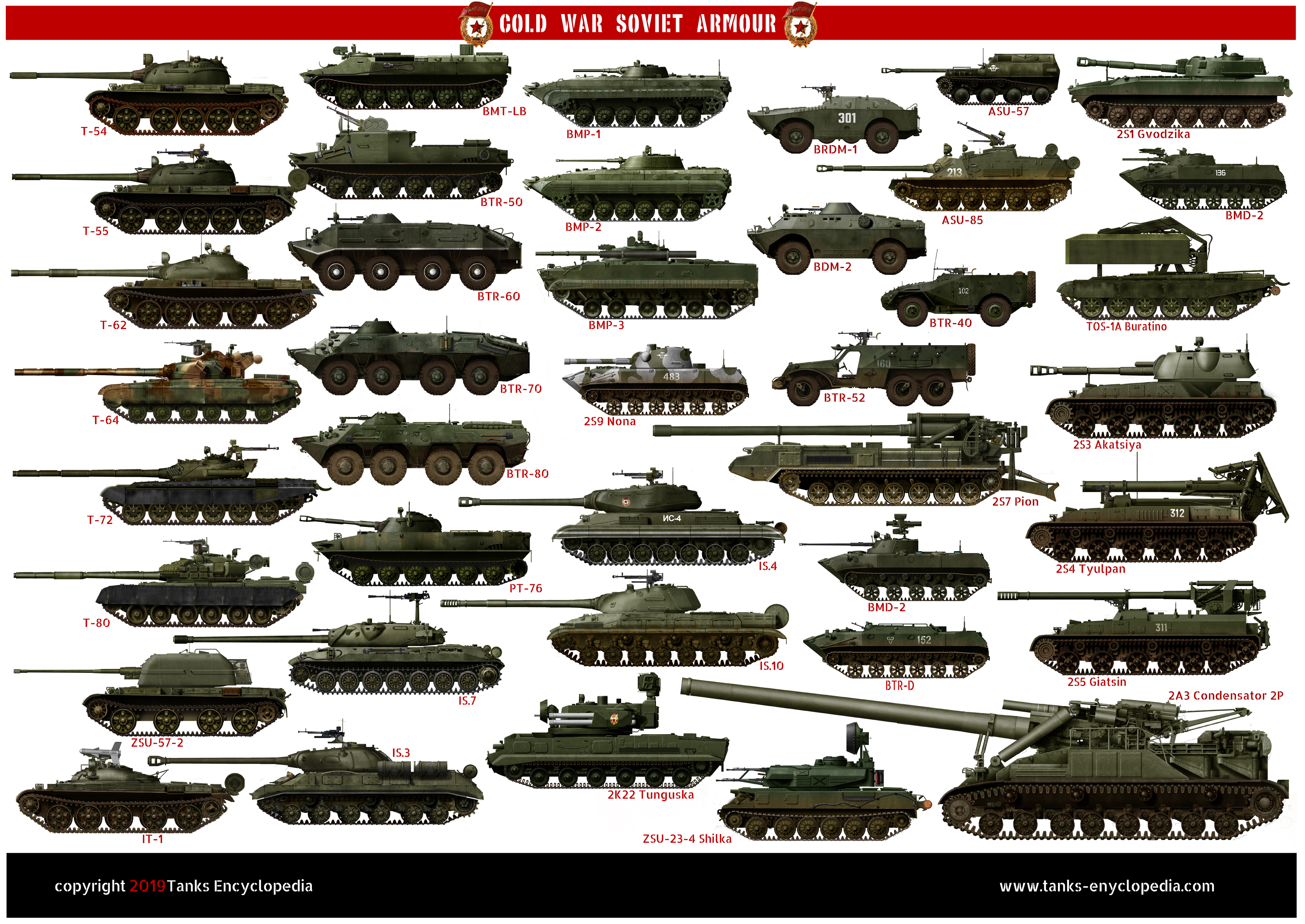
Cold War Soviet Army
Museums, Movies, Books & Games
The Tanks and Armor in pop culture
Tanks and armored vehicles in general are only really grasped when seen first person: The mass, the scale, it's all there. Explore also the way tanks were covered in the movie industry, in books and in video games.Movies:
Best tanks movie on warhistoryonline.com
On imdb.com
On bestsimilar.com/
miltours.com
liveabout.com/
watchmojo.com
Video Games:
pcgamesn.com
historyhit.com
levvvel.com
vg247.com/best-tank-games
mmobomb.com/
alienwarearena.com