Light Tank Mk VII (A17), Tetrarch (1938)
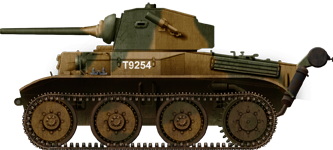
 United Kingdom - 100 built* total
See on Tank Encyclopedia
Development of the Tetrarch

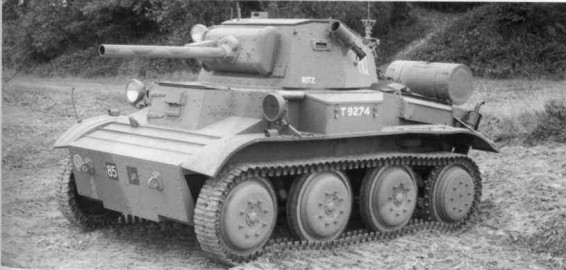
The Light Tank Mark VII, A17, unofficially known as Tetrarch ever since, was the last light tank of the British Army, produced like all those that preceded it, like the VIC, by Vickers-Arsmtrong Corporation, still by 1938 one of the world's largest industrial groups. The first majour difference from its predecessors was a 2-pounder gun, but it was also different on many other levels. Initially known as the A17 'Purdah' its developement started already in 1937 as a private venture, intended both to replace older Light Marks in the British Army and export. Reports about the armament fielded so far on these models, albeit intended for reconnaissance only, was their armament. The last Mark VI was indeed given a Besa heavy machine gun.
Vickers-Armstrong engineers knew they would be able to fit a compact 40 mm (1.6 in) QF 2-pounder main gun with a coaxial 7.92 mm (0.312 in) Besa machine gun ifdone right in the 2-man turret of their precedessor. Protection was also to be raised to 14 millimetres (0.55 in). The Mark VII was tested in 1938 and weighted 16,800 lb (7,600 kg). It was intended to power it with a 165 hp (123 kW) Meadows engine. To simplify the suspension, until then of the Hortsmann type, there would be only four wheels per side, including the rear one used as idler/tensioner and the forward one as drive psorcket, being identical to the others apart its teeth. The large size and rubber on these would also make return rollers uneccessary. With this combo, the A17 was to be capable of 40 miles per hour (64 km/h) in top speed. The front wheels could even be steered for gentle turns by bending the tracks instead of levers to block a track and free the other. This dual system was to lower the strain and reduce power wastage. The suspension system comprised struts with air pockets for springing and cushions of oil used for damping.
Several high-ranking officers observed the prototype Tetrarch in its trials for May-June 1938 and the War Office examined and since the light tank concept for reconnaissance was now superseded by light armoored scout cars instead, so the idea of a "light cruiser" until deciding otherwise since the Nuffield A13 design was better overall. Still there wthe desire to see an operational unit ofsuch light tank, pending a tactical use to be found. The War Office gave it the official General Staff specification number A17. By November 1938 minor changes (external fuel tank for exra range) were asked for and a production order was passed for a total of 70 still. Then 120 after a conference in November to start in July 1940, then back to 70, then 100, then 220 after Metropolitan Cammell Carriage & Wagon in the production loop announced it already passed orders for armour plating for 200 tanks...
In truth, there were delays: It was freezed during the battle of France in May-June 1940, as combat reports of the impromptu use of light and cruiser tanks led to crippling losses. There were still proponents for the light tank, but after this summer, no light tank would be ever requested and deployed. The exception would be the African campaign with lare amount of cheap M3 Stuarts, which were fast, reliable and well armed, but used in a new role. There the Luftwaffe bombed Vickers facilities. In total, only between 100 and 177 were manufactured, 16 in 1940, 73 in 1941 and 12 in 1942 (101) before it was stopped. The name "Tetrarch" was officialized by the War Office by 22 September 1941. Today's official records pleads to a total of 100, not 177.
Design

The A17 was a small machine, 16,800 pounds (7,600 kg) for its unladen mass, for a hull 13 ft 6 in (4.11 m) long, a width of 7 ft 7 in (2.31 m) and height of 6 ft 11 in (2.12 m). It was lower than the Mark VIC for a crew of 3, the driver which sat in the center of the forward hull nose, in a casemate dotted with sight slits and a small opening forward, but the whole froward panel could hinge on the right; There were the Commander and gunner then, seated side by a side in a multifaceted turret shared with armoured cars, either side of the QF 2 pounder (40 mm). Best protection was 16 mm (0.6 inhes) maximum for the hull Front when the lower hull nose was 14 mm. The upper glacis was only 6 mm but well sloped. The hull sides were 14+14 for the upper portion and 14+10 mm for the lower one, 5 to 10 mm for the rear. The roof was 4 mm as the engine deck and hull floor.
The turret had a cast mantled 16mm thick, the roof was 4-5 mm, 16 mm sides, 14 mm back, and 4mm floor. In this turret, quite cramped, was located the main standard QF 2 pounder (40 mm) also provided to most British tanks until 1942-43. Only 50 rounds could be carried between the ready rounds in the turret and remainder in the hull, below the basket. Coaxial to the main gun was the 7.92 mm Besa machine gun manned by the gunner, with 2,025 rounds. The A17 could be powered by a Meadows MAT H12 petrol engine rated for 165 hp (123 kW), which had a power to weight of 21.7 hp (16.2 kW) per ton. The tank's suspension comprised Coil springs. Its operational range was 140 miles (230 km) with the external fuel tank. Top speed was 40 miles per hour or 64 km/h down to 28 miles per hour (45 km/h) off road.
The turret roof had a large folding hatch instead of small ones for safety, and a persicope for the driver on the left side. It also came later with two smoke projectors for concealment. The tracks were quite narrow as the overall weight was lower, and this reduced friction improved top speed, whereas the risk of loosing the track in hard turns was moderated by the double pin design with the large roawheels rolling between. The sides of the main combat compartment had the added protecton of two large stowage bins over the mugduards. The vehicle had two towing hoods forward and aft, two sight slits either side of the turret, two road light, back lights, a small side protectors welded aside the mantlet.
Specs A17 1940 | ||
| Dimensions | 13 ft 6 in x 7 ft 7 in x 6 ft 11 in (4.11 m x 2.31 x 2.12 m) | |
| Weight | 16,800 Ibs. (7,600 kg) | |
| Crew | 3: Driver, Commander, Gunner | |
| Propulsion | Meadows MAT H12 petrol 165 hp (123 kW) | |
| Suspension | Coil spring, see notes | |
| Speed (road) | 40 miles per hour (64 km/h) | |
| Range | 140 miles (230 km) | |
| Armament | QF 2 pdr AT gun(50 rds), Besa 7.92mm LMG (2k rds) | |
| Armor | 16 mm max, see notes. | |
| Total production | 100* | |
The Tank Nobody Wanted
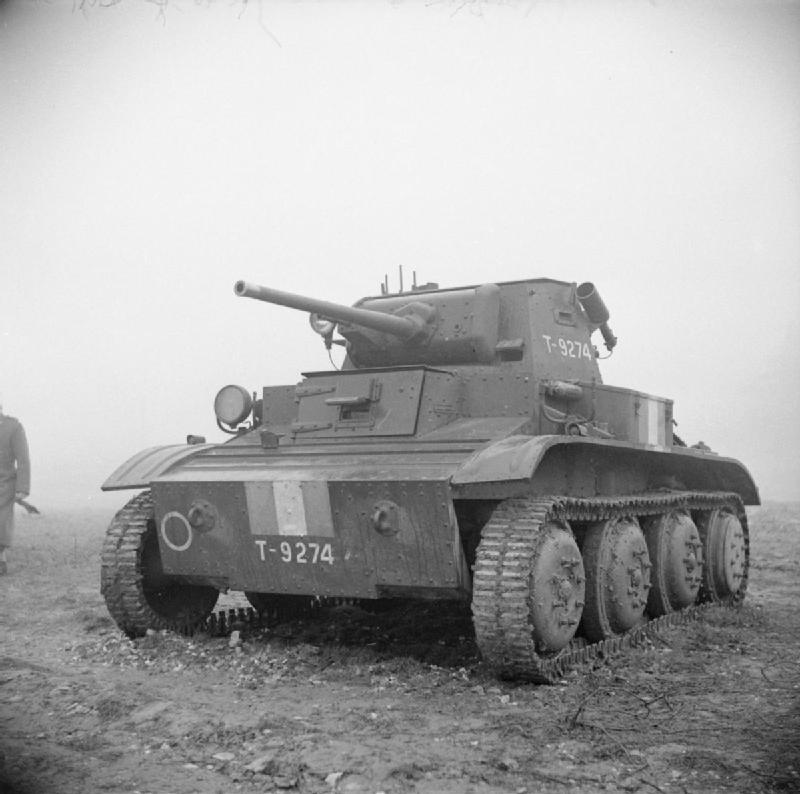
An operational Tetrarch in Normandy,
The fate of the Tetrarch is linked to the numerous changes of direction about light tanks. At first in 1939 it was still believed a light tank was tactically interesting as mechanized successor to the cavalry, for reconnaissance forward of an army. Speed was paramount over armament and protection. But as the cruiser tank developed as well initially to exploit breeches created by the pounderous infantry tank some questioned already their utility as redundant. The hard truth became apparent in May-June 1940 with frequent chance encounters of these lights tanks against German armour, never in favourable terms. Apart for the Panzer I, they were surclassed by all the others. Except for the North African exception made for the M3 Stuart, the War Office was no longer interested by a light tank. Plus with the small numbers made, apart home training (a role already filled by the Cruiser Mark III Covenanter), the tetrarch had no immediate utility.
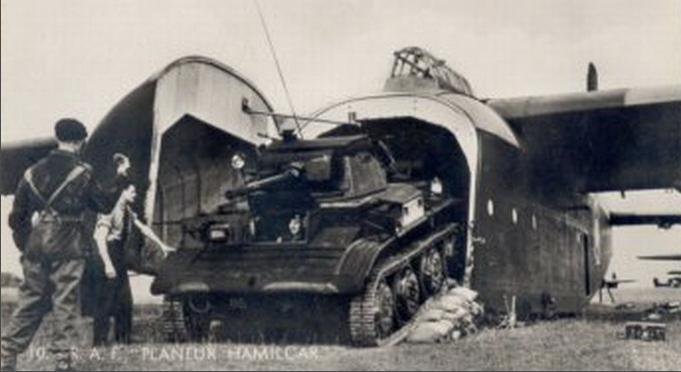
As the war progressed, its speed and the success of the M3 Stuart when deploted pleaded with a possible use in North Africa still. But it was rejected out of concerns with its cooling systems. It's the War Office in mid-1941 that saved a vehicle likely to be mothballed or even scrapped. The new airbone forces created in June 1940 under orders PM Churchill was to be reinforced for larger, deeper operations behind enemy lines, disrupting traffic, capturing depots and vital communication points in advance of land offensive, a role mostly developed with the right assets in 1944. It was agreed early on to use gliders, like the German did for some of their famous operations like the capture in May 1940 of the Eben-Emael fort. The gliders would allow to carry troops without the risk of paradropping, and "heavy" equipment for support, jeeps, light artillery and antitank weapons. On 16 January 1941 it was decided to use the General Aircraft Hamilcar to carry the Tetrarch, or an universal carrier in alternative.
It's only by early 1944 that the first tests were made. In between the Hamilcar was improved and tailored to carry the Tetrarch, which initially did not fit in. The US developed on their side for the same mission the M22 Locust, even more compact but still 7.4 tons. Better protected it was however slower. By January 1944 Tetrarchs and their crews were fitted in Hamilcar gliders and dropped succesfully. 'C' Squadron alone made 2,800 lifts with an average of 50 lifts per crew, three incidents with fatalities or injuries, seven pilots killed in training. The Air Officer definitively classified the Tetrarch by then as an airborne tank with with several changes. The 2-pounder gun was replaced by a 76.2mm (3 in) low recoil infantry support howitzer for part of the park, redesignated Tetrarch 1 CS (Close Support). For the remainder, the barrels were equipped with Littlejohn adaptors to increase muzzle velocity and armour penetration. Thus on the same base, the paratroopers could be supported by theior own brand of infantry and antitank/cruiser tank. It was later designed an even more extreme variant, a self-propelled gun, eventually made on the relatively close chassis of the next Mark VIII.
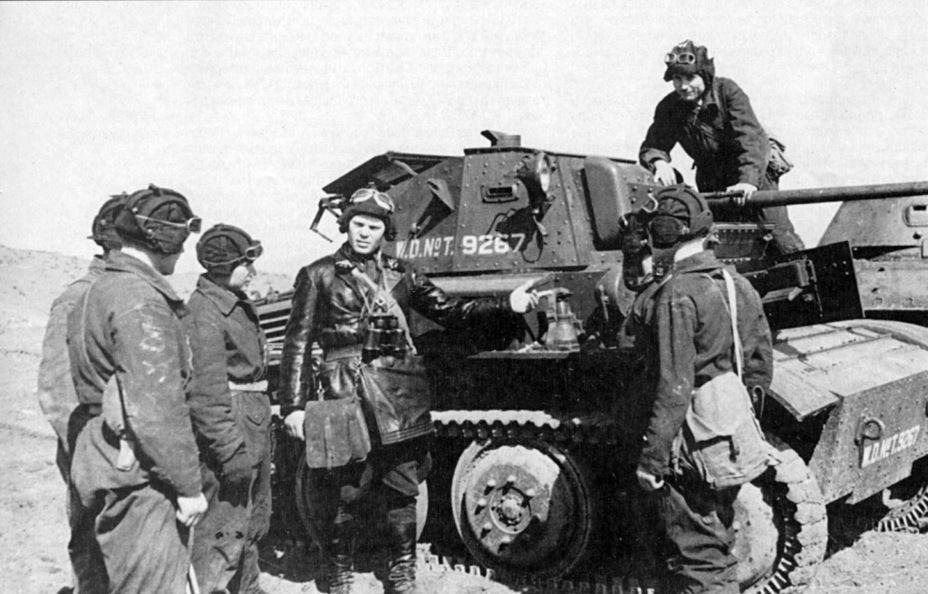
Lend-Lease Tetrarch in Soviet service at Zakavkazsko
Deployment was limited by their number, added to the transfer of 20 of thelm to the Soviets under lend-lease plus the ones lost in Operation Ironclad. By December 1942 indeed only 50 Tetrarchs were available as listed and by January 1943, Major General George F. Hopkinson (1st Airborne Division) he had no reserves to replace those lost in combat. A report stated 287 airborne tanks would be required for the 1st Airborne Division in Europe plus one more to be formed in India, a vacuum filled by the M22 Locust. In Operation Ironclad, the invasion of Madagascar in July 1941, 12 Tetrached were tropicalized and sent to the 2nd armoured brigade, and trained for landings in Scotland, the transferred to Freetown, and took part in operations from May 1942 against Vichy French Forces, poorly armed. They operated with Valentines, acting as a forward or support flank force. When the operation concluded there were only three Tetrarchs out of twelve operational as resistance as stiffer than expected.
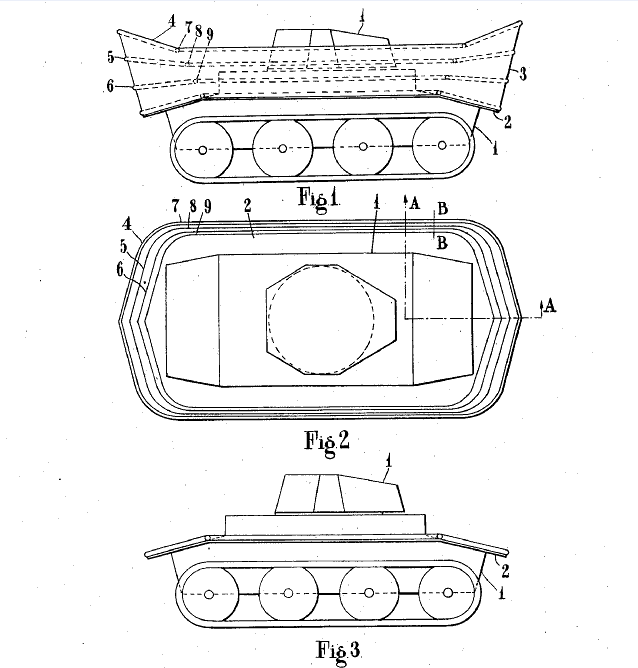 Next was Operation Tonga, an airborne operation alongsie Operation Husky, the invasion of Sicily in mid-1943 with 7 Tetrach assisgned to the 1st Airborne Division on 24 June 1942. The remaining ones took part in the British airborne landings in Normandy. There were extra losses, linked to the gliders ben shot down or crashing. They supported notably the 8th Parachute Battalion in the Bois de Bavent. However, none was used for Operation market Garden: M22 Locust were used instead, as they were in much larger numbers. The remaining Tetrarch were used for training or just gradually mothballed in 1945. There were postwar proposals to use them, and a flotation screen was designed for them, for amphibious operations, patented by Straussler in the US. Plus there was the designated successor, called the Harry Hopkins (A25) with an order for 100 eventually cancelled in February 1945. It was from the latter that the Alecto SPG was derived... Just two Tetrarch survived to this day, one with a QF 3-inch howitzer in Bovington (in a Hamilcar glider section) and another lend-lease model with the QF 2-pounder at Kubinka.
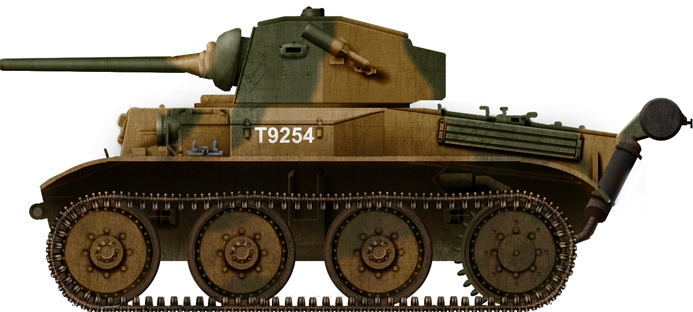
Author's rendition of a 2-pdr version.
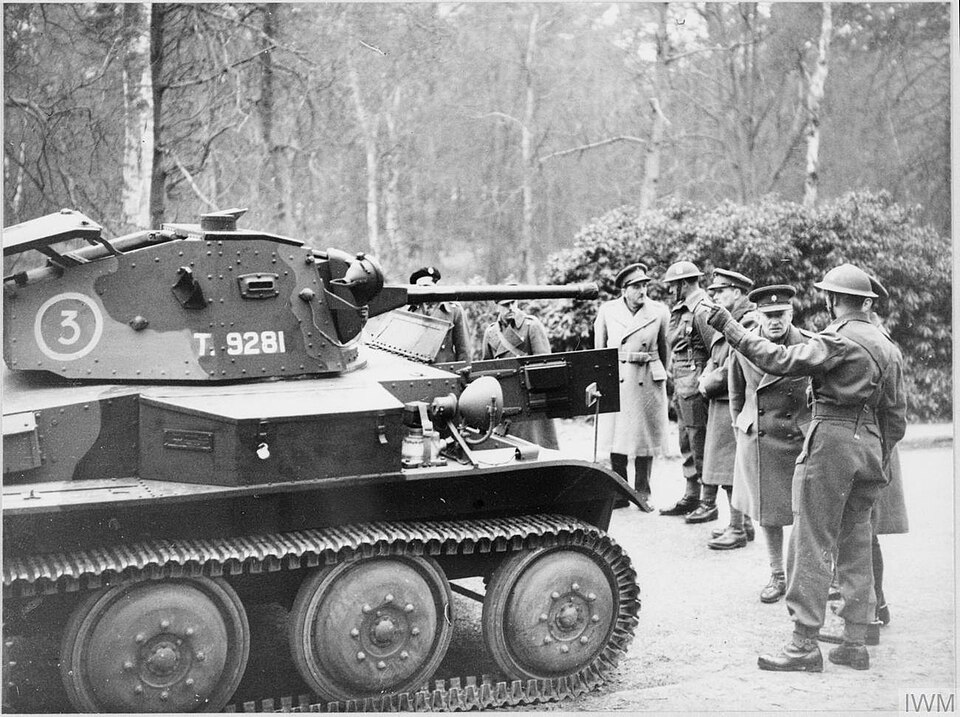
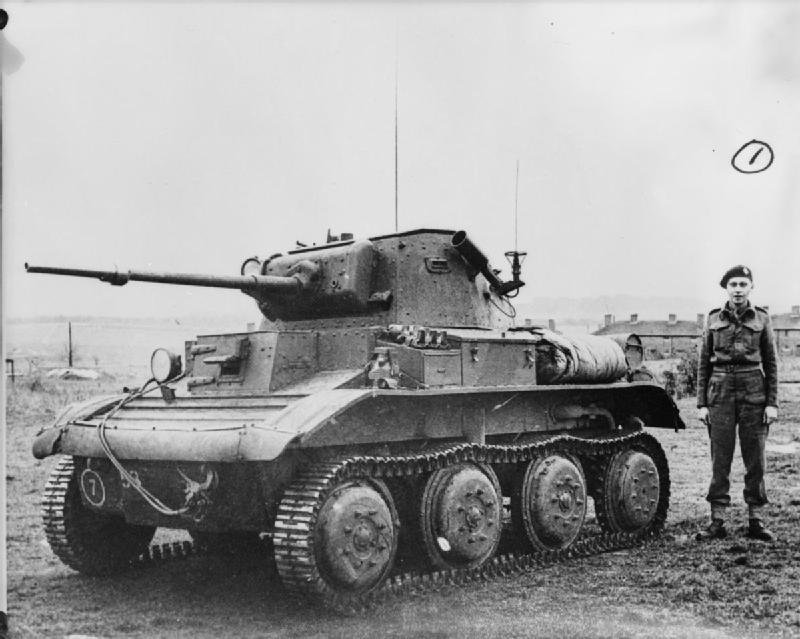
Light tank Mk VII Tetrarch Mk I with Little John adaptor
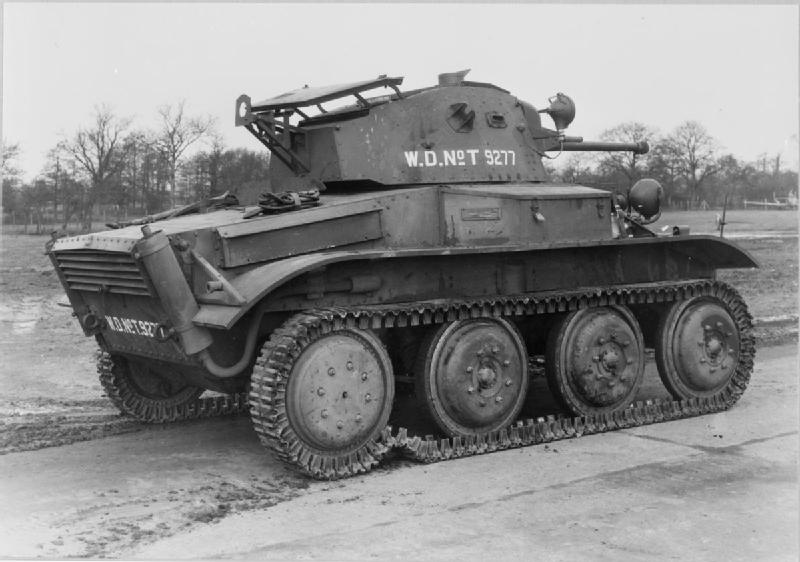
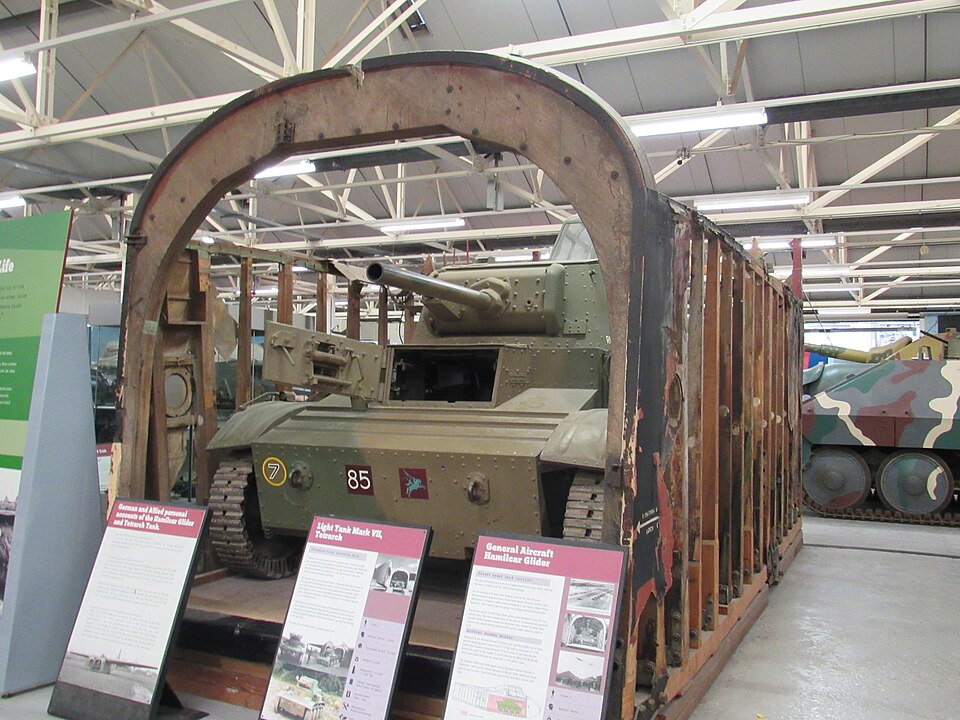
Tetrarch in a preserve Hamilcar section, Bovington
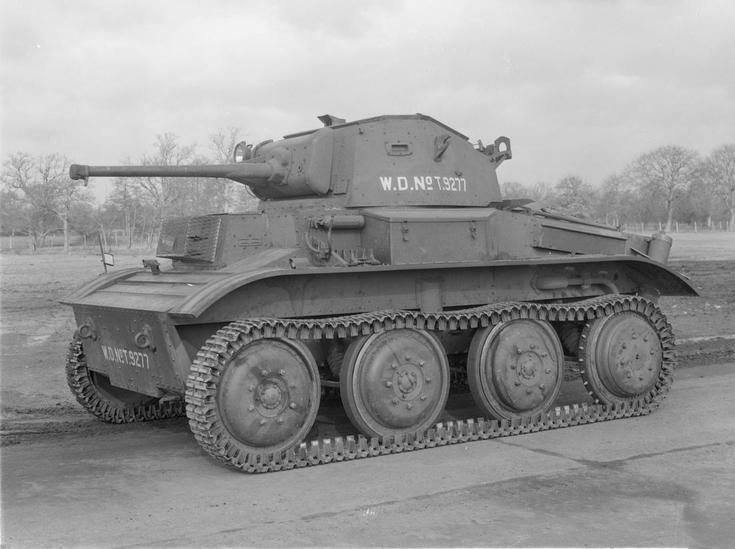
Read More
Books
Bean, Tim; Fowler, Will (2002). Russian Tanks of World War II: Stalin's Armoured Might. Ian Allan.Bishop, Chris (2002). The Encyclopedia of Weapons of World War II: The Comprehensive Guide to Over 1,500 Weapons Systems
Buckingham, William F. (2005). D-Day The First 72 Hours. Tempus.
Chamberlain, Peter; Ellis, Chris (2001). British and American Tanks of World War Two. Cassell.
Doherty, Richard (2007). The British Reconnaissance Corps in World War II. Osprey.
Fitzsimons, Bernard, ed. (1978). The Illustrated Encyclopedia of 20th Century Weapons & Warfare. Vol. XVI. Phoebus.
Fletcher, David (1989a). The Great Tank Scandal: British Armour in the Second World War - Part 1. HMSO.
Fletcher, David (1989b). Universal Tank: British Armour in the Second World War - Part 2. HMSO.
Flint, Keith (2006). Airborne Armour: Tetrarch, Locust, Hamilcar and the 6th Airborne Armoured Reconnaissance Regiment 1938–50. Helion.
Foss, Christopher; McKenzie, Peter (1988). The Vickers Tanks: From Landships to Challenger. Patrick Stephens.
Harclerode, Peter (2005). Wings Of War – Airborne Warfare 1918–1945. Weidenfeld & Nicolson.
Otway, Lieutenant-Colonel T. B. H . (1990). The Second World War 1939–1945 Army – Airborne Forces. Imperial War Museum.
Tucker, Spencer (2004). Tanks: An Illustrated History of their Impact. ABC-CLIO.
Jackson, Robert (2010). 101 Great Tanks. Roseb Pub Group.
Links
Tetrarch en.wikipedia.orgtankmuseum.org/
paradata.org.uk/
militaryfactory.com
dday-overlord.com
Craig Moore's article
Video from tank encyclopedia
wwiiequipment.com
commons.wikimedia.org
3D rendition
Videos
WW2 Tanks


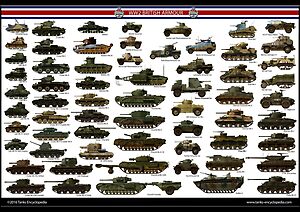
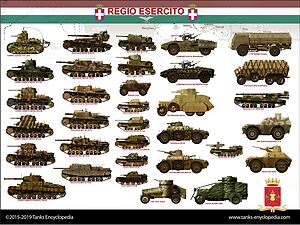
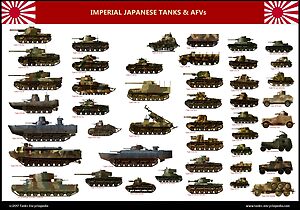
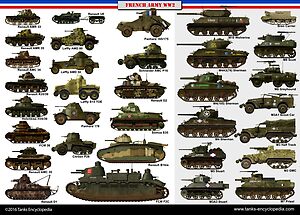
WW2 tanks posters
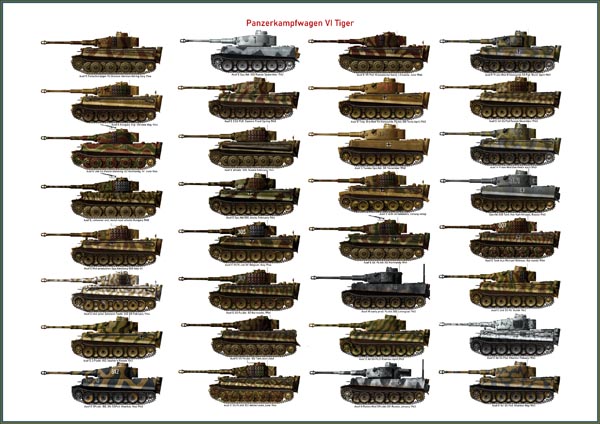
All Tiger tanks liveries.
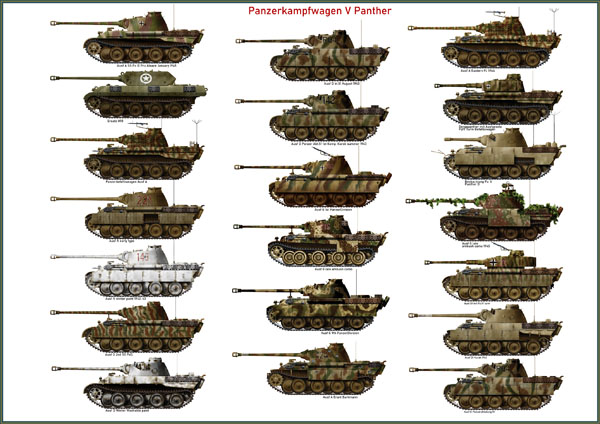
Panther liveries and variants
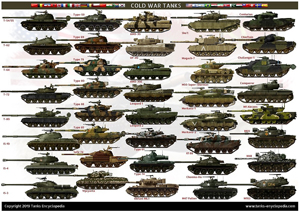
WW2 Armour - All tanks
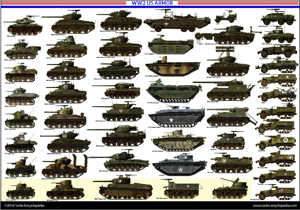
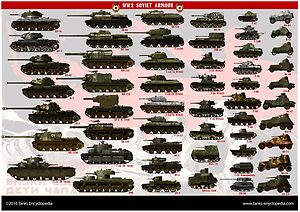
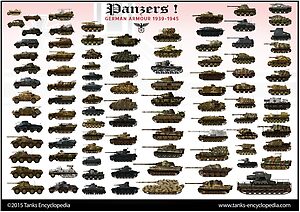
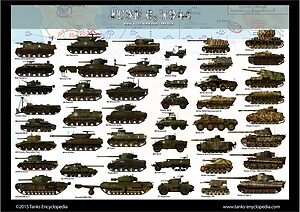
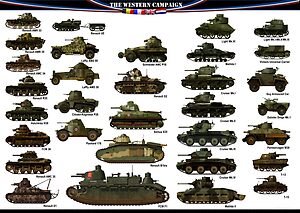
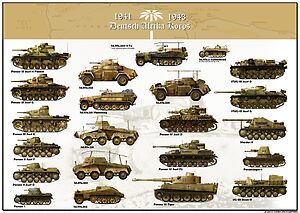

Tanks aces and single tanks series
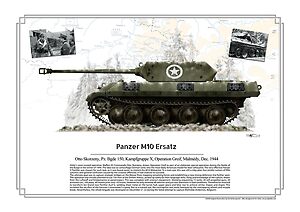
Find more there
Museums, Movies, Books & Games
The Tanks and Armor in pop culture
Tanks and armored vehicles in general are only really grasped when seen first person: The mass, the scale, it's all there. Explore also the way tanks were covered in the movie industry, in books and in video games.Movies:
Best tanks movie on warhistoryonline.com
On imdb.com
On bestsimilar.com/
miltours.com
liveabout.com/
watchmojo.com
Video Games:
pcgamesn.com
historyhit.com
levvvel.com
vg247.com/best-tank-games
mmobomb.com/
alienwarearena.com