Pantherturm
 Germany (1944-45) 268 built

Development
A Panzerturm ("armour turret" or "tank turret") was the generic name for a fully enclosed, armoured gun turret and mounting placed on a static fortification. It was also applied to any pre-fabricated steel dome built into a bunker line, like the machine-gun domes on the Siegfried Line, but mostly concerned the tactical recycling of obsolete, captured, or purpose-built tank turrets as dug-in defensive pillboxes. The design was simple but highly effective: a concrete or steel bunker structure (Bauform) was completely buried underground. The only part exposed above the surface was the low-profile tank turret. This provided static infantry or anti-tank units with heavy armor protection, excellent 360-degree fields of fire, and a target that was incredibly small and difficult for Allied artillery, naval bombardment, or aircraft to spot and hit.Main Variants

Early in World War II, as tanks like the Panzer I and Panzer II became completely outclassed on the battlefield, the Wehrmacht stripped their turrets. They also repurposed captured French assets (like Renault light tank turrets). These light-gun or machine-gun turrets were commonly placed on top of small, one-man concrete bunkers nicknamed "Tobruks" by the Allies. They were heavily utilized to defend beaches and airfields along the Atlantic Wall.
The Pantherturm (Panther Ostwall Turm): The ultimate evolution of this concept used the lethal 7.5cm KwK 42 L/70 gun of the Panther Tank. Because the production of Panther turrets outpaced the manufacturing of tank chassis, Germany began purpose-building them into heavy defensive positions. The Panthertum was by far the most common model.
The "What-If" Purpose-Built Domes: The term also applies to massive, non-tank cast-steel domes built directly for fortified lines, such as the 56-ton 20P7 Panzerturm, a 300 mm thick steel machine-gun cupola used extensively on the Westwall (Siegfried Line). They are not the subject here.
The Pantherturm

Pantherturm in Berlin
While it looked like just a tank turret from the outside, the underground reality of a heavy Panzerturm was complex. A standard concrete base installation (Regelbau 687) required roughly 175 cubic metres of reinforced concrete. Beneath the turret sat a multi-level compartment housing a crew living area with a heating stove; massive ammunition racks holding up to 450 main gun rounds. There was a stationary generator motor powering a ventilation compressor. This compressed air was absolutely vital to flush poisonous propellant gases out of the gun barrel so the crew wouldn't suffocate inside the sealed bunker. They also often had a rear tunnel leading safely out to a deeper communication trench system. A total of 268 Pantherturms were deployed late in the war across Italy's Gothic Line, the Atlantic Wall, and the Eastern Front, acting as highly dangerous, camouflaged roadblocks to advancing Allied armor.
Distribution of the 268 Pantherturms
Eastern Front or Ostwall: 182 On Strategic river-line defense and urban roadblocksItalian Front 48 on Mountain valley choke points and pass defense
Western Front, Atlantic Wall: 38 Reinforcing inland fortified zones and border lines
Design of the Pantherturm
The Pantherturm (or Panther-Ostwallturm) was a purpose-built static fortification design that mated a 7.5cm KwK 42 L/70 tank turret to a buried, sub-surface support bunker. It was engineered to present an incredibly small target profile while delivering lethal anti-tank capabilities. The entire layout was divided into two distinct components: a heavily modified fortress turret and an underground support base.The Turret Modifications
While early variants used standard production turrets from damaged tanks, the Germans quickly transitioned to a dedicated fortress version (Fortess-Ostwallturm) featuring several structural changes to optimize it for static defensive roles:-The turret roof armor was thickened from the standard tank thickness of 16–17 mm up to 40 mm or 65 mm. This change allowed it to withstand heavy direct artillery shell impacts up to 150 mm.
-The tank's tall, prominent commander’s cupola was removed and replaced with a flat, flush-fitting split hatch to significantly reduce the structure's silhouette.
-Nahverteidigungswaffe (close-defense grenade launcher/smoke discharger) was built directly into the roof to counter flanking infantry assaults.
The Base Foundations (Bunkers)
The turret assembly sat over a subterranean base, buried up into the surrounding earth so that only the sloped steel turret remained visible above ground.Three distinct base variants were developed:
Pantherturm I It had a Stahluntersatz (Steel Support), two-story prefabricated cuboid steel box 3m x 3m with components were welded on-site, making it highly preferred for quick, frozen-ground winter deployments, especially on the eastern front.
Pantherturm III Betonsockel It had a Concrete Base, thick reinforced concrete based on the Regelbau 687. It took longer to cure but was extensively used on the Atlantic Wall as less resources intensive.
Panther-Turm Called the Schnelleinbau (Fast Installation)it was an emergency wooden log-structure base drafted in late 1944 as steel or concrete started to ran out.
Internal Engineering and Sub-Surface Layout
In the most common two-story prefabricated steel version called Stahluntersatz, the interior function was highly organized to support a three-person crew with the commander, gunner, and loader. The UPPER BOX or Fighting Compartment was much wider than the original turret basket. It holds the turret basket & turret ring and its wall thickness were about 80mm steel. Since it was much roomier, there was a ready ammunition storage of 175 rounds, twice as much as in a standard Panther tank. The LOWER BOX housed the Living & Utility Quarters, it was spartan, with three folding bunk beds & heating stove and protected by the earthwork and 70mm steel.The turret ring was a 1.65 metres (5 ft 5 in) clear internal opening, which was the width required for the crew basket to drop down into the subterranean bunker. The Turret Body Only was 2.40 metres (7 ft 10 in) from the rear bustle to the curved front gun mantlet and overall, with the barrel, it measured 5.63 metres (18 ft 6 in). In height it reached 1.05 metres (3 ft 5 in) from the turret ring up to the top of the commander's cupola. The turret weighted 7.5 to 8 metric tonnes depending on the variant and ammunition load and its armoyr thickness was 100–110 mm on the sloped front face, 45 mm on the sides and rear, and 40–65 mm on the reinforced roof of the fortification versions, so more than a regular Panther.
To power electricity and the turret itself on its bearing there was a 2 hp DKW engine acting also a electric generator but there was alsk a compressed air tank for the gun's bore evacuation. If the structure was badly damaged frontally and inoperative, there was also an emergency escape tunnel hatch. The Fighting Deck about measuring roughly 1 meter tall only with the corner space around stacked with rounds. This area accommodated the suspended turret basket in which were seated the three crew members, commander, gunner and loader. Ammunition was densely packed around the perimeter walls, and it stored up to 175 main gun rounds.
The Lower Compartment included the living & utility deck, standing around 1.8 meters high, featuring three folding bunk beds, as well as maintenance supplies, and a compact coal/wood-burning stove for heating. There was a pneumatic ventilation to evacuated the 75mm round's produced toxic fumes quickly. The lower compartment contained a small 2-horsepower DKW motor powering a generator both for electric turret rotation and ventilation fans. It was coupled with a compressed air tank hooked to the gun barrel in order to violently blow combustion gases outward after every shot. As for the the access points, the normal crew entry was achieved via a deep slit trench extending roughly 30–40 feet away into a broader trench layout, completely shielding movement from the surface. There was also an integrated vertical emergency shaft used as a hidden rear escape route. Plus the turret itself still could have functional hatches (two) to exit via the roof.
Production
268 purpose-built Pantherturm sets (officially known as the Panther Ostwallturm) had been delivered by March 1945. In addition were a few salvaged tank turrets modified on an ad-hoc basis in the field, but the overwhelming majority were produced as part of a dedicated, coordinated industrial program. The manufacturing occurred in batches and involved several industrial contractors:First Component Batch: 112 turret parts sets were produced by Dortmund Hoerder Hüttenverein, finishing in February 1944.
Second Component Batch: 155 turret parts sets were manufactured by Ruhrstahl, wrapping up in August 1944.
Final Assembly: The final integration and weapon assembly took place at the Demag-Falkensee plant.
They delivered the first 98 fully assembled sets by May 1944, after which production continued at a steady, sustained rate of 15 completed installations per month until near the war's end.
Operational Deployment (By late March 1945):
182 units were allocated to the Western Front, split between the Atlantic Wall and the Siegfried Line (Westwall).
48 units were deployed to Italy to reinforce the heavily contested Gothic Line and Hitler Line.
36 units were sent to the Eastern Front.
2 units were held back within Germany for training and operational experimentation.
Of these, roughly 143 were Pantherturm I (Stahluntersatz) steel underground boxes, 125 were as Pantherturm III (Betonsockel) concrete installations.
Pantherturm specifications | |
| Dimensions | 5.63 metres (18 ft 6 in) long overall |
| Weight | 7.5 to 8 tons turret alone |
| Crew | 3 (Cdr, Gunner, Loader) |
| Propulsion | 2 hp DKW engine |
| Armament | 7.5cm KwK 42 L/70 Tank Gun |
| Armor | 100 mm face, 45mm sides and rear, 45-65 mm roof |
| Total production | 268 purpose-built Ostwallturm by March 1945 |
Combat Deployment
There were Pantherturms on the Eastern Front (The Panther-Wotan Line or Ostwall: They were built in late 1943, this massive defensive line stretched along the Dnieper River to halt the Soviet advance. Dozens of Pantherturms were integrated into the line to act as long-range anti-tank anchors. Later in the war, several were hastily dug into the streets of major cities—including Berlin itself—acting as fortified street-corner barricades during the final Battle of Berlin in 1945. On the Western Front (Atlantic Wall & Westwall), while hundreds of smaller, obsolete French and Panzer II turrets defended the beaches of Normandy and the Netherlands, heavier Pantherturms were deployed further inland to reinforce the Siegfried Line (Westwall) along the German border. They were rare actually on the Atlanticwall.Camouflage was their primary defense and engineers went to extraordinary lengths to hide them like fake buildings, with many turrets built inside the ruins of destroyed stone houses or barn structures. The crew could remotely collapse the fake walls or roof when an enemy approached. They also used deceptive Mockups, Dummy wooden structures or fake haystacks placed over the turrets. They used netting and vegetation like turf and local brush woven into tracking nets covering the steel dome, making them invisible from the air. In combat, a single well-hidden Pantherturm could completely lock down a road or valley. Because the 7.5cm KwK 42 gun outranged most Allied tanks, a turret could pick off the lead and rear vehicles of an advancing column from over 1,500 metres away, trapping the entire unit in a kill zone.
Italy
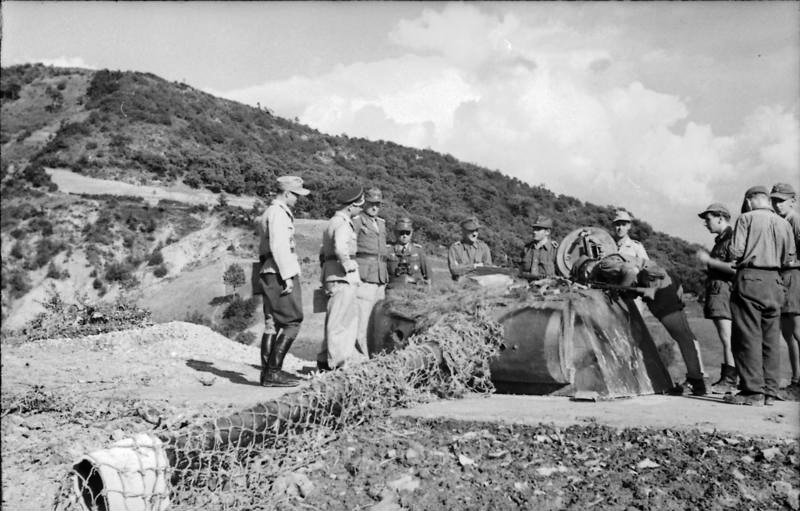
 Legend: General Sir Harold Alexander (right), with Lt General Leese and Lt General Harding, inspect one of the German Panther tank turrets which formed part of the Gothic Line defences, September 1944. - The Italian Front (The Gothic & Gustav Lines): Italy saw some of the most effective use of the Pantherturm. The mountainous terrain naturally funneled Allied armor into narrow valleys. German forces dug these turrets into choke points along the Gustav Line (around Monte Cassino) and the Gothic Line further north. They proved nightmarish for British and American tank crews, as they were nearly impossible to spot until they opened fire.
Around 48 Pantherturm units were deployed along the Gothic Line and others along the Hitler/Gustav Lines in Italy. They first appeared in combat in early 1944 (such as during the May 1944 fighting on the Hitler Line around Piedimonte). This of the Hitler Line (Senger Line) – from May 1944 were situated just south of Rome in the Liri Valley, saw the first major combat deployment of these turrets in Italy. They were placed to block the advance towards Rome:
Piedimonte San Germano: Multiple positions were placed on the slopes and base of this hill town to guard the highway below. A prominent Pantherturm position here was famously knocked out by the Polish II Corps after intense fighting.
Aquino to Pontecorvo Sector: The 1st Canadian Infantry Division ran directly into a network of mutually supporting Panthertürme spaced a few hundred meters apart. A well-known emplacement sat directly blocking the road between Aquino and Pontecorvo.
On the Gothic Line (Apennines) from Autumn 1944, as the Germans retreated north, they deployed Panthertürme to seal off the mountain passes breaking into the Po River Valley. One example: The Futa Pass (Passo della Futa). Located further west along the Porrettana highway, this pass was heavily fortified to deny Allied armor access to the north. It is possible to visit most of these locations.
AtlantikWall
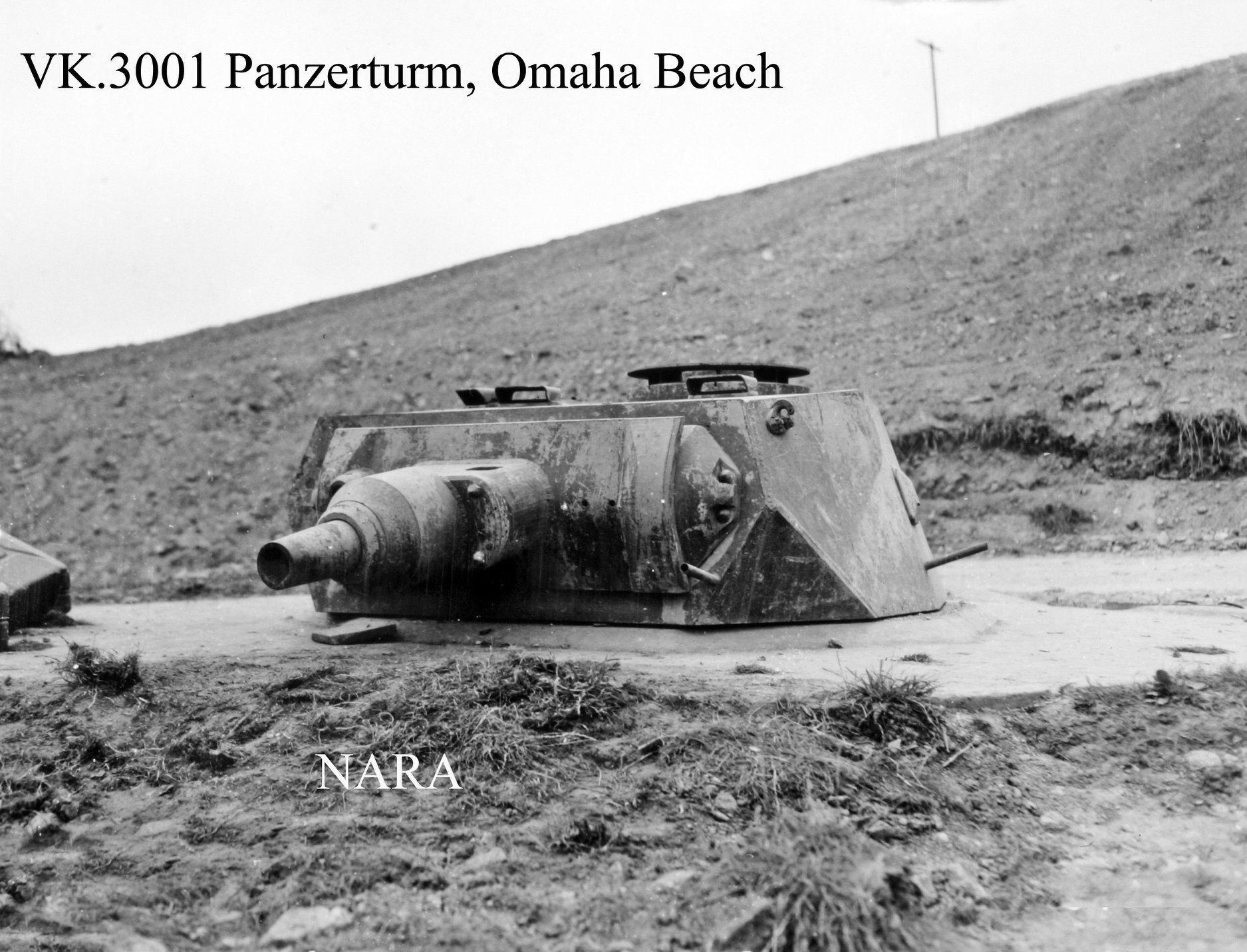
VK.3001 Panzerturm at Omaha Beach: This was Panzer Drehturm Wiederstandsnest 68 (WN68) which guarded the draw through the high bluffs at the D-3 Les Moulons exit. It was armed with a 75mm gun and the turret was from an early war medium panzer prototype.
Steven Zaloga, who has written a superb book on the Wehrmacht defensives at Omaha Beach - "The Devil's Garden", considers the Panzer Drehturm (tank turret mount) to have been effective. The turrets, many from obsolete models, when placed over a 'tobruk' -underground concrete bunker) were difficult to destroy.
These Panzer Drehturm were one of the better defensive positions on Omaha Beach since the tank turret was impervious to most infantry weapons and the Tobruk was a very small target for naval bombardment.To deal with them, each of the landing craft had two organic bazooka teams (2 GIs and a bazooka) so they were able to damage or destroy one with a lucky round. There were also a few M4 tanks when they managed to land on time (aside the DD fiaco). At Les Moulons notably from 8:30-9:00 USN Destroyers moved inshore to blast beach defenses with rheir 5" (127 mm) guns. However many were never destroyed, they were simple outran by allied infantry, sometimes attacked by the rear by blasting their door.
At Les Moulons (Dog Red) Drehturms were placed low-down off the bluffs close to the beach and the allies had some cover from grass fire. At 9:00, GIs climbed the bluffs on both flanks, the WN68 position and others were bypassed, but some were still firing at GIs into the evening. Some ran out of ammo and eventually the servants surrendered. These Drehturms were flanked nevertheless against infantry go-around manouevers bt a network of MG emplacements, riflemen and mortars. Overall, there were 38 Pantherturm were placed along the wall, extending from southern France to Norway.
 Whatever the type, they were sitting flush with or low against the ground or dunes, making them hard to spot and difficult for Allied naval or direct fire to hit. They included internal fighting chambers, ammunition storage, and living quarters for the small crew. They used standardized, prefabricated steel frames or thick concrete structures (Regalbauten) to withstand artillery bombardment. The German types were:
Pantherturm (Panzer V Turret): Mounted a high-velocity 75mm KwK 42 gun on top of concrete, steel, or wooden base bunkers. Around 182 units were deployed along the Atlantic Wall and Siegfried Line.
20P7 Armored Turret: An armored steel turret featuring six machine-gun embrasures to cover multiple angles of approach, seen at sites like Musée D-Day Omaha in Normandy.
Panzer II or D24804 Turret: Older light tank turrets rearmed with 3.7cm KwK guns and placed in drum-shaped concrete bunkers (Festung-Panzer-Drehturm 4804) connected to trench networks.
Tobruk Panzerturm: Small, single-man observation or machine-gun turrets integrated into smaller resistance nests (Widerstandsnester), such as those in IJmuiden and Zandvoort in the Netherlands.
 There were also some french turrets. Hundreds of the leftover cast steel turrets were salvaged to fortify the Atlantic Wall, from discarded, damaged or sabotaged French tank hulls. The APX in particular was the most available, followed by cast or assembled variants of the Renault FT. By 1944, out of nearly 1,000 "Panzer Tobruks" (small concrete pillboxes topped with tank turrets) deployed across France, Belgium, and the Netherlands, approximately 780 were captured French types. The common APX R Turret came from Renault R35 and Hotchkiss H35/H39. Cast in thick steel they had excellent protection but only a short 37mm SA 18 or long SA 38 gun alongside a coaxial machine gun. But they were disliked ad only manageable by a single German soldier which had to load aim, and fire both weapons. There were also a few FCM 36 Turret which had welded sides, highly sloped, used for concrete pillboxes to provide flanking fire over beach obstacles.
 The old Renault FT Turret was aslo widely reused, stripped of its main gun, instead mounted with a 7,5mm Reibel machine gun (MG 311(f)) so acting as machine-gun nests along dunes and sea walls. There were also the larger cast APX 1 and APX 4 turrets common to the Somua S35 & Char B1 bis. They were rare as remaining tanks were all used by German security units, and they came mostly from damaged vehicles and were placed larger coastal defensive structures. These turrets were called officially "Ringstände" but commonly called Tobruks. They were buried completely underground.
Since at best they had 37mm guns, largely obsolete against Allied tanks by 1944, they were strategically positioned to fire sideways across the beaches in enfilade fire to target infantry, landing craft or light vehicles.
The old Renault FT Turret was aslo widely reused, stripped of its main gun, instead mounted with a 7,5mm Reibel machine gun (MG 311(f)) so acting as machine-gun nests along dunes and sea walls. There were also the larger cast APX 1 and APX 4 turrets common to the Somua S35 & Char B1 bis. They were rare as remaining tanks were all used by German security units, and they came mostly from damaged vehicles and were placed larger coastal defensive structures. These turrets were called officially "Ringstände" but commonly called Tobruks. They were buried completely underground.
Since at best they had 37mm guns, largely obsolete against Allied tanks by 1944, they were strategically positioned to fire sideways across the beaches in enfilade fire to target infantry, landing craft or light vehicles.

Panthertum on the Gothic line, Italy, 1944
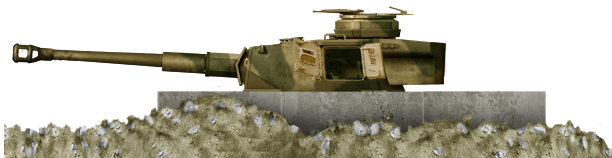
Panzer IV Turm in Berlin, 1945.
Gallery

Pz.38t Turm plan

Panther Turm 1

Panther Turm 2

Pz.II Turm

Tigerturm

Panzer III Turm


Pantherturm Berlin (with hull)

Buried T34/85, origin unknown

AtlantikWall: Renault AMC35 Turm

Pz 38t Turm in the Pyrenees Roussillon
Video
Links
Panzer Tracts No. 21-2: Pantherturm I und II, Thomas L. Jentz and Hilary Louis DoyleThe National Archives and Records Administration (NARA)
missing-lynx.com
pl.wikipedia.org
thearmorylife.com
historyofwar.org
Video
WW2 Tanks


WW2 tanks posters
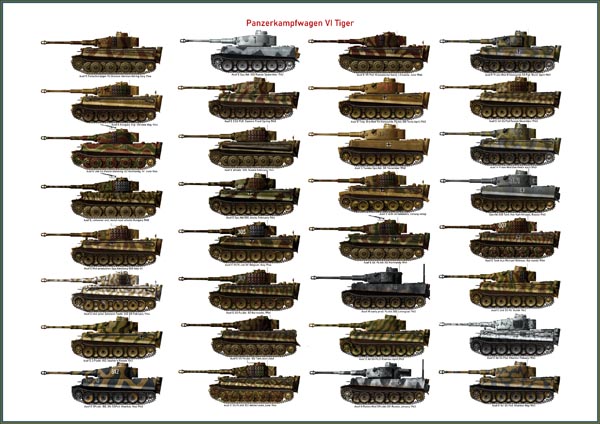
All Tiger tanks liveries.
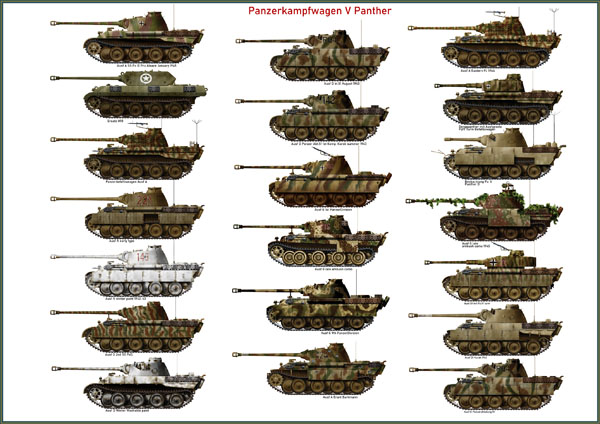
Panther liveries and variants
WW2 Armour - All tanks

Tanks aces and single tanks series
Find more there

Museums, Movies, Books & Games
The Tanks and Armor in pop culture
Tanks and armored vehicles in general are only really grasped when seen first person: The mass, the scale, it's all there. Explore also the way tanks were covered in the movie industry, in books and in video games.Movies:
Best tanks movie on warhistoryonline.com
On imdb.com
On bestsimilar.com/
miltours.com
liveabout.com/
watchmojo.com
Video Games:
pcgamesn.com
historyhit.com
levvvel.com
vg247.com/best-tank-games
mmobomb.com/
alienwarearena.com