Mareșal
 Tank hunter (1942-44): 6 built
Development
 An alleged inspiration source for the German Hetzer tank hunter, the Mareșal was designed in order to develop a local tank hunter with available resources. The technical team in charge of the project was composed of Major Nicolae Anghel and Captain Gheorghe Sambotin with the help of engineer and Lt Colonel Constantin Ghiulai. Initial tests included a 122 mm (4.8 in) Putilov-Obuhov howitzer mounted over the T-60 chassis, protected by an extremely sloped armored casemate. While its thickness was only 20-30 mm (0.79-1.18 in), still light, the angle raised its effective thickness against direct fire, making it virtually impenetrable to the 76 mm (3 in) gun of the T-34. Trials were performed in July 1943, revealing numerous problems, and three other prototypes were built and tested until October 1943.
Among the early inspiration sources for the casemate shape and light tank accommodation, the Romanian Mareșal is often cited. It was developed by the Ateliere Leonida. This vehicle was born after the Romanian encounters with the Russian T-34 in Ukraine, which radically changed their opinion on armor and especially the possibilities of sloped armour. From there a project was born, which tried to create a tank hunter that would be extremely well-protected over an existing, readily available captured light tank chassis (the T-60), while keeping the weight down.
The new tank was named in honor of the leader of the country, Marshal Ion Antonescu. New tests occurred in the Sudiți with a Romanian AT gun, the 75 mm DT-UDR No.26 and under proposition of Colonel Paul Draghiescu, it was adopted for production. In November, 1000 Hotchkiss engines were ordered in France. However, the M04 interested the Germans and it was presented to Hitler by Marshal Antonescu in December. The 5th prototype underwent tests and modifications helped by Alkett and Vomag specialists in March-May 1944.
Characteristics

The "Marshall" had an H39 engine and gearbox which were French, the tracks were Czech and the optics and radio were German. The Driver/Gunner was seated on the right, and Loader on the left. It was propelled indeed by a Hotchkiss H-39 120 hp engine (10 hp/t) and transmission. It was also based on a modified T-60 chassis, but with Rogifer suspensions, comprising four stamped roadwheels per side. The prototypes weighted 6.5-10 t depending on the prototype version The top speed was 45 km/h (28 mph) on flat and 25 km/h (15 mph) cross-country thanks to a Power-to-Weight Ratio of 14.1 hp/tonne. It had indeed leaf spring suspension combined with Czech-designed tracks. Fuel Capacity was c215 litres. Other sources gives 50 km/h (31 mph) and off-Road: 35 km/h (22 mph) for the 1st prototype and an operational Range of 200 km on road and c100 km cross-country.
Protection was achieved by giving the hull an extremely sloped, all-side armour. This resulted in the 50 mm (1.97 in) armor plates offering 100 mm (3.94 in) of effective protection against direct fire, which provided this small tank destroyer with the heavy tank protection level. Its main armament was a 7.5 cm (2.95 in) DT-UDR Resita Model 1943 and secondary ZB-53 7.92 mm (0.31 in) machine gun. The 75 mm Reșița M1943 anti-tank gun (50 rounds carried) was in the front center casemate. The Secondary Armament of two 9 mm submachine guns fired through custom hull ports.
Fate
Six prototypes were built (M-00, M-01, M-02, M-03, M-04, M-05) between December 1942 and January 1944. An ambitious order for 1,000 Mareșal tank destroyers was placed to form the backbone of the Romanian armored divisions.But after the 23 August coup d'etat, the plans and the remaining prototypes were seized by the Soviet army. 1000 were ordered in May 1944 by the high command, however, due to Allied bombings, the first series was delayed until November 1944 and a bi-national joint production program with the Hetzer was setup. Other tests were performed until August 1944, when the armistice led to the cancellation of the project and everything was later confiscated by the Soviets.
Early Prototypes (M-00 to M-03) were built by combining captured Soviet T-60 light tank chassis with a Soviet 122mm Putilov-Obukhov howitzer enclosed in a unique, 4-piece turtle-shaped armour shell.Refined Prototypes (M-04 & M-05): The howitzer was replaced by the superior, Romanian-built 75 mm DT-UDR Reșița anti-tank gun.
The M-05 variant swapped out the T-60 components for a wider chassis and a German Hotchkiss 120 hp engine. The German Connection: In late 1943, German military officials—including Panzer commander Heinz Guderian—inspected the Mareșal. They were so impressed by its low silhouette and sloped armour that they adopted the exact layout for their own Jagdpanzer 38(t) Hetzer. Later Mareșal prototypes (like M-06) even utilized the Czech-designed Panzer 38(t) chassis.
Mareșal specs. Proto 1 | |
| Dimensions (L-w-h) | 4.43 m (5.80 m including gun barrel) long overall. |
| Weight | 8.5 tonnes (9.4 short tons) |
| Crew | 2 (Driver/Gunner and Loader) |
| Propulsion | R35 engine 120 hp |
| Max speed (on/off road) | 45-50 kph road |
| Range (off-road/road) | 200 km |
| Armament | 1x 75mm, 2x 8mm LMGs |
| Armor | 10mm-30mm front at 70°. |
| Total production | 2 prototypes |
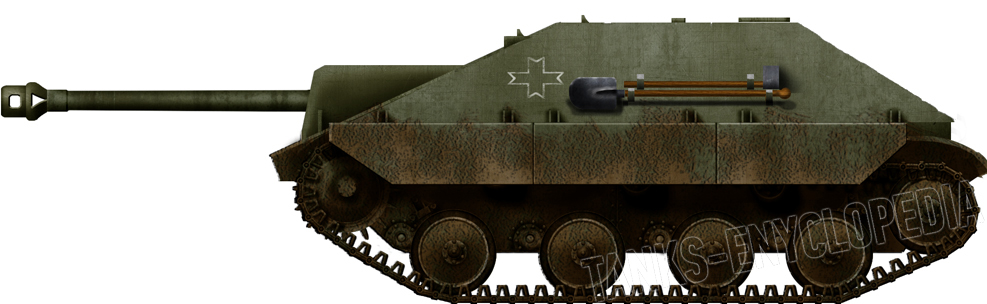
Romanian Mareșal, 1943.
Gallery


Wooden Mockup of the Hetzer in 1943
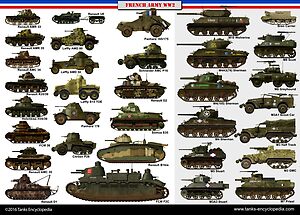
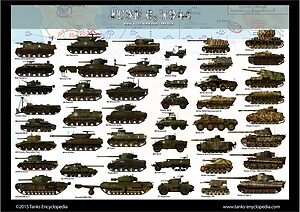
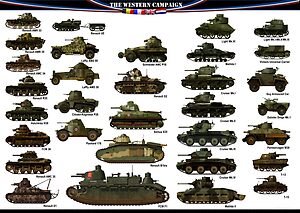
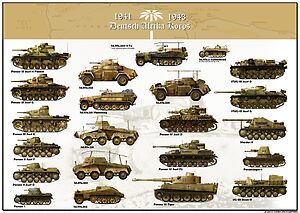
WW2 Tanks


WW2 tanks posters
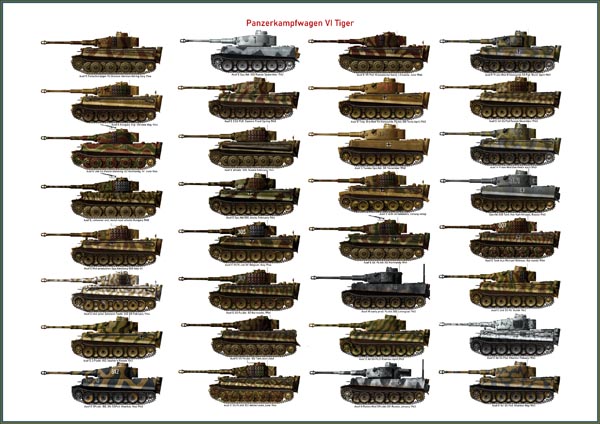
All Tiger tanks liveries.
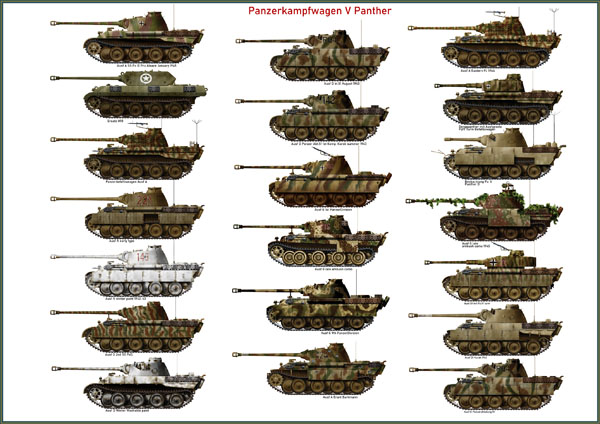
Panther liveries and variants
WW2 Armour - All tanks
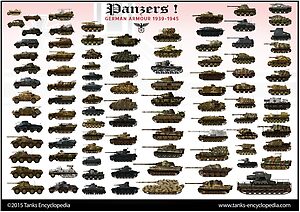
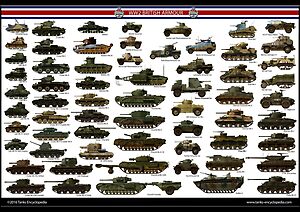
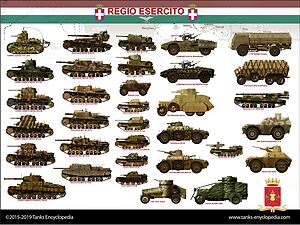
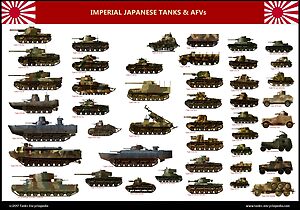

Tanks aces and single tanks series
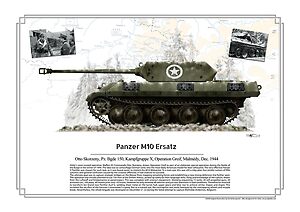
Find more there
Museums, Movies, Books & Games
The Tanks and Armor in pop culture
Tanks and armored vehicles in general are only really grasped when seen first person: The mass, the scale, it's all there. Explore also the way tanks were covered in the movie industry, in books and in video games.Movies:
Best tanks movie on warhistoryonline.com
On imdb.com
On bestsimilar.com/
miltours.com
liveabout.com/
watchmojo.com
Video Games:
pcgamesn.com
historyhit.com
levvvel.com
vg247.com/best-tank-games
mmobomb.com/
alienwarearena.com